This is not an encyclopedia. It is a map of the argument — the long, unfinished argument about who owns what the earth and human labor produce, and who decides.
The figures gathered here span millennia, continents, and disciplines. Some are philosophers, some are farmers, some are poets. What connects them is a refusal to accept the enclosure of shared wealth as natural or inevitable. Each, in a different voice and from a different position, has said: this belongs to all of us.
The entries are arranged not chronologically but by the kind of question they ask. Not all arrive at the same answer; some have reached the threshold of the ownership argument without yet crossing it, and they are included for the path they illuminate. The reader will notice that the same names recur across categories, because the best thinkers on the commons have always understood that economic questions are also ecological questions, that governance questions are also spiritual questions, and that the fight for shared abundance has never been only about money.
"The first man who, having fenced in a piece of land, said 'This is mine,' and found people naïve enough to believe him, that man was the true founder of civil society."
— Jean-Jacques Rousseau, Discourse on Inequality (1755)
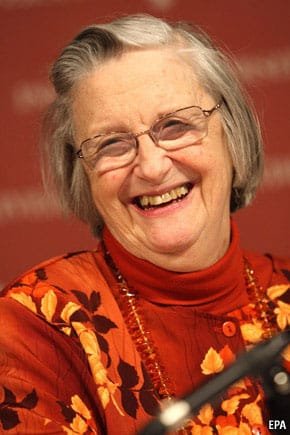
Elinor Ostrom
1933–2012 · Political economist · Nobel Prize in Economics, 2009
Ostrom's Governing the Commons (1990) did more than contribute to theory — it demolished one. By studying irrigation systems in the Philippines, Alpine pastures in Switzerland, fisheries in Turkey and Maine, and forests in Japan and Nepal, she demonstrated empirically that the "Tragedy of the Commons" — the idea that shared resources are inevitably destroyed by selfish actors — is a myth. Communities throughout history have managed shared resources effectively, provided they design their own governance rules, monitor compliance collectively, and have the authority to enforce them without external interference.
For any argument about shared ownership of AI-generated abundance, Ostrom is foundational. Her work proves that the question is not whether commons can be governed democratically — they can, she showed it — but whether the people who benefit from them are permitted to govern them. The obstacle is not human nature. It is enclosure by those with the power to enclose.
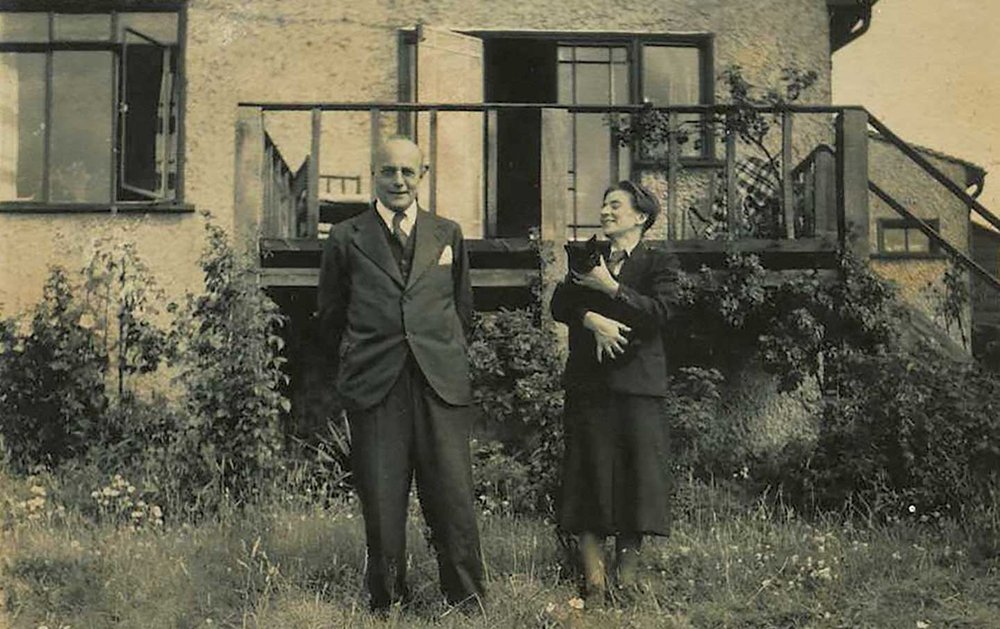
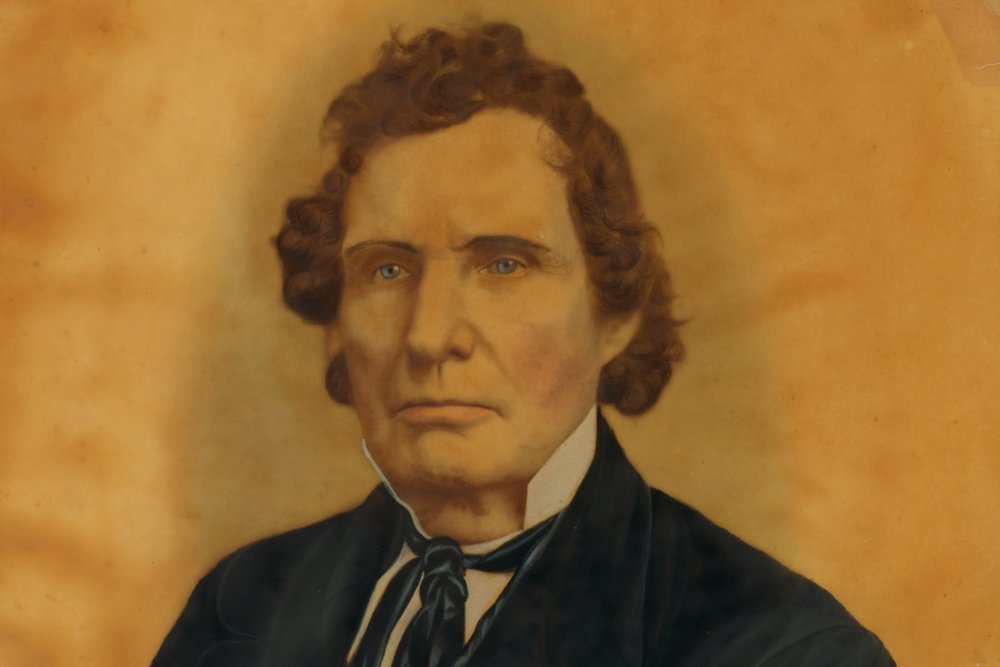
E. P. Thompson
1924–1993 · Historian
Thompson's Customs in Common (1991) and his earlier The Making of the English Working Class (1963) recovered a history that enclosure tried to erase: the dense web of customary rights — gleaning, grazing, foraging, fuel-gathering — by which ordinary people in pre-industrial England sustained themselves on common land. Thompson showed that these weren't vague traditions but specific, negotiated, fiercely defended legal and social claims. When enclosure destroyed them, it didn't merely redistribute land. It destroyed a moral economy, a whole way of understanding what people owed each other.
Thompson's concept of the moral economy — the idea that economic life is governed by shared norms of fairness, not just market logic — is indispensable for understanding why the enclosure of AI feels like a violation even when no law is broken.
Silvia Federici
b. 1942 · Historian, feminist theorist
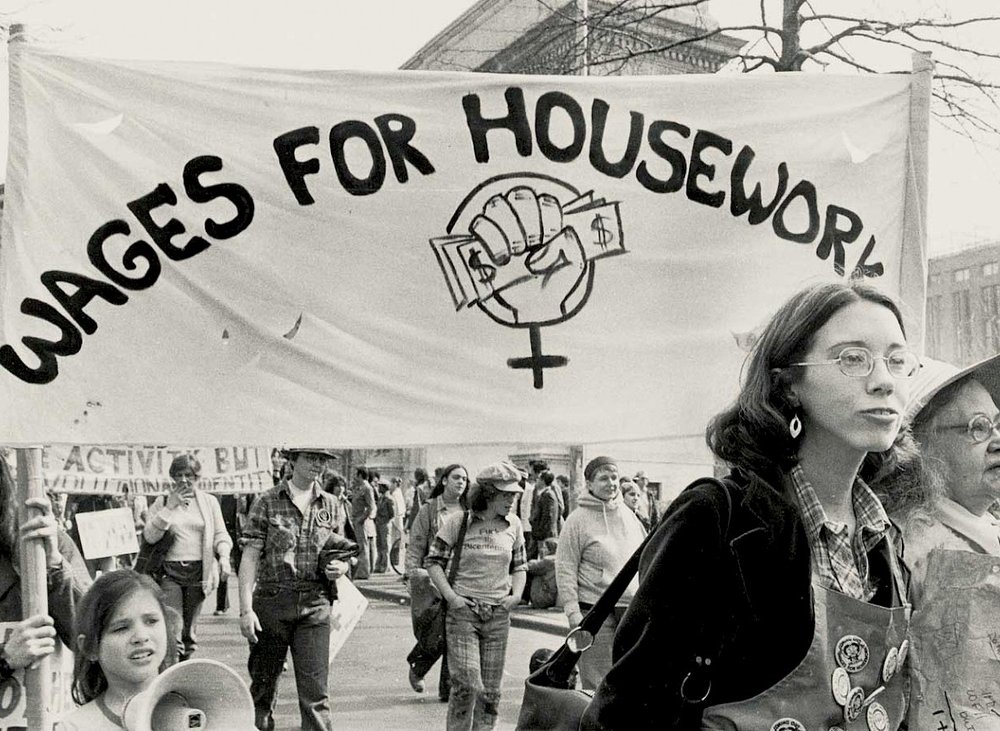
In Caliban and the Witch (2004), Federici renarrated the transition from feudalism to capitalism as a story not of progress but of coordinated violence — against women, against colonized peoples, against the commons. She demonstrated that the European witch hunts, the Atlantic slave trade, and the enclosure of common lands were not separate events but interlocking strategies for creating a dispossessed labor force. The destruction of women's reproductive autonomy and the destruction of the commons were the same project.
Federici insists that any new commons must be built on reproductive labor — the work of care, feeding, healing, teaching — that capitalism has always appropriated without compensation. This is not a metaphorical point. It means that a cooperative home care agency in the Bronx staffed by Black and Latina women is not a peripheral example of the commons. It is the center.
Karl Polanyi
1886–1964 · Economic historian
The Great Transformation (1944) described the catastrophic consequences of treating land, labor, and money as commodities — what Polanyi called "fictitious commodities," because they are not produced for sale but are the substance of human life itself. When markets are allowed to govern these things without democratic constraint, society protects itself through a "double movement": a counter-surge of regulation, mutual aid, and collective action to re-embed the economy in social relations.
We are living through a Polanyian moment. Data, intelligence, attention — these are the new fictitious commodities, treated as raw material for extraction despite being the fabric of human social life. The double movement is already underway, even if it doesn't yet know its own name.
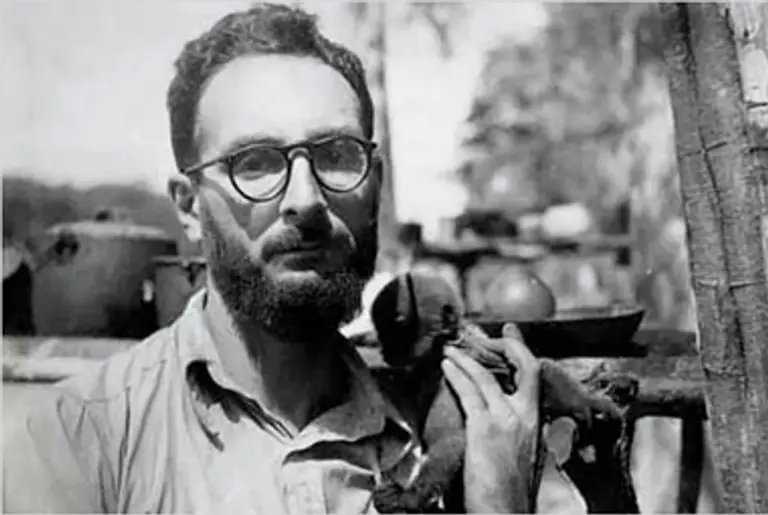
Marcel Mauss
1872–1950 · Anthropologist
The Gift (1925) documented what Mauss called "total social phenomena" — economic exchanges in Melanesia, Polynesia, and the Pacific Northwest that were simultaneously legal, moral, religious, aesthetic, and economic. The gift, Mauss showed, is never free: it creates obligation, relationship, reciprocity. But unlike commodity exchange, it binds people together rather than separating them. The gift economy is not pre-economic innocence; it is a sophisticated alternative logic for circulating wealth.
Mauss matters for the digital commons because the open-source movement, Wikipedia, and Creative Commons all operate on gift logic — people contribute not for payment but for standing, reciprocity, and the maintenance of a shared resource. The question is whether this logic can survive contact with trillion-dollar extraction.
· · · · ·
"Property is theft."
— Pierre-Joseph Proudhon, What Is Property? (1840)
John Locke
1632–1704 · Philosopher
Every argument about AI ownership eventually returns to Locke, whether it knows it or not. His labor theory of property — that you own what you "mix your labor" with — is the philosophical bedrock beneath both the corporate claim ("we built the models") and the democratic claim ("you built them from our language"). But Locke's own argument contains its most devastating critique: the proviso, his insistence that appropriation is legitimate only if "enough and as good" is left for others. When a handful of companies train models on the entire written output of human civilization and then gate access behind subscription fees, the proviso is not merely violated. It is annihilated.
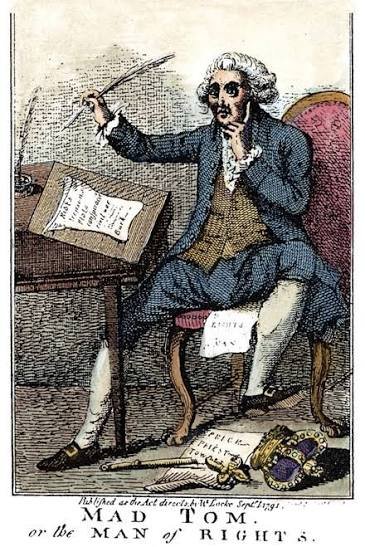
Thomas Paine
1737–1809 · Revolutionary, pamphleteer
In Agrarian Justice (1797), Paine made what may be the earliest argument for a universal basic income. The earth, he argued, belongs to no one in its natural state; private property creates wealth but also creates poverty, because it excludes people from what was once common. Therefore, every property owner owes a "ground rent" to the community, to be distributed as a lump sum to every citizen at age twenty-one and as a pension after fifty. Paine called this "not charity but a right."
Paine's argument is the direct ancestor of proposals for data dividends and AI wealth funds. But notice what he got right that many of his descendants get wrong: the payment is owed not because individuals can prove their specific contribution, but because exclusion from a common inheritance creates an obligation. The right is prior to the accounting.
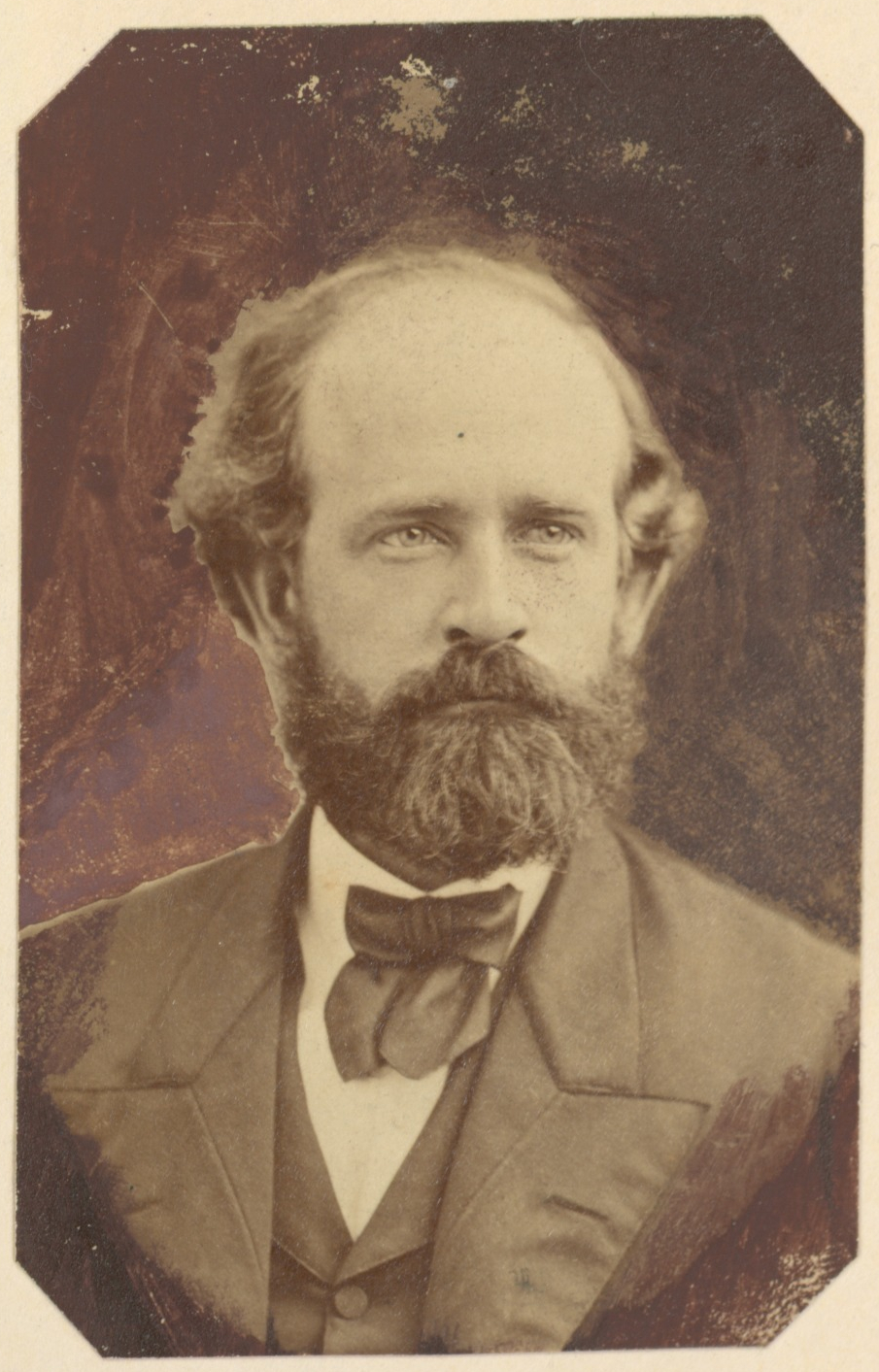
Henry George
1839–1897 · Political economist
Progress and Poverty (1879) asked a question that still has no adequate answer: why does increasing wealth produce increasing poverty? George's answer was land. The value of land rises not through any labor of the owner but through the collective activity of society — roads, schools, commerce, population. Therefore, land rent should be captured by the community through a single tax, eliminating the parasitic extraction that allows a few to profit from what everyone created.
George's insight transfers almost perfectly to the AI economy: the value of a language model arises not from the labor of its corporate owner but from the entire linguistic, cultural, and intellectual production of human civilization. The rent is owed to the civilization that produced the value.
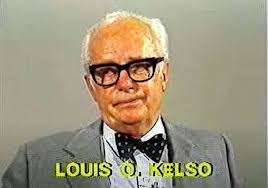
Louis Kelso
1913–1991 · Economist, lawyer
Kelso's binary economics argued that the economy has two factors of production — labor and capital — and that as technology increases, capital does more of the producing. If ownership of capital remains concentrated, the majority of people are cut off from the primary source of wealth. His solution was not redistribution but broadened ownership: Employee Stock Ownership Plans (ESOPs), which he invented, and more radical proposals for universal capital ownership through mechanisms like Capital Homesteading.
Kelso is essential for The People's Share because he frames the question not as "how do we redistribute AI's profits?" but as "how do we ensure that ordinary people own the thing that produces the wealth?" The distinction between receiving a dividend and holding a stake is the distinction between a subject and a citizen.
→ Kelso's Discovery, in Autotroph.
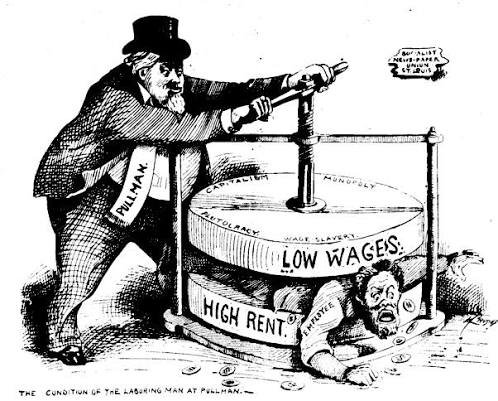
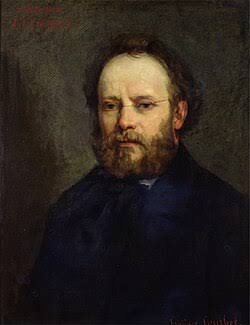
Pierre-Joseph Proudhon
1809–1865 · Philosopher, economist
The first person to call himself an anarchist, Proudhon argued that property — not possession, but property used to extract rent or profit from others' labor — is theft. His alternative was mutualism: a society of free producers exchanging the products of their labor on equal terms, organized through mutual credit and federated associations rather than through state power or capitalist markets. He envisioned a "Bank of the People" that would provide interest-free credit, eliminating the parasitic role of finance.
Proudhon's sharp distinction between possession (what you use and need) and property (what you own in order to extract value from others) remains one of the most useful tools for thinking about who should own AI.
Peter Kropotkin
1842–1921 · Geographer, naturalist, anarchist
Mutual Aid: A Factor of Evolution (1902) is, among other things, a monumental act of scientific dissent. Against Social Darwinists who reduced evolution to competition, Kropotkin — drawing on decades of fieldwork in Siberia — demonstrated that cooperation is as fundamental to survival as competition, in species from ants to medieval guilds. Mutual aid is not altruism or charity; it is a survival strategy, and the species and societies that practice it most effectively are the ones that flourish.
In an era when AI discourse is saturated with competitive metaphors — arms races, moats, winner-take-all markets — Kropotkin's empirical insistence that cooperation is not naive but adaptive remains essential medicine.
· · · · ·
"The assumption that what currently exists must necessarily exist is the acid that corrodes all visionary thinking."
— Murray Bookchin, The Ecology of Freedom (1982)
Murray Bookchin
1921–2006 · Political theorist, ecologist
Bookchin spent half a century developing an alternative to both capitalism and state socialism. His libertarian municipalism argued that the municipality — not the nation-state, not the market, not the individual — is the proper scale for democratic governance. He called for face-to-face popular assemblies that would confederate upward into regional and eventually global networks, with delegates (not representatives) who could be recalled at any time. He saw ecological crisis and social hierarchy as expressions of the same pathology: the domination of nature and the domination of human by human arise from the same root and must be fought together.
Bookchin matters for the AI commons because he insists that ownership without governance is empty. A data dividend is not democratic ownership. A micropayment is not power. Only when people sit in assemblies and make decisions about how shared resources are used — not merely receive a check — does the commons exist as a political reality rather than a financial product.
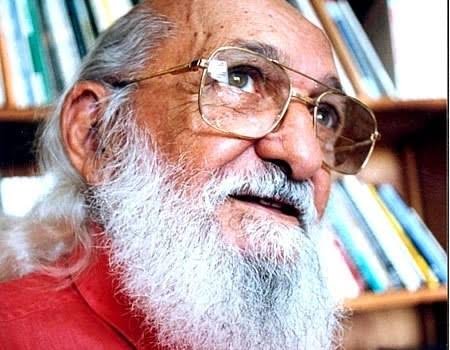
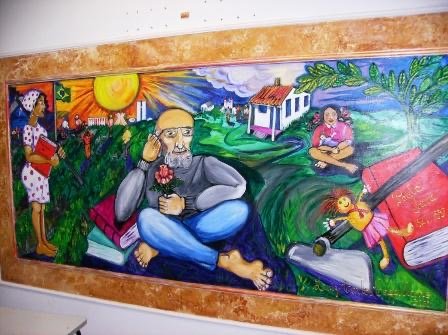
Paulo Freire
1921–1997 · Educator, philosopher
Pedagogy of the Oppressed (1968) is a book about literacy that is really about power. Freire argued that education is never neutral: it either domesticates or liberates. The "banking model" of education — in which knowledge is deposited into passive students — mirrors and reinforces social domination. The alternative, problem-posing education, begins from learners' own experience and treats them as subjects of their own learning, capable of reading their world before they read the word.
Freire's relevance to the AI commons is not metaphorical. If democratic ownership requires informed governance, then popular education — the capacity of ordinary people to understand, critique, and direct complex systems — is not a nice-to-have but a structural prerequisite. The adult education classroom is an organizing site for the commons, not just a skills pipeline.
Gar Alperovitz
b. 1936 · Political economist, historian
Alperovitz's America Beyond Capitalism (2005) and his concept of the Pluralist Commonwealth argue for systemic change through the democratization of wealth — not by seizing existing institutions but by building new ones that embody democratic ownership from the start. His work at the Democracy Collaborative helped design the Cleveland Model, connecting anchor institutions to worker cooperatives. He has mapped a landscape of existing democratic economic institutions — co-ops, land trusts, public banks, municipal enterprises — and argued that together they constitute the embryonic infrastructure of a post-capitalist economy already growing within the shell of the old.
Adrienne Maree Brown
b. 1978 · Writer, facilitator, organizer
Emergent Strategy (2017) draws on biomimicry, science fiction, and Black feminist organizing to argue that the patterns of the natural world — fractals, mycelial networks, adaptive systems — offer more useful models for social change than strategic plans and org charts. Brown insists that how movements organize internally prefigures the world they are trying to build: if the process is hierarchical, the outcome will be hierarchical, regardless of the stated goals.
For the commons, Brown's work is a corrective to the technocratic fantasy that democratic ownership can be designed by engineers and implemented by smart contracts. The commons is a practice, not a protocol. It has to be lived before it can be scaled.
Abdullah Öcalan & the Rojava Experiment
b. 1949 · Political theorist · Autonomous Administration of North and East Syria, est. 2012
Öcalan, the imprisoned Kurdish leader, developed the theory of democratic confederalism — largely drawn from Bookchin — while in solitary confinement. His ideas became the governing framework of Rojava, the autonomous region of northern Syria, where a multi-ethnic population of several million has built a system of nested councils, gender-equal governance (every leadership position is co-held by a woman and a man), and cooperative economics in the middle of a civil war. Rojava is not a utopia — it exists under siege, bombardment, and embargo — but it is the most ambitious living experiment in Bookchin's vision of direct democratic governance.
· · · · ·
"In the gift economy, wealth is not a thing, it is a web of relationships."
— Robin Wall Kimmerer, Braiding Sweetgrass (2013)
Robin Wall Kimmerer
b. 1953 · Botanist, writer · Citizen Potawatomi Nation
Braiding Sweetgrass weaves Potawatomi traditional knowledge and Western plant science into an argument for what Kimmerer calls a "grammar of animacy" — a way of speaking about the natural world that treats other beings as subjects, as givers, rather than as objects available for extraction. Her concept of the Honorable Harvest — take only what you need, ask permission, give thanks, reciprocate the gift — is a governance framework for the commons that predates Ostrom by millennia.
Kimmerer's work challenges the entire framing of the AI commons debate. If intelligence is treated as a resource to be extracted and distributed, the argument has already been lost. The question is not "who gets how much?" but "what do we owe to the web of knowledge, culture, and language from which this intelligence emerged?"
Vandana Shiva
b. 1952 · Physicist, activist
Shiva's decades of work on seed sovereignty, water rights, and biopiracy constitute one of the most sustained arguments against the enclosure of the biological commons. Her concept of Earth Democracy insists that living systems — seeds, water, genetic knowledge — cannot be owned. When corporations patent seeds developed over thousands of years by farming communities, they are not innovating; they are stealing. Shiva's organization Navdanya has built a network of community seed banks across India, preserving and sharing indigenous seed varieties outside the patent system.
The parallel to AI is direct: language models trained on the collective linguistic output of humanity are analogous to corporate patents on seeds developed through millennia of communal cultivation. The enclosure is structurally identical.
Buen Vivir / Sumak Kawsay
Andean indigenous philosophy · Constitutionalized in Ecuador (2008) and Bolivia (2009)
Buen vivir — "good living" or "living well" — is a Quechua and Aymara concept that defines well-being not as individual accumulation but as harmony between human communities and the natural world. Ecuador's 2008 constitution, shaped by indigenous movements, enshrined the rights of nature (Pachamama) as constitutional law and adopted buen vivir as its development framework, explicitly rejecting GDP-based growth as a measure of progress.
As a framework for abundance, buen vivir asks a question that neither the redistribution camp nor the ownership camp typically asks: abundance of what? If the answer is "of commodities," then the commons has already been enclosed conceptually. Buen vivir insists that abundance is relational — a quality of connection, not a quantity of output.
Frantz Fanon
1925–1961 · Psychiatrist, revolutionary theorist
The Wretched of the Earth (1961) argued that decolonization is not reform but the creation of genuinely new social relations. Fanon warned that a nationalist bourgeoisie would simply replace the colonial power if political independence wasn't accompanied by the radical redistribution of land, wealth, and decision-making power. He called for a "new humanity" — not a transfer of ownership within existing structures but the invention of structures adequate to human dignity.
Fanon's warning about the nationalist bourgeoisie applies with uncomfortable precision to the "AI sovereignty" movement, which often means transferring control of AI from one set of elites to another while leaving the underlying power structure intact.
· · · · ·
"If nature has made any one thing less susceptible than all others of exclusive property, it is the action of the thinking power called an idea."
— Thomas Jefferson, letter to Isaac McPherson (1813)
Yochai Benkler
b. 1964 · Legal scholar
The Wealth of Networks (2006) described what Benkler called commons-based peer production — the organizational logic behind Wikipedia, Linux, and open-source software. Benkler argued that networked digital infrastructure makes it possible for large numbers of people to collaborate on complex projects without markets or managerial hierarchies, and that this mode of production is often more innovative and efficient than either. The key condition is that the resource must be open: shared infrastructure enables distributed contribution.
Benkler's framework asks the essential question about AI: is it a product (owned by whoever built it) or an infrastructure (which, like the internet itself, produces more value when shared)? History suggests that treating intelligence as infrastructure rather than product would generate more abundance — but it would distribute the benefits differently than Silicon Valley prefers.
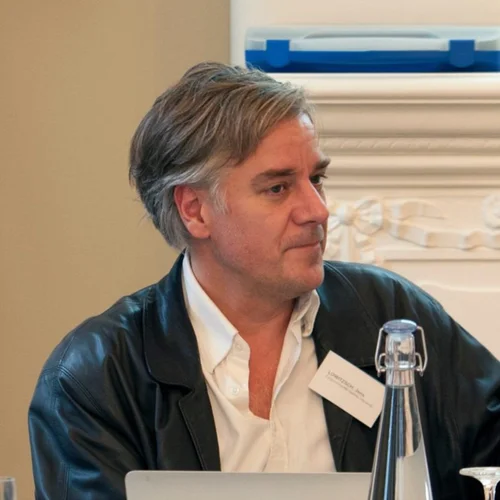
Lawrence Lessig
b. 1961 · Legal scholar
Lessig co-founded Creative Commons and wrote Code and Other Laws of Cyberspace (1999), which demonstrated that in digital environments, architecture is law — the code that builds a platform determines what users can and cannot do more effectively than any statute. Lessig's insight that "code is law" means that the design of AI systems — not just their regulation — determines whether they function as commons or as enclosures. A model trained on open data but deployed behind an API paywall is an act of enclosure at the architectural level, regardless of what the terms of service say.
Trebor Scholz
b. 1964 · Scholar-activist
Scholz coined the term platform cooperativism and built an international movement around it. His argument is that the gig economy's extractive platforms — Uber, TaskRabbit, DoorDash — can be rebuilt as cooperatives owned and governed by the workers and users who create their value. Through the Platform Cooperativism Consortium at The New School, Scholz has supported the development of dozens of cooperative platforms worldwide, from taxi cooperatives in India to freelance marketplaces in Europe.
Scholz's work is the most direct precursor to what The People's Share argues about AI: the technology is not the problem; the ownership structure is. The same infrastructure that enables extraction can enable democratic ownership — if the people who produce the value are the ones who hold the keys.
Aaron Benanav
b. 1986 · Economic historian
Automation and the Future of Work (2020) punctured the myth of imminent technological unemployment, arguing that the real problem is not robots replacing workers but chronic overcapacity and stagnating demand in the global economy. Benanav contends that proposals like UBI treat the symptoms while leaving the disease — private ownership of productive capacity — untouched. His alternative is democratic control of investment and production, ensuring that technological capacity is directed toward meeting human needs rather than generating returns for shareholders.
Benanav is essential reading for anyone tempted by the "abundance is coming, we just need to distribute it" narrative. He shows that abundance is not a technical achievement waiting to be unlocked — it is a political relationship that must be constructed.
· · · · ·
"Today's economy is divisive by design. Tomorrow's economy must be distributive by design."
— Kate Raworth, Doughnut Economics (2017)
Kate Raworth
b. 1970 · Economist
Raworth's Doughnut — a visual framework showing the safe operating space between a social foundation (below which people lack essentials) and an ecological ceiling (above which planetary systems collapse) — has been adopted by Amsterdam, Brussels, and dozens of cities as an alternative to GDP growth. Her argument is not merely that growth should be "inclusive" but that the economy should be redesigned from the ground up to distribute wealth through its basic structure: through commons, cooperatives, public ownership, and community land trusts, rather than through after-the-fact redistribution.
Raworth asks the design question that AI discourse almost never asks: what would an economy look like if it were built to share, rather than built to concentrate and then corrected by policy?
David Bollier
b. 1953 · Commons scholar, activist
Bollier has spent decades developing the idea of commoning — the verb, not the noun. The commons, in his account, is not a thing (a resource, a piece of land, a dataset) but a social practice: a community managing a shared resource through negotiated rules and mutual obligation. This distinction matters enormously. If the commons is a thing, it can be enclosed, privatized, or managed by technocrats. If it is a practice, it exists only as long as people continue to do it together. Bollier's work with the Commons Strategies Group has documented commons-based governance of everything from fisheries to seed libraries to open-source hardware.
Marjorie Kelly
Writer, senior fellow at the Democracy Collaborative
Kelly's Owning Our Future (2012) distinguishes between extractive ownership — designed to maximize returns to absentee shareholders — and generative ownership — designed to create conditions for life. She identifies five design patterns of generative ownership: rooted mission, stakeholder governance, social architecture, ethical finance, and commons-based resource management. Her framework provides a practical design vocabulary for building institutions that share wealth structurally rather than redistribute it after the fact.
The Abundance Accelerator
UC Berkeley Possibility Lab · Est. 2023 · Led by Amy E. Lerman
The Abundance Accelerator begins where policy should begin: with people's actual lives. A 2024 survey of more than 8,000 Californians found that over half struggled to access basic goods and services. In response, the Lab identified twelve "human essentials" — housing, food, water, energy, healthcare, childcare, eldercare, education, employment, transportation, safety, and digital connectivity — and commissioned a research consortium of experts across the state to develop an evidence-based policy agenda for expanding supply of each. Their work has focused on removing regulatory barriers, local veto points, and institutional bottlenecks that create artificial scarcity in a wealthy state. They call themselves "data-driven idealists" and root their approach in community-based decision-making, drawing on earlier Possibility Lab projects in public safety and farmworker health.
The Abundance Accelerator is a bridge — and a useful one. It demonstrates that scarcity is manufactured, not natural, and that serious policy research can start from human needs rather than market logic. Where it stops short, and where projects like this one pick up, is the ownership question. The Accelerator asks how to build more housing; it does not yet ask who owns the housing that gets built. It asks how to expand childcare; it does not yet ask whether the childcare workers govern the institutions they sustain. The supply-side insight is real and necessary. But supply without democratic ownership is construction without foundation — and the thinkers elsewhere in this guide, from Raworth to Alperovitz to the builders of the Cleveland Model, show what it looks like to ask both questions at once.
· · · · ·
"We don't have any bosses or shareholders. We, the employees, set the direction of the business."
— Suma Wholefoods, Elland, West Yorkshire
Mondragón Corporation
Basque Country, Spain · Est. 1956 · ~80,000 workers
The world's largest federation of worker cooperatives, founded by a Catholic priest named José María Arizmendiarrieta in a town devastated by the Spanish Civil War. Mondragón now encompasses over 80 cooperatives in finance, industry, retail, and education, including its own university and bank. Its pay ratio between the highest- and lowest-paid workers is capped (typically 6:1, compared to 300:1 or higher at major U.S. corporations). Worker-owners vote on major decisions, elect management, and share profits.
Mondragón's great tension — and its great lesson — is the strain between democratic governance and global competition. Several of its industrial cooperatives operate subsidiaries abroad that are not cooperatively owned, creating a two-tier workforce. This is the scaling contradiction that every democratic ownership project must eventually face: can the commons survive integration into markets that don't share its values?
Cooperative Home Care Associates (CHCA)
Bronx, New York · Est. 1985 · ~2,000 workers
The largest worker-owned cooperative in the United States. Nearly all of its workforce — home health aides providing care across New York City — are Latina and African-American women. CHCA was founded with twelve workers and a dual mission: quality care through quality jobs. It runs a free training program for 600 unemployed women annually, guaranteeing jobs to graduates. In 2003, it unionized with SEIU Local 1199, combining worker ownership with collective bargaining — an unusual and sophisticated layering of worker power.
CHCA is the answer to anyone who says cooperative ownership is a model for boutique industries staffed by the already-privileged. It operates at the intersection of race, gender, care work, and poverty in one of the poorest congressional districts in America, and it works.
Uralungal Labour Contract Cooperative Society (ULCCS)
Kerala, India · Est. 1925 · ~18,000 workers
A century old in 2025, ULCCS was founded by fourteen workers from oppressed castes following the social reformer Vagbhatananda, who told them to answer economic exclusion with self-organization. It began with fence-building and well-digging. Today it builds national highways and bridges, runs India's first cooperative-owned IT park (UL CyberPark), and has annual revenue of $300 million. The Kerala Chief Minister has called it "a people's alternative to the capitalist, corporate development model."
ULCCS matters because it demonstrates that worker cooperatives can compete at industrial scale — winning national infrastructure contracts against multinational corporations — while also running night schools at worksites, integrating migrant workers, and leading disaster relief. The cooperative is not just an economic structure; it is a civic institution.
Suma Wholefoods
Elland, West Yorkshire, UK · Est. 1977 · ~300 workers
Europe's largest equal-wage workers' cooperative. Completely flat management structure: no bosses, no hierarchy, everyone earns the same wage. Workers rotate through roles — the truck driver is also the accountant and the product developer. Suma is the UK's largest independent wholefood wholesaler, distributing over 7,000 products on its own fleet of trucks. It has operated this way for nearly fifty years.
Suma is proof of concept for radical internal democracy at commercial scale. When someone says "that can't work," Suma has been working since 1977.
John Lewis Partnership
United Kingdom · Est. 1929 · ~70,000 "Partners"
The UK's largest employee-owned business. All shares are held permanently in trust on behalf of employees — "Partners" — who receive annual profit-sharing bonuses and participate in governance through an elected Partnership Council. The structure was designed for permanence: John Spedan Lewis's 1929 trust settlement was irrevocable, intended to ensure employee ownership across generations. The constitutional principle is the sharing of "knowledge, gain, and power."
John Lewis is currently under stress: years of losses have led the board to consider outside investors for the first time, which would dilute the employee ownership model. The partnership council — sixty elected members — would have to approve. They rejected a similar proposal in 1999. This is a live test of whether democratic governance structures can withstand sustained financial pressure, and the outcome matters for every trust-based ownership model in the world.
The Cleveland Model / Evergreen Cooperatives
Cleveland, Ohio · Est. 2008
After losing half its population and most of its corporations to deindustrialization, Cleveland still had its hospitals and universities — anchor institutions spending $3 billion a year, almost none of it locally. The Democracy Collaborative worked with these anchors to redirect procurement toward a network of intentionally created green worker cooperatives: a commercial laundry serving hospitals, a solar energy installer, a hydroponic greenhouse producing lettuce and basil on ten acres in the city center. The cooperatives are profitable and are displacing multinational service contractors.
The model has been replicated in Preston, England — the "Preston Model" — and elsewhere. Its core insight is that democratic wealth can be built not by inventing new capital but by redirecting institutional spending that already exists. The anchor doesn't need to be a hospital. It could be a public university, a transit authority, or a public AI infrastructure.
Farmerline & SOLshare
Ghana · Bangladesh
Farmerline pools data from Ghanaian smallholder farmers to negotiate better market rates and provide agricultural insights — a cooperative data structure serving the people who produce the data. SOLshare in Bangladesh manages a decentralized peer-to-peer energy trading network, redistributing profits to rural communities. These are Global South models of cooperative data and resource governance that operate at the intersection of technology and communal ownership, without the blockchain fetishism of Western tech-utopian proposals.
· · · · ·
"The only thing that makes life possible is permanent, intolerable uncertainty; not knowing what comes next."
— Ursula K. Le Guin, The Left Hand of Darkness (1969)
Walt Whitman
1819–1892 · Poet
"I contain multitudes." Whitman's Leaves of Grass is the great poem of democratic abundance — the insistence that the self is not private property but a commons, that identity is formed in encounter with others, that the body is not separate from the body politic. His Democratic Vistas (1871) argued that American democracy would fail unless it developed a culture — a literature, an art, a way of seeing — adequate to its political promise. We have not yet built that culture. The People's Share is one attempt.
William Morris
1834–1896 · Designer, writer, socialist
News from Nowhere (1890) imagined a future England in which capitalism has been abolished, work is freely chosen and pleasurable, and the distinction between art and labor has dissolved. Morris refused the Victorian separation between beauty and justice: he insisted that an ugly society is an unjust society, that the degradation of work and the degradation of the physical world are the same crisis. His socialism was rooted not in economic theory but in craft — in the conviction that human beings need to make beautiful things with their hands, and that any system that prevents this is a system of domination.
Morris asks the question that the abundance discourse almost never asks: abundance of what kind of life?
Ursula K. Le Guin
1929–2018 · Novelist
The Dispossessed (1974) — subtitled "An Ambiguous Utopia" — imagined an anarchist society on a barren moon, founded by followers of a revolutionary named Odo. Le Guin did not sentimentalize it: the anarchist society develops its own conformisms, its own subtle hierarchies, its own ways of punishing those who think differently. The novel insists that freedom is not a state to be achieved but a practice to be renewed, and that every revolution carries within it the seeds of new oppressions. It is the most honest novel about the commons ever written.
Langston Hughes
1901–1967 · Poet
"I, too, sing America." Hughes insisted on Black presence in the democratic commons at a time when that commons was violently exclusionary. His poetry is a record of what it means to claim a share in a civilization that denies you personhood — and to do so not with a legal brief but with a blues stanza. His question — "What happens to a dream deferred?" — is the question The People's Share asks about technological abundance that never reaches the people who need it.
Pablo Neruda
1904–1973 · Poet, diplomat
Neruda's Canto General (1950) attempted to write the entire history of the Americas — from geological formation to political revolution — as a single poem. It is an act of radical inclusion: the poem belongs to the copper miners, the fishermen, the indigenous dead, the rivers. Neruda wrote it while in hiding from a dictatorship, smuggled it out of Chile in fragments. He understood that poetry is not a luxury but a commons — a shared language for naming what matters.
Adrienne Rich
1929–2012 · Poet, essayist
"A wild patience has taken me this far." Rich's work traces the arc from private lyric to public commitment — from the carefully crafted early poems through the shattering political awakening of the late 1960s and beyond. She wrote about the commons not as an abstraction but as the refusal to accept that any part of human experience is someone else's business. Her 1997 refusal of the National Medal of Arts — on the grounds that art must not be used to legitimate a government that neglects its people — was itself an act of commoning: a public artist insisting that public honor requires public accountability.
Octavia Butler
1947–2006 · Novelist
The Parable novels — Parable of the Sower (1993) and Parable of the Talents (1998) — imagined a near-future America collapsed by climate change, inequality, and authoritarian religion. The protagonist, Lauren Olamina, founds a community called Acorn and a philosophy called Earthseed: "God is Change." Butler's genius was to imagine not a perfected commons but a struggling one — a community that fails, is destroyed, rebuilds, and endures. She understood that the commons is not a destination but a practice of survival, undertaken by people who have no other choice.
· · · · ·
This field guide is incomplete by design. The commons is not a canon but a conversation — one that includes voices not yet heard, models not yet built, arguments not yet made. What these thinkers and builders share is not a program but a conviction: that the wealth produced by human cooperation belongs to the humans who cooperate, and that the structures through which that wealth is governed must be as democratic as the civilization we claim to be.
The arrival of artificial intelligence — trained on the common inheritance of human language, culture, and knowledge — makes this conviction not merely idealistic but urgent. The question is no longer theoretical. The commons is being enclosed in real time, at planetary scale, by a handful of corporations whose business model depends on treating shared human intelligence as raw material. The thinkers and builders gathered here have been answering that enclosure for centuries. The technology is new. The argument is very old.
The coral reef, not the payment splitter.