Ideologues & Operators of Enclosure
The technology described in Part I is not developing in a political vacuum, and the alternative described in Parts II and III is not foreclosed by technical necessity but by political project. Part IV names the project.
The figures in this section are not interchangeable, and the document's discipline requires holding the distinctions in view. The ideologues supply doctrine, often through texts that have been public for over a decade and that name their political program directly. The operators build the infrastructure and staff the policy positions — sometimes the same individuals who funded the ideologues, sometimes their political opponents whose monopolizing methods produce convergent enclosure regardless of stated alignment. The state actors deploy the resulting capability through the apparatus of governance, in regimes ranging from explicit autocracy to nominal democracy, and increasingly through alliances that crosscut conventional geopolitical rivalries.
The receipts in Part IV are direct quotations and signed manifestos. Where possible, the figures convict themselves.
i.The Ideologues
These figures articulated the political program. Their texts are public. Their followers include the people now staffing federal agencies under the second Trump administration. The argument that AI consolidation requires an explicit political project — not merely a market dynamic but an ideological one — depends on the work this subsection documents.
Peter Thiel
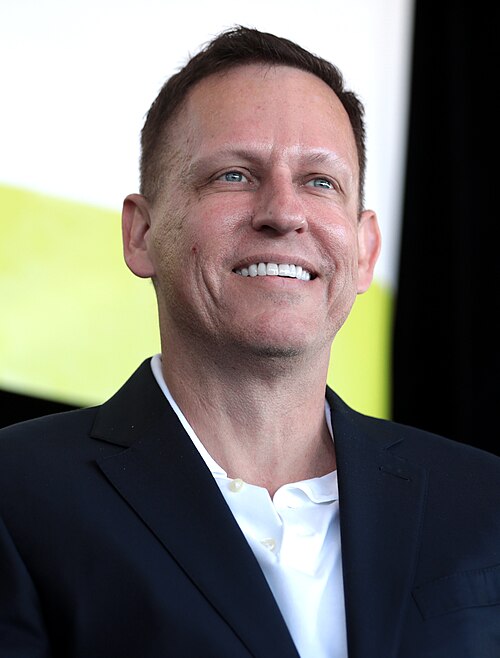
Co-founder of PayPal, Palantir Technologies, and Founders Fund. Thiel's political position is not inferred from his investments; he has stated it directly. In The Education of a Libertarian, his lead essay for Cato Unbound published April 13, 2009, he wrote:
"I no longer believe that freedom and democracy are compatible."— Peter Thiel, Cato Unbound, April 13, 2009
His 2014 book Zero to One argues that "competition is for losers" and that the goal of a founder should be to build an uncontested monopoly. He has funded the political careers of figures including JD Vance, Blake Masters, and Josh Hawley, and he financed the litigation that bankrupted Gawker. Palantir, the firm he co-founded with Alex Karp, supplies data infrastructure to US intelligence agencies, ICE, and an expanding list of federal departments under the second Trump administration. Thiel is the figure who has done the most to translate Silicon Valley capital into an anti-democratic political project, and the project is no longer subtextual.
Marc Andreessen
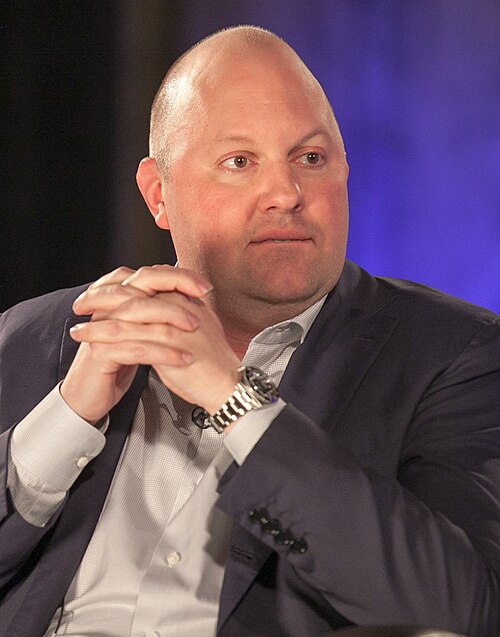
Co-founder of Netscape and co-founder of Andreessen Horowitz (a16z), among the most powerful venture capital firms in the world. His Techno-Optimist Manifesto, published October 16, 2023 on the a16z site and his personal Substack, names "trust and safety," "tech ethics," "sustainability," and "social responsibility" as enemies of progress. The essay is not metaphor; it is a list. Andreessen has positioned a16z as the principal venture firm aligned with the second Trump administration on AI policy, has publicly endorsed accelerationist and neoreactionary thinkers including Curtis Yarvin and Nick Land, and has used the firm's media operation to mainstream positions that were marginal five years ago. Andreessen does not hold a formal, Senate-confirmed administration title. He has functioned during the transition period and early administration cycle in an informal but substantive advisory role, including recruiting, vetting, and interviewing candidates for tech, defense, and intelligence positions at Mar-a-Lago. The informal status is itself the point: the channel from venture-capital ideology to federal personnel decisions does not require Senate confirmation, public hearings, or any of the democratic procedures that the figures Andreessen helps place have argued should be bypassed.
Curtis Yarvin
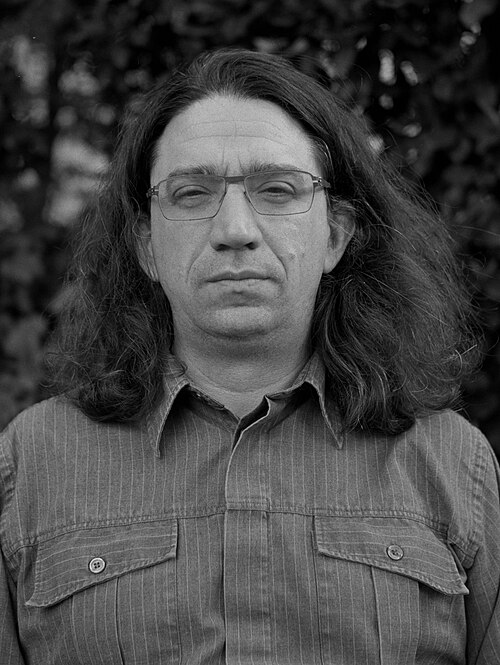
Software engineer turned political theorist, writing first under the pseudonym Mencius Moldbug. Yarvin's "neoreactionary" project proposes replacing democratic government with a unitary executive — what he has called a "CEO-king" or "monarch" — and dismantling the administrative state through what he labels "RAGE": Retire All Government Employees. His readership is small but strategically placed: he has been cited approvingly by JD Vance, advised by Andreessen and Thiel, and his framework of "the cathedral" — his term for the alleged ideological alliance of universities, media, and the civil service — has become standard vocabulary in the current administration's intellectual circles. Readers may not have encountered the name. They are encountering the implementation.
Balaji Srinivasan
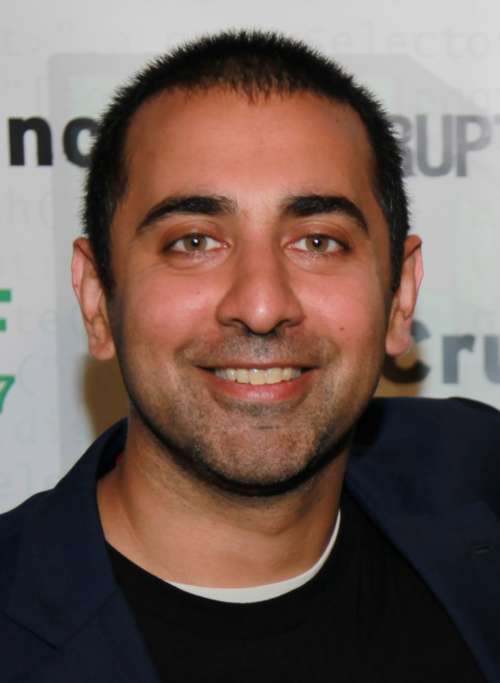
Former CTO of Coinbase and former General Partner at a16z, author of The Network State (2022), which proposes that crypto-funded, ideologically homogeneous online communities should acquire physical territory and eventually achieve diplomatic recognition as sovereign entities — exit from democratic nation-states rather than reform of them. The project sounds eccentric until you notice the funding behind it and the overlap with the broader Thiel-Andreessen network. Seasteading, charter cities, "freedom cities" proposed in the second Trump administration's executive orders — these are not separate ideas but a single intellectual lineage.
Nick Land
British philosopher associated with the original Cybernetic Culture Research Unit at Warwick, Land developed the philosophical framework — "Dark Enlightenment," accelerationism — that Yarvin politicized and Andreessen popularized. His work argues that capitalism and technological development are self-intensifying processes that should be accelerated past democratic constraints rather than restrained by them. The lineage runs Land → Yarvin → Andreessen → administration policy, and the rhetoric current officials use is downstream of texts most of those officials have not read but that their advisors have.
ii.The Operators
These figures translate the ideology into infrastructure, capital, and personnel. They sit on multiple boards, fund multiple campaigns, build the data systems that state agencies rely on, and increasingly hold formal positions inside government. They are not the same as the ideologues — some are political opponents of Thiel and Andreessen — but the technofeudalism critique applies regardless of stated alignment, because the structural effect of platform monopoly is the same across rhetorical wrappers.
Elon Musk
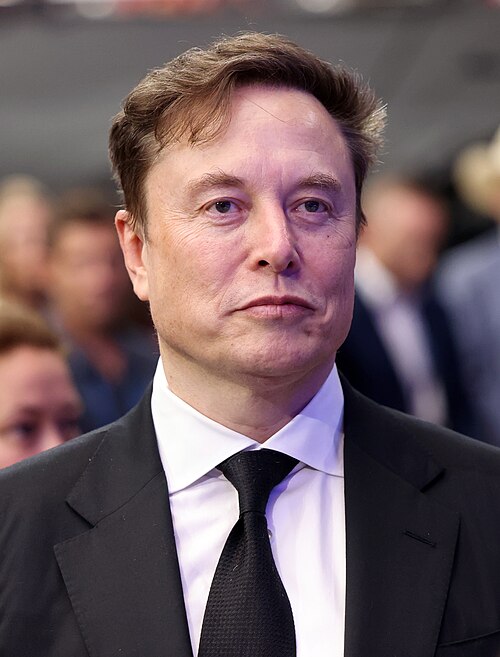
Already named in Part I as an acceleration figure; here named for what is structurally distinct. Musk's holdings now constitute critical infrastructure that state actors depend on: Starlink for military communications in Ukraine and elsewhere, X as a primary global political-discourse channel, Tesla's Optimus program as the leading edge of physical AI deployment, xAI as a frontier model competitor. His 2022 acquisition of X and his subsequent role in the second Trump administration — initially through DOGE, with continuing influence on federal AI procurement — represent the most direct fusion of private digital infrastructure ownership with state power in US history. The consolidation has since completed its arc: X was folded into xAI in March 2025, and in February 2026 SpaceX acquired xAI whole — an all-stock combination valued around a trillion and a quarter dollars, uniting the rockets, the Starlink mesh, the discourse platform, and the frontier lab under one founder ahead of a public listing. The stated rationale was the material constraint this document meters: Musk's own memo conceded that terrestrial power and cooling cannot meet AI's demand "without imposing hardship on communities and the environment," and offered orbital data centers as the exit. The phrase sovereign CEO is not hyperbole; it describes the operational reality — a sovereign now proposing to move the infrastructure off-planet, beyond the grid and beyond the jurisdictions that meter it. The contradiction with his earlier AI-safety positioning is not a hypocrisy to be exposed but the central fact of his political role.
Reid Hoffman
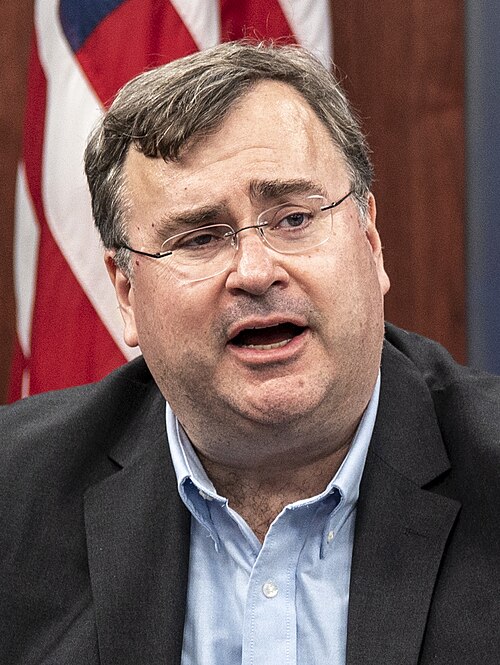
Co-founder of LinkedIn, former COO of PayPal, and the Democratic Party's largest tech-sector donor through the 2024 election cycle. Hoffman is included here not as equivalent to Thiel and Andreessen — his political alignments are genuinely opposed to theirs — but because the technofeudalism critique applies regardless of party. His Blitzscaling doctrine (Stanford course, 2018 book) instructs founders to prioritize aggressive market capture over sustainability, profitability, or social externalities, on the explicit logic that network effects mean the first firm to total dominance wins everything. The doctrine produces enclosure regardless of whether its practitioners vote Democratic or Republican. Naming Hoffman in this section is the document's commitment to analytic honesty: the enclosure question is structural, not partisan, and pretending the Democratic tech billionaires are on the side of democratic ownership would be a category error.
Larry Ellison
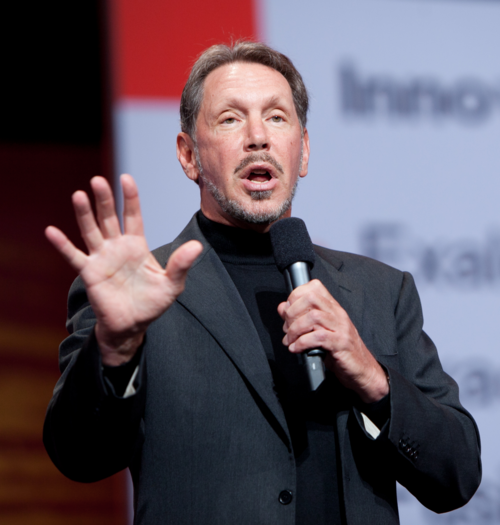
Co-founder and chairman of Oracle, longtime federal contractor, and a central figure in the Stargate Project announced in January 2025 — a SoftBank-, OpenAI-, and MGX-backed AI supercomputer initiative carrying an initial $100 billion investment phase and a $500 billion master plan, with Oracle as principal infrastructure partner. At the Oracle Financial Analyst Meeting on September 12, 2024, Ellison described a future of real-time AI-monitored police body cameras and security feeds in which, in his words:
"Citizens will be on their best behavior because we are constantly recording and reporting everything that's going on."— Larry Ellison, Oracle Financial Analyst Meeting, September 12, 2024
The first-person plural pronoun is the receipt. Most operators of surveillance infrastructure decline to articulate the disciplinary function; Ellison has not, and he has named Oracle's position in it.
Masayoshi Son
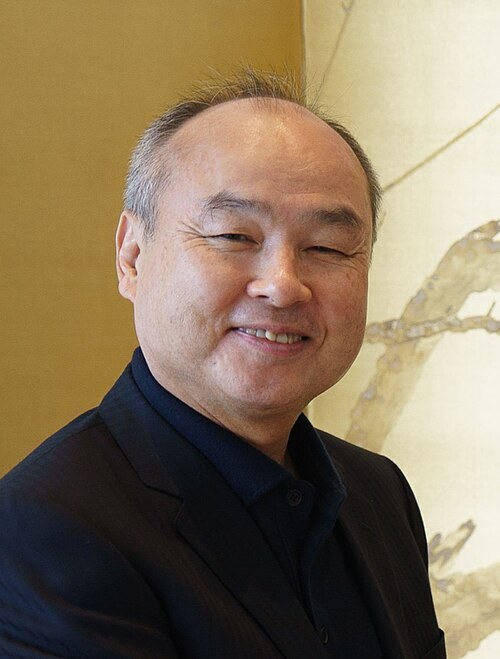
Chairman and CEO of SoftBank, and chairman of the Stargate Project — the joint venture of OpenAI, SoftBank, Oracle, and Abu Dhabi's MGX announced from the White House on the second day of the second Trump administration, committing one hundred billion dollars immediately and up to five hundred billion by 2029. The division of labor is explicit: OpenAI operates, Oracle builds, MGX supplies sovereign capital, and Son finances. He has spent three decades demonstrating that capital at sufficient scale is itself a strategy — the twenty-million-dollar Alibaba stake that became one of the largest returns in investing history, the hundred-billion-dollar Vision Fund that taught an industry to price ambition rather than revenue, WeWork as the cautionary receipt. Stargate applies the method to the material base of AI: by the end of 2025 SoftBank had completed roughly forty-one billion dollars of investment in OpenAI for approximately an eleven percent stake, the flagship Abilene campus was partially operational, five further US sites had been named, and the platform claimed nearly seven gigawatts of planned capacity — even as reporting through early 2026 described the joint venture's own governance as unsettled while the buildout proceeded through bilateral contracts. Son supplies no doctrine; the ideologues do that. His significance is that he is constructing, at the greatest speed capital allows, the very premise this document's counter-example disputes: that the frontier belongs to whoever can finance ten gigawatts. What Liang Wenfeng gives away, Son is spending half a trillion dollars to enclose.
Sheikh Tahnoon bin Zayed
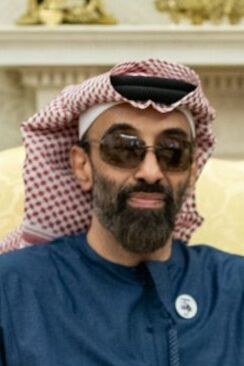
National security adviser of the United Arab Emirates, deputy ruler of Abu Dhabi, full brother of the president — and chairman of both G42, the Emirati AI champion he controls, and MGX, the state AI investment vehicle established in 2024 with a target of one hundred billion dollars under management. The double portfolio is the entry: one man holds the state's intelligence apparatus and its AI capital in the same pair of hands, and no figure in this document fuses the two so completely. The receipts run in sequence. In 2024, after G42 shed its Chinese partnerships under American pressure, Microsoft put a billion and a half dollars into the company and its president joined the board; MGX took a position in OpenAI's record round and stands as a founding partner of Stargate. In May 2025 came the reciprocal: Stargate UAE, a G42-led campus with its first two hundred megawatts due in 2026, and an American pledge of as many as half a million advanced AI chips a year to the Emirates — the launch photograph places Tahnoon beside the president of the UAE, Altman, Huang, and Son in a single frame. In the same season, MGX made a two-billion-dollar investment in the exchange Binance settled in USD1, the stablecoin issued by the sitting American president's family venture — Gulf sovereign AI capital moving through the president's family's own till. Part IV's argument is that the consolidation crosscuts conventional rivalries, and Tahnoon is where the lines visibly meet: an export-control regime that denies chips to adversaries grants them by the hundred thousand to the security chief of a client monarchy, so long as the capital flows back through Abilene.
David Sacks
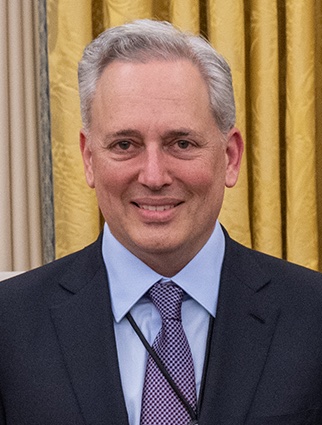
Member of the original PayPal Mafia, venture capitalist at Craft Ventures, host of the All-In podcast (one of the highest-reach political-economy podcasts in the US), and, as of the second Trump administration, the formally appointed White House AI and Crypto Czar — a newly created executive position. Sacks served in that role as a Special Government Employee until late March 2026, when his statutory 130 days ran out and he moved to co-chair the President’s Council of Advisors on Science and Technology — a body whose initial fifteen members include Huang, Zuckerberg, Ellison, Brin, Andreessen, Su, and Dell: built almost entirely from the executive suites of the companies it advises on — alongside launching a hundred-million-dollar outside group to push the agenda free of government ethics constraints. Sacks's position is partly ideological — he uses the podcast platform to mainstream Thiel-Andreessen positions for a broader audience — and partly operational, shaping federal AI policy from inside the administration. The pipeline from Silicon Valley venture capital to formal federal policy office, with no intervening democratic process, is itself the point. The owners of AI, seated where the governance of AI is decided — a seat at the table means nothing when the table was built by and for the owners.
Emil Michael
Under Secretary of Defense for Research and Engineering — the Pentagon’s chief technology officer, appointed at the administration’s start to make the renamed Department of War an “AI-first” organization. The résumé is the Valley-to-power arc in miniature: Harvard, Stanford Law, Goldman, Tellme Networks, Uber. The Anthropic conflict is his case study: when the company refused to remove safety constraints that would have enabled mass surveillance and autonomous targeting, Michael led the campaign to blacklist it — a “chosen winner” of the previous administration, he said, trying to “get in between the command structure and the warfighter” — and the government designated the company a “supply chain risk,” a classification previously reserved for entities controlled by foreign adversaries, with a six-month phaseout ordered across the government. His public rhetoric is velocity worship: “Speed defines victory in the AI era.” The entry belongs here because it completes the operators’ circuit: when AI ownership is private and democratic governance absent, the state’s only relationship to the technology is as a customer bending it to military purpose — punishing refusal, and leaving the public voiceless either way.
Joe Lonsdale
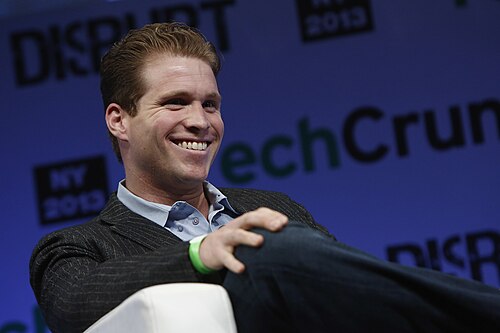
Co-founder of Palantir alongside Thiel, founder of 8VC, and active in staffing the second Trump administration with personnel aligned with the Thiel-Andreessen network. Less publicly visible than the figures above but operationally central in translating ideological positioning into government personnel decisions.
Alex Karp
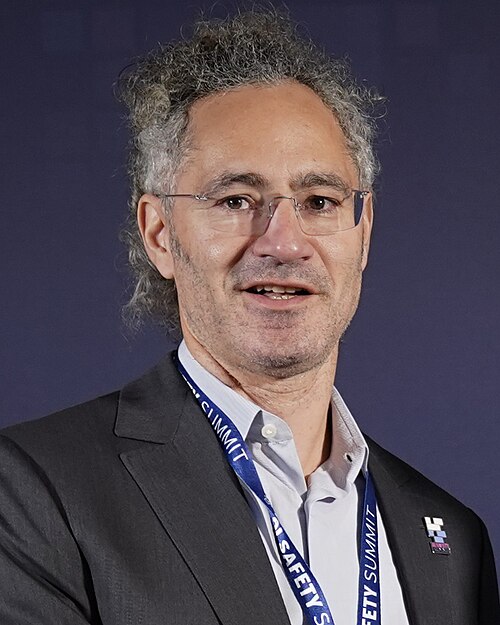
CEO of Palantir, the firm Thiel co-founded and the principal supplier of data infrastructure to US intelligence, ICE, and an expanding list of federal departments. Karp is not ideologically aligned with Thiel in any simple sense — he is a self-described social democrat, vocally pro-Israel, idiosyncratic in his political statements — but Palantir's infrastructure is now embedded in the operational core of the US security state regardless of its CEO's stated views. His July 2024 New York Times op-ed and his 2025 book The Technological Republic (with Nicholas Zamiska) argue that Silicon Valley has a patriotic obligation to build for the US military and intelligence services. The position is coherent; it is also the operational rationale for the consolidation Part IV describes.
iii.The State Actors
These figures deploy the consolidation through the apparatus of state power. They are not interchangeable — Xi and Trump are geopolitical rivals, MBS and Modi pursue distinct projects — but each is structurally implicated in concentrating AI capability and AI-enabled state capacity inside political systems that range from explicit autocracy to nominal democracy. The US–China AI rivalry is the geopolitical superstructure inside which the consolidation is conducted, and that rivalry is routinely invoked to justify it.
Donald Trump
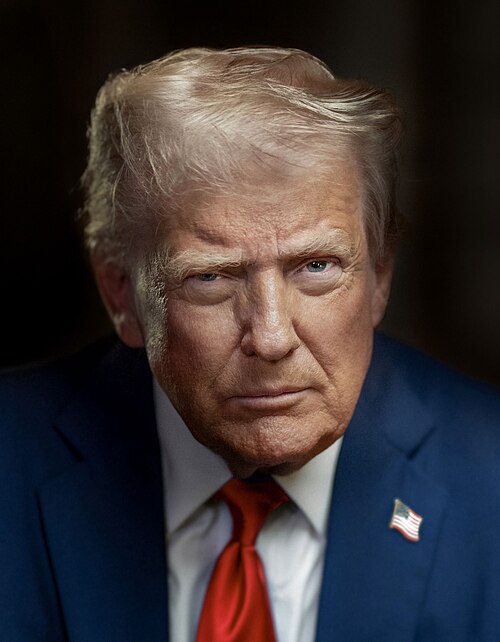
President of the United States as of January 2025. The current administration's relationship with the AI consolidation is direct rather than mediated: Sacks at AI and Crypto policy, Musk's continuing influence on federal AI procurement, the Stargate announcement, executive orders rescinding the Biden-era AI safety framework, "freedom cities" and deregulatory zones proposed in administration policy documents. The administration represents the first US government in which the Thiel-Andreessen network is positioned not as outside influence but as governing coalition. Readers will recognize the daily details; the document's contribution is to connect them to the longer arc.
JD Vance
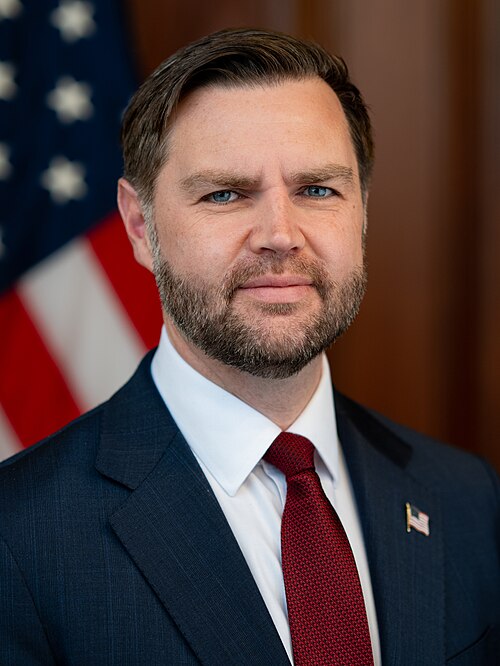
Vice President of the United States, formerly funded politically by Thiel, intellectually formed in part by Yarvin and the broader neoreactionary network, and the administration figure most explicitly aligned with the ideological project Part IV describes. His public statements about Europe (the 2025 Munich speech), about administrative-state employees, and about democratic legitimacy are not idiosyncratic; they articulate positions the network has been developing for fifteen years.
Xi Jinping
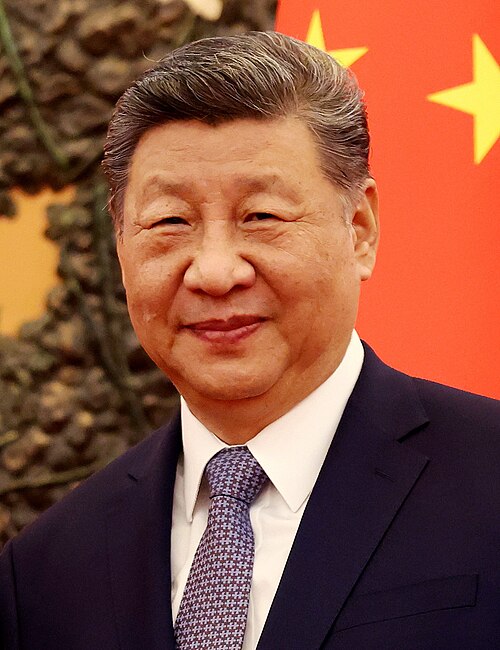
General Secretary of the Chinese Communist Party. The PRC's AI program is the principal geopolitical counterweight to US frontier development, structured around state-directed investment in firms including DeepSeek, Baidu, Alibaba, and a constellation of national champions. The Chinese model represents a different configuration of AI consolidation — state ownership rather than oligarchic capture, social credit infrastructure rather than private surveillance markets — but the concentration is structurally analogous. The US–China AI rivalry is the geopolitical superstructure inside which the consolidation Part IV describes is conducted, and that rivalry is routinely invoked to justify the consolidation: we cannot afford democratic deliberation, the argument runs, because the Chinese will win the race.
Mohammed bin Salman
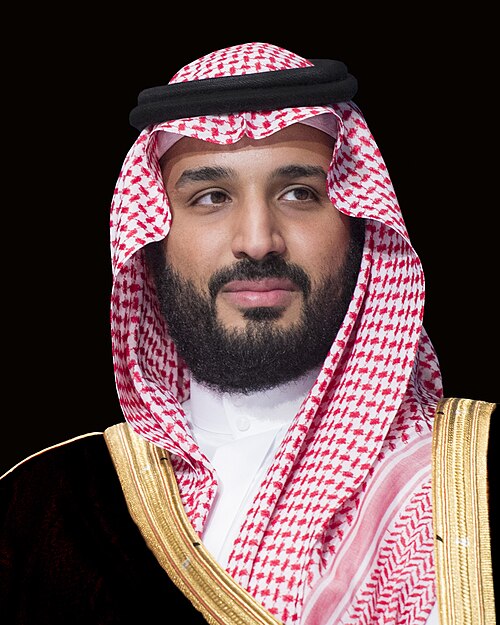
Crown Prince of Saudi Arabia and de facto ruler since 2017. Saudi sovereign wealth, channeled through the Public Investment Fund and its affiliates, is now among the largest sources of frontier AI investment globally — financing OpenAI partnerships, US data center construction, and the kingdom's own NEOM buildout. The hundred-billion-dollar ambition once reported as Project Transcendence now has an operating vehicle: HUMAIN, launched under the Public Investment Fund in May 2025 with the crown prince himself in the chairman's seat — a full-stack state AI champion with roughly twenty-three billion dollars in announced hardware agreements with NVIDIA, AMD, Qualcomm, and Cisco, a stated target of nearly two gigawatts of data-center capacity by 2030, and its own Arabic large language model. The sovereign does not merely fund the national AI company; he chairs it. Gulf sovereign wealth has become a principal financial circulatory system for frontier AI infrastructure on both sides of the Atlantic. The 2025 Trump–MBS announcement of substantial Saudi investment in US infrastructure including AI is the visible portion of a longer alignment.
Sheikh Mohamed bin Zayed
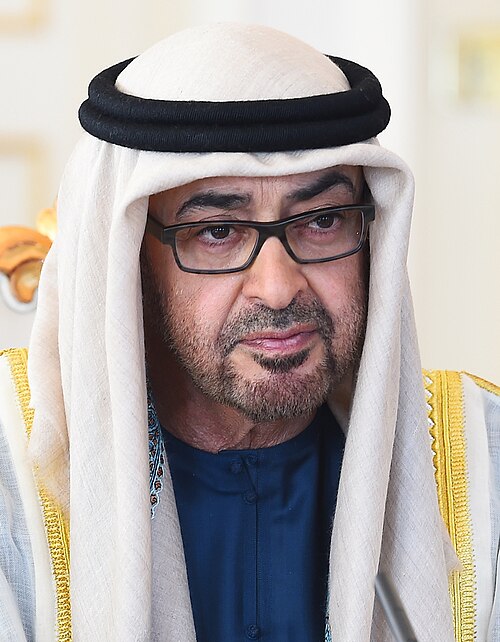
President of the UAE. The Emirates' G42 conglomerate and its partnerships with Microsoft and OpenAI position the UAE as the second Gulf node in the AI financing structure, with Mohamed bin Zayed playing a role functionally parallel to MBS's. The operational architecture of that role runs through his full brother, Sheikh Tahnoon bin Zayed, profiled among the operators above — the division between head of state and head of the AI-capital apparatus being, in this case, a division within one family.
Vladimir Putin
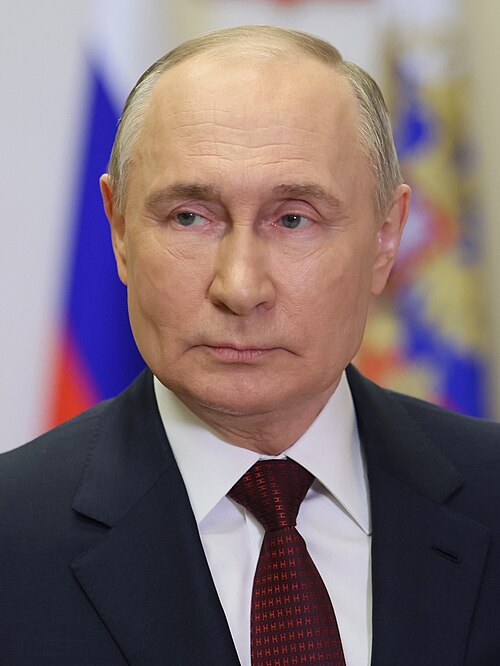
President of Russia. Russian AI development is less commercially competitive than Chinese or American but more aggressive in deployed information-environment operations. Putin's September 2017 statement to Russian students:
"Whoever becomes the leader in this sphere will become the ruler of the world."— Vladimir Putin, "Russia Focused on the Future" forum, Yaroslavl, September 1, 2017
remains the canonical articulation of the geopolitical framing the consolidation invokes.
Narendra Modi
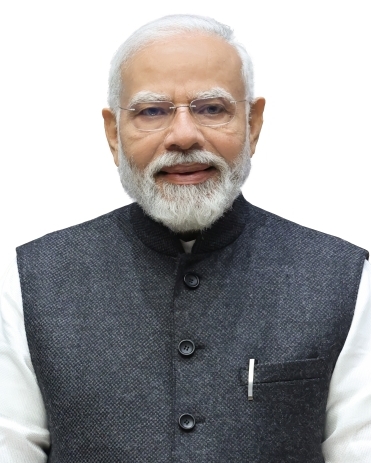
Prime Minister of India. India is the largest contested market in the global AI economy — too populous to ignore, not yet captured by either the US or Chinese model, with its own ambitions in foundation model development through the IndiaAI Mission. Modi's government's relationship with both US tech firms and a domestic Hindu-nationalist political project shapes how AI is being deployed inside the world's largest democracy, including documented use of facial recognition against political demonstrators.
Javier Milei
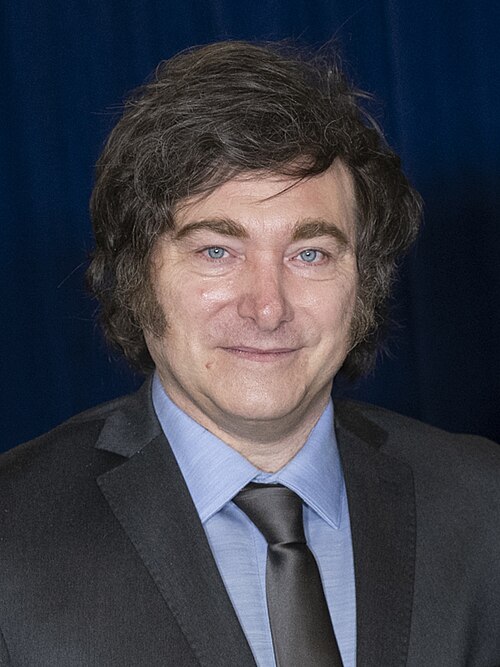
President of Argentina. Included not because Argentina is consequential to global AI development — it is not, at scale — but because Milei represents the clearest current case of an elected head of state explicitly aligned with the Thiel-Andreessen-Yarvin ideological project, governing on its terms, and being held up by the network as a proof of concept. His public friendship with Musk and the network's celebration of his administration are the visible signs of an internationalization that the document should name.
The figures in this section are not a single conspiracy. Thiel and Hoffman are political opponents on most domestic questions. Xi and Trump are geopolitical rivals. MBS and Modi pursue distinct projects. The ideologues, the operators, and the state actors do not coordinate from a single room. What they share is a structural relationship to AI as the principal technology of the coming decade — and a willingness, in some cases an explicit program, to organize political power around its concentration rather than its distribution.
The Autotroph argument is that this concentration is not the necessary form of the technology. The cooperatives in Part III demonstrate that it is not the necessary form of productive infrastructure at all. The work this reader is built to support is the work of recognizing what is being consolidated, who is consolidating it, and what alternative is already operating — at scale, in dozens of countries, for decades.
The reader is in the middle. The reader gets to choose.