What this guide is for
This guide is about two processes that happen inside living cells. Photosynthesis is the way plants use the energy of sunlight to make sugar. Cellular respiration is the way living cells break that sugar down to get energy they can use. The two processes are closely connected: each one uses what the other one makes.
Read the parts in order. Each new word is explained the first time it comes up, and there is a list of the words near the end. The last part is a set of questions that check themselves.
Goes with: Quiz 11: Photosynthesis · Quiz 12: Cellular Respiration · Start Here, Part 5
In this guide:
- Two processes that trade with each other
- The two processes side by side
- Autotrophs and heterotrophs: living things that make their food, and living things that eat it
- ATP: the form of energy that cells spend
- How gases and water move in and out
- Chlorophyll and chloroplasts: where plants catch light
- The carbon-oxygen cycle
- Why plants matter to people
- Ways to study these two processes
- Check yourself
Two processes that trade with each other
Every breath you take connects you to plants. When you breathe in, you take in oxygen. Somewhere, a leaf gave off oxygen like that as a leftover, or “waste product,” of photosynthesis. When you breathe out, you give off carbon dioxide, and carbon dioxide is exactly what a plant needs to build sugar and grow.
This trade is not an accident. Plants and animals have depended on each other in this way for a very long time, and living things have been doing both processes for billions of years.
Scientists sometimes call photosynthesis and cellular respiration “mirror images” of each other. Here is what that means. Photosynthesis takes in carbon dioxide and water and gives off sugar and oxygen. Cellular respiration takes in sugar and oxygen and gives off carbon dioxide and water. It is the same set of chemicals, run in the opposite direction, the way a mirror shows your right hand as a left hand. Together the two processes form a cycle, a loop that keeps going around, and that cycle makes most life on Earth possible.
If you understand these two processes, you understand where the energy that keeps living things alive comes from, and where it goes.
The two processes side by side
First, a few words. A reactant is a substance that goes into a chemical reaction. A product is a substance that comes out of it. Glucose is a kind of sugar. It is the sugar that plants make and that cells break down for energy.
Photosynthesis
Photosynthesis happens in plants, in algae (simple living things, such as seaweed and pond scum, that also use sunlight to make food), and in some bacteria.
- Where it happens: in chloroplasts, small parts found in the green cells of plants and algae. (Part 6 explains chloroplasts.)
- Energy source: sunlight.
- What goes in: carbon dioxide (CO₂) + water (H₂O) + light energy.
- What comes out: glucose (C₆H₁₂O₆) + oxygen (O₂).
- Purpose: to catch light energy and store it in glucose. The energy is held in the chemical bonds of the glucose, the links that hold its atoms together.
Cellular respiration
Cellular respiration happens in all living things, plants and animals.
- Where it happens: mostly in the mitochondria (singular: mitochondrion), small parts inside the cell that release energy from food. The first step happens just outside them, in the fluid of the cell.
- Energy source: glucose, which comes from food.
- What goes in: glucose (C₆H₁₂O₆) + oxygen (O₂).
- What comes out: carbon dioxide (CO₂) + water (H₂O) + energy in the form of ATP. (Part 4 explains ATP.)
- Purpose: to release the energy stored in food so the cell can use it to stay alive and do its work.
The two equations
Here are the two processes written as chemical equations. The arrow means “turns into.” What is on the left of the arrow goes in; what is on the right comes out.
6CO₂ + 6H₂O + light energy → C₆H₁₂O₆ + 6O₂
C₆H₁₂O₆ + 6O₂ → 6CO₂ + 6H₂O + ATP energy
How to read them: the big number in front, such as the 6 in 6CO₂, tells how many molecules there are. So 6CO₂ means six molecules of carbon dioxide. The small numbers tell how many atoms of each kind are in one molecule. C₆H₁₂O₆, glucose, has 6 carbon atoms, 12 hydrogen atoms, and 6 oxygen atoms.
Look at the two equations together. What comes out of photosynthesis (glucose and oxygen) is what goes into cellular respiration. What comes out of cellular respiration (carbon dioxide and water) is what goes into photosynthesis. The products of one process are the reactants of the other. Each process supplies what the other one needs.
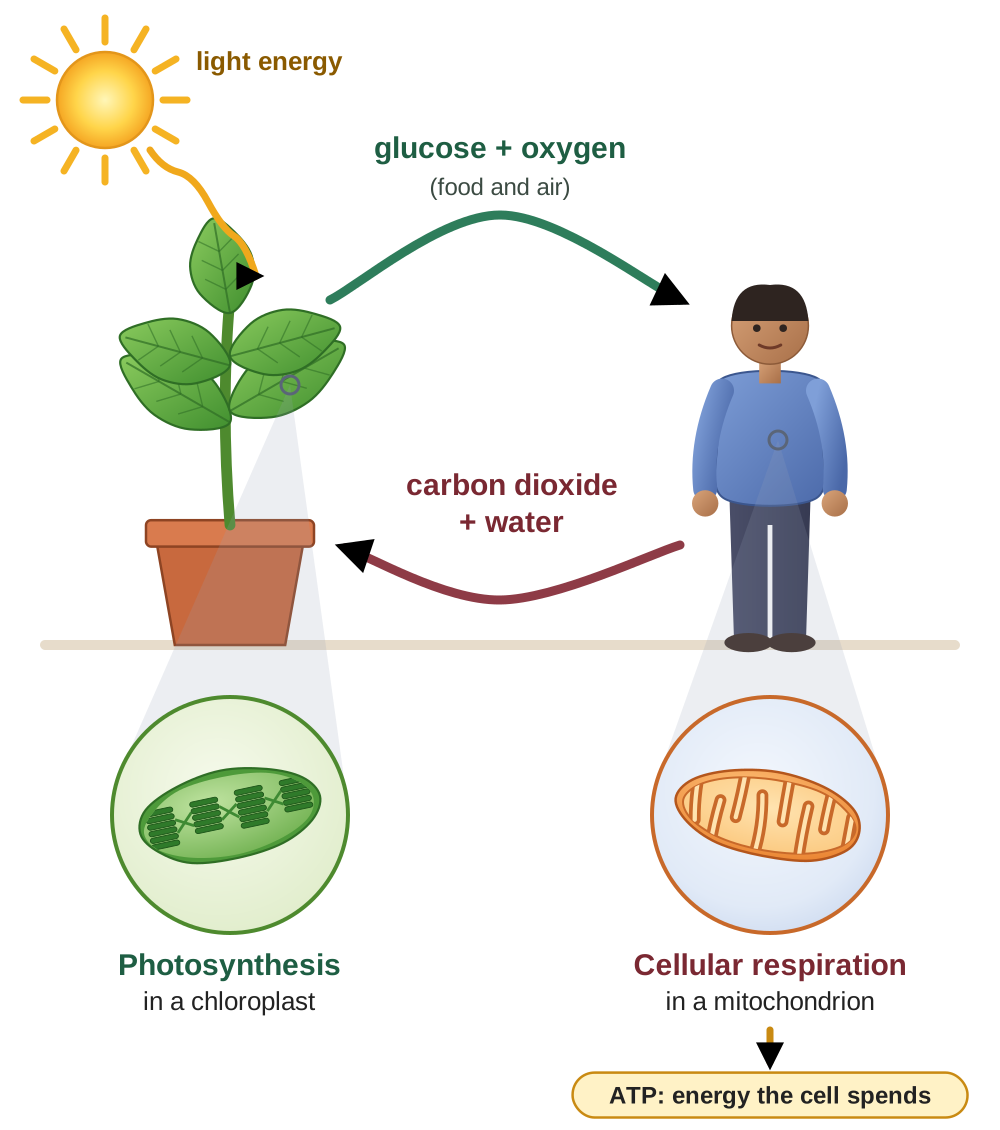
“Photo” means light, and “synthesis” means putting together. Photosynthesis is putting together glucose with the help of light.
Autotrophs and heterotrophs: living things that make their food, and living things that eat it
This leads to one of the most basic ways of dividing up the living world.
Autotrophs (“self-feeders”)
- Make their own food from simple inorganic materials, meaning materials such as water, carbon dioxide, and minerals that are not made by living things.
- Include plants, algae, and some bacteria.
- Most of them use photosynthesis to turn light energy into chemical energy, energy stored in the bonds of molecules.
- Are the starting point of nearly every food chain on Earth. A food chain is the path food energy takes from one living thing to the next, for example from grass to a cow to a person.
Heterotrophs (“other-feeders”)
- Cannot make their own food.
- Must eat or take in other living things, plants or animals, or their remains.
- Include all animals, all fungi (such as mushrooms and molds), and most bacteria.
- Depend on autotrophs to survive, either directly (eating plants) or indirectly (eating animals that ate plants).
Here is something that surprises many people: plants do both processes. During the day, when there is light, they carry out photosynthesis and make food. But all day and all night, their cells also carry out cellular respiration, breaking down food for energy, just as our cells do.
Animals do only cellular respiration. We depend completely on plants and other living things that photosynthesize to make the organic molecules we need. Organic molecules are molecules built around carbon that living things make, such as sugars, fats, and proteins.
ATP: the form of energy that cells spend
Imagine that every business in the world accepted only one kind of payment, one currency that worked everywhere. Inside your cells, there is a currency like that. It is a molecule called ATP (adenosine triphosphate).
ATP is how cells store and pass along energy for immediate use. When your muscle cells tighten, when your brain cells send signals, when any cell builds proteins or moves materials in and out, the cell is spending ATP.
Here is how the money comparison fits the two processes:
- Photosynthesis turns light energy into chemical energy stored in glucose. Glucose is like money in a long-term savings account: it holds a lot of energy, but the cell cannot spend it directly.
- Cellular respiration turns the energy in glucose into ATP. That is like taking money out of savings and turning it into cash in your pocket that you can spend right away.
Breaking down one molecule of glucose through cellular respiration makes about 30 to 32 molecules of ATP. That is the best count scientists have today. Older books say 36 to 38, and many GED materials use about 36, so you may see that number too. All of these numbers describe the same process; the newer count is lower because scientists now know that moving molecules in and out of the mitochondria costs some energy. This ATP is what the cell gets back from the energy that photosynthesis stored in the sugar.
Glucose stores energy for later. ATP is the energy a cell spends right now. Cellular respiration turns the first into the second.
How gases and water move in and out
In animals (heterotrophs)
Taking in oxygen: we breathe air into our lungs. Oxygen passes from the lungs into the bloodstream, and the blood carries it to every cell in the body. In the cells, it is used in cellular respiration.
Getting rid of carbon dioxide: the carbon dioxide made by cellular respiration is a waste product for us. It travels in the blood back to the lungs, and we breathe it out.
In plants (autotrophs)
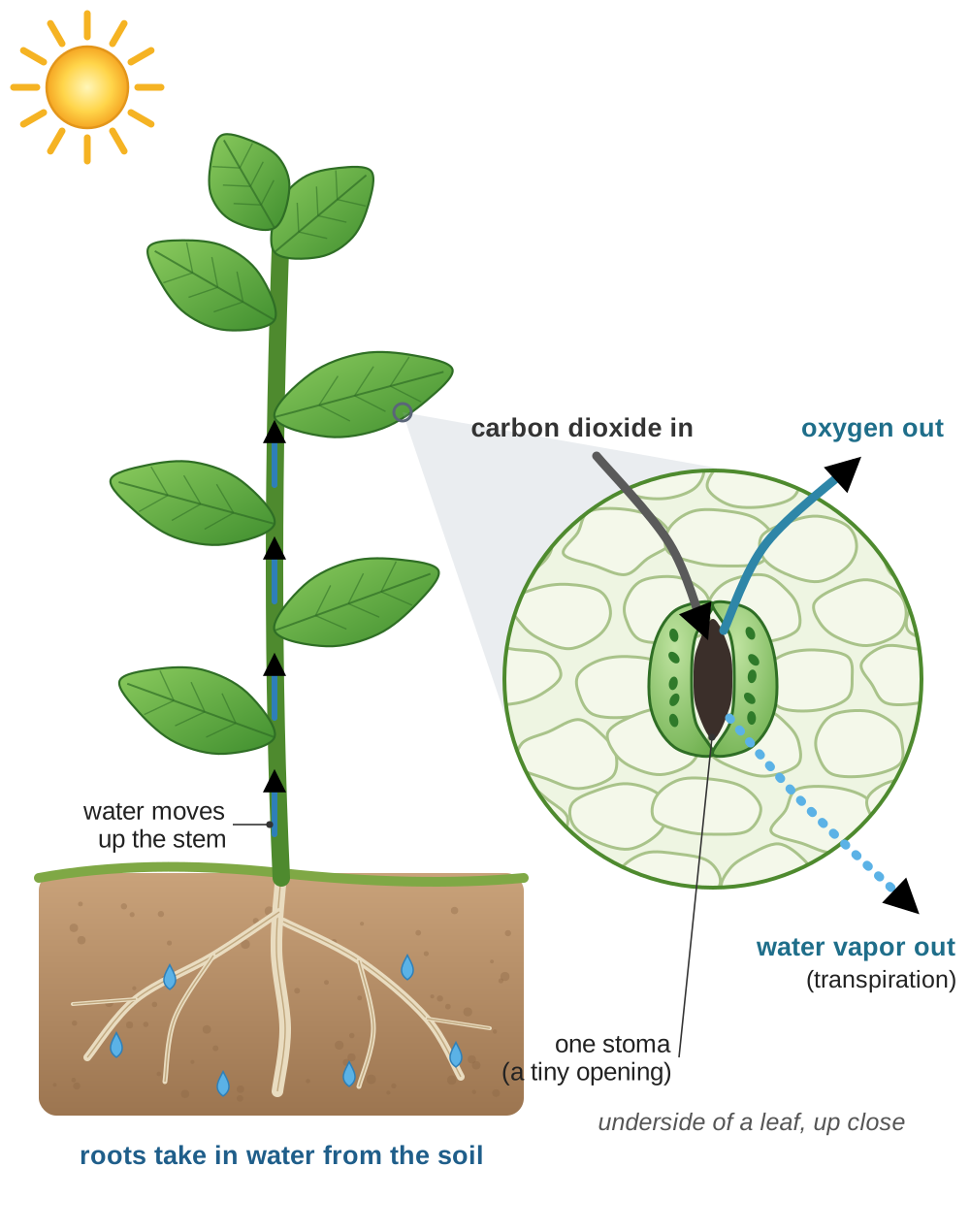
Taking in carbon dioxide: plants take in carbon dioxide from the air through tiny openings called stomata (singular: stoma). Most stomata are on the undersides of leaves. The carbon in this carbon dioxide is what the plant uses to build glucose.
Giving off oxygen: the oxygen made in photosynthesis leaves the plant through the same stomata. It is a waste product for the plant, but animals need it to live.
Taking in water: plants take in water through their roots. Some of this water is used in photosynthesis. Some of it evaporates, turning into water vapor that escapes through the stomata. This loss of water through the leaves is called transpiration. As water leaves the top of the plant, it helps pull more water up from the roots.
Chlorophyll and chloroplasts: where plants catch light
Why are plants green? Because of chlorophyll, the substance in plants that catches light energy.
- Chloroplasts are organelles in plant cells where photosynthesis happens. An organelle is a small part inside a cell that does a particular job, the way an organ such as the heart does a particular job in the body.
- Chlorophyll is a green pigment (a substance that gives something its color) found inside chloroplasts. It absorbs, or soaks up, red and blue light. It reflects green light, bouncing it back, and that reflected green light is why plants look green to us.
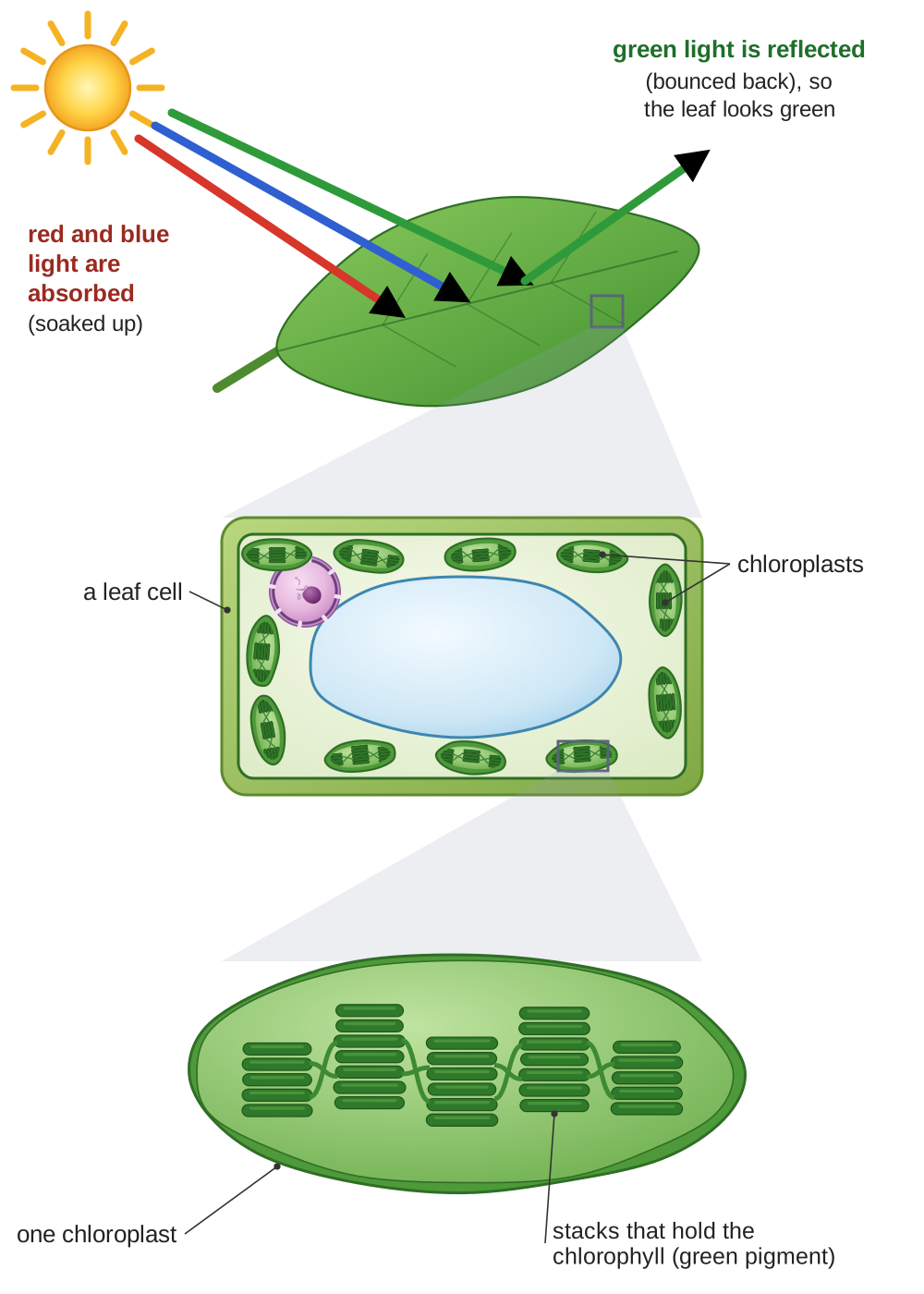
Inside the chloroplast, chlorophyll molecules are arranged so that they work something like a solar panel. A solar panel on a roof catches sunlight and turns it into electricity. Chlorophyll catches light, in tiny packets of light energy called photons, and the plant uses that energy to split water molecules apart and to power the building of glucose.
Chlorophyll may be the most important molecule for life on Earth. Without it, there would be no photosynthesis, oxygen would never have built up in the air, and animals like us could not exist.
The carbon-oxygen cycle
Now put the pieces together. The carbon-oxygen cycle is the way carbon and oxygen pass back and forth between plants, animals, and the air:
- Plants carry out photosynthesis: they take in carbon dioxide, give off oxygen, and store energy in glucose.
- Animals eat plants, or eat animals that ate plants, and so they get glucose.
- Animals carry out cellular respiration: they use oxygen, give off carbon dioxide, and break down glucose to make ATP.
- The carbon dioxide goes back into the air, where plants can use it again.
- The cycle starts over.
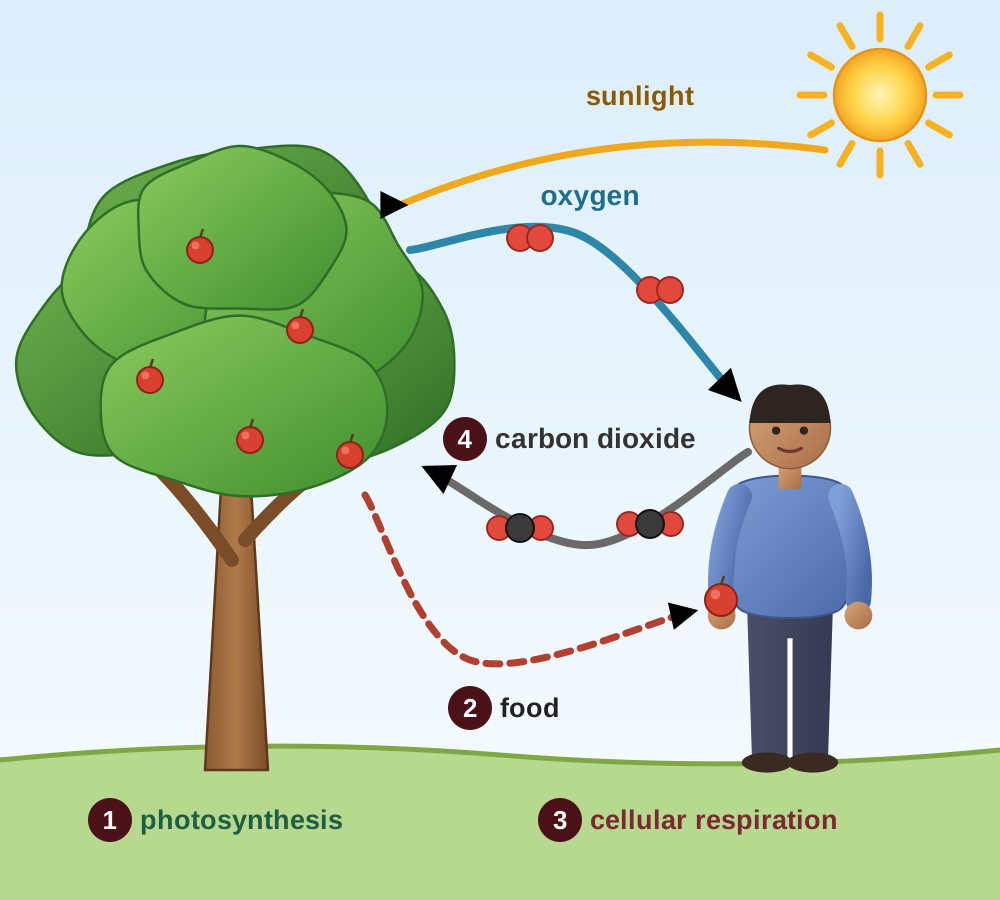
This cycle has been going on for billions of years. The oxygen you are breathing right now was probably made by a plant: maybe one in your neighborhood, maybe one in the Amazon rainforest in South America. Or it may have been made by phytoplankton, tiny living things, mostly algae and bacteria, that float in the ocean and carry out photosynthesis. The carbon dioxide you breathe out might be taken in tomorrow by a tree, which will use it to build wood, leaves, and seeds.
People are part of this cycle, not outside it. Every breath in takes oxygen that plants made, and every breath out gives back carbon dioxide that plants will use.
Think it through. A houseplant sits on a sunny windowsill in a Bronx apartment where a family lives. Name one thing the plant gives the family and one thing the family gives the plant, and say which process makes each one.
Show a model answer
The plant gives the family oxygen, which it makes by photosynthesis. The family gives the plant carbon dioxide, which they make by cellular respiration and breathe out. (The plant also makes some carbon dioxide itself, because its cells carry out cellular respiration too, but in sunlight it makes more oxygen than it uses.)
Why plants matter to people
It is easy to think of plants as decoration, as scenery in the background. But plants are the base that human life rests on. They are:
- Our oxygen suppliers: nearly all the oxygen in the air comes from photosynthesis.
- Our food source: either directly (vegetables, fruits, grains) or indirectly (they feed the animals we eat).
- Our energy source: even fossil fuels, such as coal, oil, and natural gas, formed from the remains of living things from long ago, most of them plants and algae that got their energy from photosynthesis.
- Helpers in keeping the climate steady: they take in carbon dioxide, a gas that holds heat in the air, and they help keep temperatures from climbing too high.
And what do plants need in return? Only the carbon dioxide we are already breathing out as waste, some water, and sunlight.
Ways to study these two processes
- Write out the equations for both processes. Label the reactants (what goes in) and the products (what comes out).
- Draw a diagram of the carbon-oxygen cycle between plants and animals, like the one in Part 2.
- Remember: “photo” means light, and “synthesis” means putting together (building glucose).
- Think of cellular respiration as photosynthesis run backward.
- Keep track of where each process happens: photosynthesis in chloroplasts, cellular respiration in mitochondria.
The terms in this guide
Photosynthesis The process in which plants, algae, and some bacteria use light energy to turn carbon dioxide and water into glucose and oxygen.
Cellular respiration The process in which cells break down glucose, using oxygen, to release energy as ATP. It gives off carbon dioxide and water.
Reactant A substance that goes into a chemical reaction.
Product A substance that comes out of a chemical reaction.
Glucose A sugar (C₆H₁₂O₆) that plants make and that cells break down for energy.
ATP Adenosine triphosphate: the molecule cells use to carry energy they can spend right away.
Autotroph A “self-feeder”: a living thing that makes its own food from inorganic materials. Plants and algae are autotrophs.
Heterotroph An “other-feeder”: a living thing that cannot make its own food and must eat or take in other living things. Animals and fungi are heterotrophs.
Inorganic Describes simple materials, such as water, carbon dioxide, and minerals, that are not made by living things.
Organic molecules Molecules built around carbon that living things make, such as sugars, fats, and proteins.
Chloroplast The organelle in plant and algae cells where photosynthesis happens.
Mitochondria Organelles (singular: mitochondrion) where most of cellular respiration happens.
Organelle A small part inside a cell that does a particular job.
Chlorophyll The green pigment in chloroplasts that catches light energy.
Pigment A substance that gives something its color.
Stomata Tiny openings, mostly on the undersides of leaves, that let gases in and out (singular: stoma).
Transpiration The loss of water from a plant as it evaporates through the stomata.
Phytoplankton Tiny living things, mostly algae and bacteria, that float in the ocean and carry out photosynthesis.
12 questions on this guide
Check yourself
Choose an answer, then press Check. The explanation opens either way.
Which of these best describes how photosynthesis and cellular respiration are related?
The products of photosynthesis (glucose and oxygen) are the reactants of cellular respiration, and the products of cellular respiration (carbon dioxide and water) are the reactants of photosynthesis. The two work together in a cycle. The most tempting wrong answer is “only in plants,” because plants do both processes. But animals do cellular respiration too.
What is the main job of ATP in cells?
ATP is the cell’s “energy currency”: it supplies the energy for the cell’s work, such as muscle cells tightening and cells building proteins. Catching light energy is the job of chlorophyll, not ATP. It is easy to mix them up because both have to do with energy.
The equation 6CO₂ + 6H₂O + light energy → C₆H₁₂O₆ + 6O₂ shows which process?
Carbon dioxide and water go in, light energy powers the change, and glucose and oxygen come out. That is photosynthesis. The most tempting wrong answer is cellular respiration, because it uses the same chemicals. But in cellular respiration, glucose and oxygen are on the left side (going in), not the right side. (Fermentation, which this guide does not cover, is a way some cells get energy from sugar without oxygen.)
Which statement about autotrophs and heterotrophs is TRUE?
“Auto” means self. Autotrophs are self-feeders: they make food from simple materials such as carbon dioxide and water, most of them by photosynthesis. The first choice describes heterotrophs, not autotrophs. It is easy to swap the two words, so remember: auto = self.
Where in plant cells does photosynthesis take place?
Chloroplasts are the organelles where photosynthesis happens. The most tempting wrong answer is mitochondria, because plant cells have mitochondria too. But mitochondria are where cellular respiration happens, not photosynthesis.
What does chlorophyll do in photosynthesis?
Chlorophyll is the green pigment that absorbs light energy, and that energy powers photosynthesis. Breaking down glucose to release energy is cellular respiration. That choice is tempting because it is about energy, but it is the other process.
During cellular respiration, glucose is broken down using oxygen. What comes out?
The equation for cellular respiration is glucose + oxygen → carbon dioxide + water + ATP. “Oxygen and glucose” is tempting, but those are what go into cellular respiration (and what come out of photosynthesis).
Plants take in carbon dioxide through small openings called:
Stomata are tiny openings, mostly on the undersides of leaves, that let gases in and out. Chloroplasts are tempting because they are where the carbon dioxide gets used, but they are inside the cells, not openings to the air.
Which living things carry out cellular respiration?
Plants, animals, and all other living things carry out cellular respiration to release energy from food. “Only animals” is the most tempting wrong answer, because we usually connect plants with photosynthesis. But plant cells also do cellular respiration, day and night.
How does the carbon-oxygen cycle show that plants and animals depend on each other?
Plants make oxygen by photosynthesis, and animals need it. Animals make carbon dioxide by cellular respiration, and plants need it. The second choice has the same words, turned around. Check which process gives off which gas: photosynthesis gives off oxygen.
A student notices that a plant gives off oxygen during the day but not at night. Which explanation is most accurate?
Photosynthesis needs light, so it happens during the day. Cellular respiration goes on all the time, because the plant’s cells always need energy. The first choice is the tempting one: it gets photosynthesis right, but plants do not stop cellular respiration during the day.
Which of these is a waste product of cellular respiration in animals?
Carbon dioxide is made during cellular respiration, and animals breathe it out as waste. ATP is also made during cellular respiration, and that makes it tempting. But ATP is the useful product, the energy the cell spends, not a waste. Oxygen is a waste product of photosynthesis, not of cellular respiration.