What this guide is for
This guide is about photosynthesis and cellular respiration, the two processes that move energy through living things. Photosynthesis is how plants and some other living things use the energy in sunlight to make sugar. Cellular respiration is how cells break that sugar down to get usable energy.
Read the introduction guide first. This guide builds on Photosynthesis and Cellular Respiration: the introduction. That guide explains the basic idea: photosynthesis takes in carbon dioxide and water and gives off oxygen, and cellular respiration takes in oxygen and gives off carbon dioxide and water. If you have not read it yet, read it now and come back.
This guide goes past what the GED test asks. Parts 1 and 2 describe the stages inside each process: the light-dependent reactions and the Calvin cycle in photosynthesis, and glycolysis, the Krebs cycle, and the electron transport chain in cellular respiration. The GED Science test does not ask you to know these stages by name. They are here for students who want to understand how the processes work, not only what goes in and what comes out. Part 9, on the history of oxygen on Earth, is also extra.
Some parts of this guide are useful for the test. These are:
- Fermentation (Part 3): what cells do when there is no oxygen.
- Energy flows and matter cycles (Part 5): why energy passes through living things once, while atoms are used again and again.
- Limiting factors (Part 6): what slows a process down when one of its inputs runs short.
- Common misconceptions (Part 7): mistaken ideas that test questions often use as wrong answers.
- Reading data (Parts 8 and 10, and several of the questions at the end): reasoning from numbers and from the results of an experiment.
You do not have to read this guide in one sitting. Each part can be read on its own.
Goes with: the introduction guide · Look Again 11: Photosynthesis · Look Again 12: Cellular Respiration
In this guide:
- Inside photosynthesis: the two stages
- Inside cellular respiration: the three stages
- When there is no oxygen: fermentation
- Photosynthesis in the ocean
- Energy flows one way; matter cycles
- Limiting factors: when an input runs short
- Common misconceptions
- How people are changing these cycles
- How these processes came to be: a history
- The numbers behind the cycles
- Connecting to everyday life
- Ways to study this guide
- Check yourself
Inside photosynthesis: the two stages
The introduction guide showed photosynthesis as one equation: carbon dioxide and water go in, sugar and oxygen come out. In fact, photosynthesis is two linked processes, and they happen in different parts of the chloroplast. (A chloroplast is the small green part inside a plant cell where photosynthesis takes place.)
Stage 1: the light-dependent reactions (the "photo" part)
Where it happens: in the thylakoid membranes. Thylakoids are stacks of flat, disc-shaped sacs inside the chloroplast. Their thin outer layers, the membranes, hold the chlorophyll. (Chlorophyll is the green substance that absorbs light.)
What happens:
- Chlorophyll absorbs light energy.
- This energy splits water molecules (H₂O) into hydrogen and oxygen.
- The oxygen is released as a waste product. This is the oxygen (O₂) we breathe.
- The hydrogen and the captured energy are stored in energy-carrier molecules called ATP and NADPH. An energy-carrier molecule is a small molecule that holds energy for a short time and carries it to where it is needed in the cell.
Stage 1 needs light, and it is the stage where oxygen is produced. With no light, there is no Stage 1.
Stage 2: the light-independent reactions, or Calvin cycle (the "synthesis" part)
Where it happens: in the stroma. The stroma is the fluid that fills the chloroplast and surrounds the thylakoids.
What happens:
- Carbon dioxide from the air is captured.
- Using the energy carriers from Stage 1 (ATP and NADPH), the carbon dioxide is combined with hydrogen.
- Through a series of reactions, glucose (C₆H₁₂O₆) is assembled. Glucose is the sugar that plants make and that cells use for energy.
Stage 2 does not use light directly. It uses the energy captured during Stage 1. That is why it is called "light-independent." But without Stage 1 supplying new energy carriers, Stage 2 stops too.
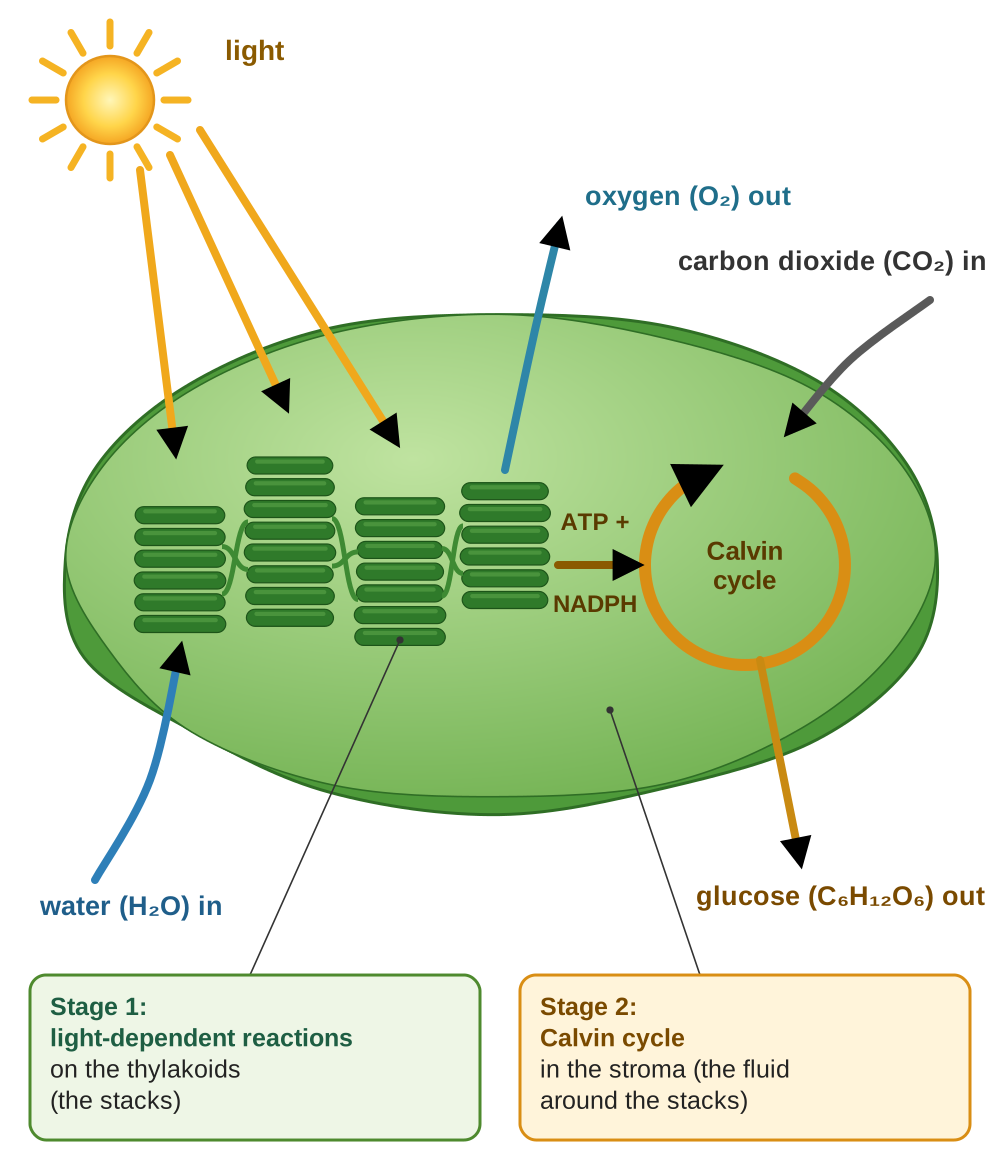
Why the two stages matter
Knowing about the two stages helps explain:
- Why plants stop producing oxygen at night: Stage 1 shuts down without light.
- Why plants can keep making glucose for a short time after sunset: Stage 2 uses the energy carriers left over from the day.
- How scientists can change the rate of photosynthesis: they can affect either stage separately.
Inside cellular respiration: the three stages
Cellular respiration also has stages. It is a process of several steps that together take as much energy as possible out of glucose. The energy ends up in ATP, the molecule cells use to pay for their work.
Stage 1: glycolysis (splitting the sugar)
Where it happens: in the cytoplasm, the jelly-like fluid that fills the cell, outside the mitochondria.
What happens:
- One glucose molecule is broken into two smaller molecules called pyruvate.
- Energy made: 2 ATP. That is not much, but it is some.
- It does not need oxygen. A process that does not need oxygen is called anaerobic.
Glycolysis is the oldest part of respiration. It evolved before Earth's air had oxygen in it, and it still works without oxygen.
Stage 2: the Krebs cycle (also called the citric acid cycle)
Where it happens: in the mitochondrial matrix, the fluid inside the mitochondria. (Mitochondria are the parts of the cell where most of cellular respiration happens.)
What happens:
- Pyruvate is broken down completely.
- Carbon dioxide is released. This is the carbon dioxide we breathe out.
- Energy carriers (molecules called NADH and FADH₂) are loaded up with high-energy electrons. An electron is one of the tiny, negatively charged particles in every atom.
- Energy made directly: 2 ATP. That is still not much.
The Krebs cycle produces most of the carbon dioxide we breathe out, and it sets up Stage 3, where most of the ATP is made.
Stage 3: the electron transport chain
Where it happens: in the inner membrane of the mitochondria. A mitochondrion has two membranes, an outer one and a folded inner one.
What happens:
- The high-energy electrons are passed along a chain of proteins in the membrane.
- As they are passed along, the chain pumps hydrogen ions to one side of the membrane. (A hydrogen ion is a hydrogen atom that has lost its electron.) The ions then flow back through a protein that uses their flow to make ATP. This works like water flowing through a dam to make electricity: the water held behind the dam is like the hydrogen ions held on one side of the membrane, and the machine the water turns is like the protein that makes ATP.
- Oxygen is the final electron acceptor: it is the last molecule to take the electrons at the end of the chain. It then combines with hydrogen to form water.
- Energy made: about 26 to 28 ATP. This is where most of the energy comes from.
This is the stage where oxygen is absolutely needed. Without oxygen to take the electrons at the end, the whole chain backs up and stops. This is why we cannot survive without breathing: without oxygen, our cells would make only 2 ATP from each glucose instead of about 30.
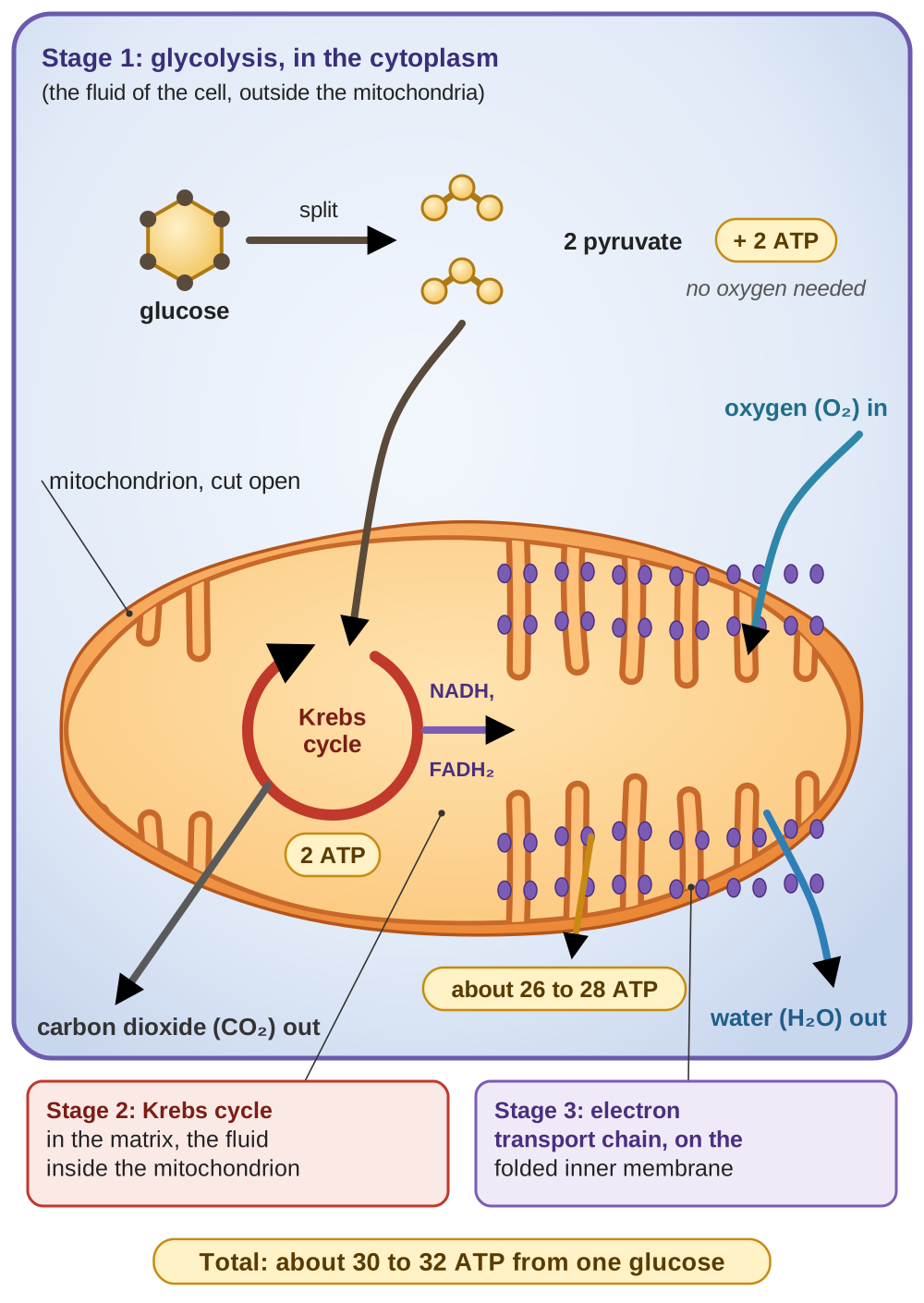
Adding up the energy
| Stage | ATP made from one glucose |
|---|---|
| Glycolysis | 2 |
| Krebs cycle | 2 |
| Electron transport chain | about 26 to 28 |
| Total | about 30 to 32 |
You may see different totals in different books. Older textbooks say 36 to 38 ATP per glucose. Newer measurements give about 30 to 32, because moving molecules in and out of the mitochondria costs some energy. This guide uses the newer count and rounds it to about 30. Either way, the point is the same: with oxygen, a cell gets far more ATP from each glucose than without it.
That is about 15 times as much energy as fermentation produces from the same glucose. Fermentation is explained in Part 3.
When there is no oxygen: fermentation
When there is no oxygen, cells can still make ATP through glycolysis, which does not need oxygen. But to keep glycolysis going, they need a way to deal with the pyruvate it produces. The process they use is called fermentation. Fermentation is a way of getting energy from sugar without oxygen, by running glycolysis over and over.
Lactic acid fermentation (in muscle cells and some bacteria)
What happens:
- Glycolysis produces pyruvate.
- Without oxygen for the Krebs cycle, the pyruvate is changed into lactic acid.
- This lets glycolysis keep going, producing 2 ATP for each glucose.
When you sprint or exercise very hard, your muscles need ATP faster than your bloodstream can bring them oxygen. Your muscle cells switch to lactic acid fermentation. The muscle becomes more acidic, and you feel a burning feeling and your muscles tire. (For many years the burn was blamed on lactic acid alone; scientists now think the acid buildup and other chemical changes in the working muscle cause it together.) When you rest and catch your breath, oxygen becomes available again, the lactic acid is cleared away, and your muscles recover.
Alcoholic fermentation (in yeast and some bacteria)
What happens:
- Glycolysis produces pyruvate.
- The pyruvate is changed into ethanol (the alcohol in drinks) and carbon dioxide.
- This lets glycolysis keep going, producing 2 ATP for each glucose.
Where you see fermentation in everyday life:
- Bread making: yeast ferments the sugars in dough. The carbon dioxide it makes forms bubbles that make the bread rise. The alcohol evaporates during baking.
- Brewing and winemaking: yeast ferments the sugars in grains or grapes, producing alcohol.
- Yogurt and cheese: bacteria ferment lactose (the sugar in milk), producing lactic acid, which thickens the milk.
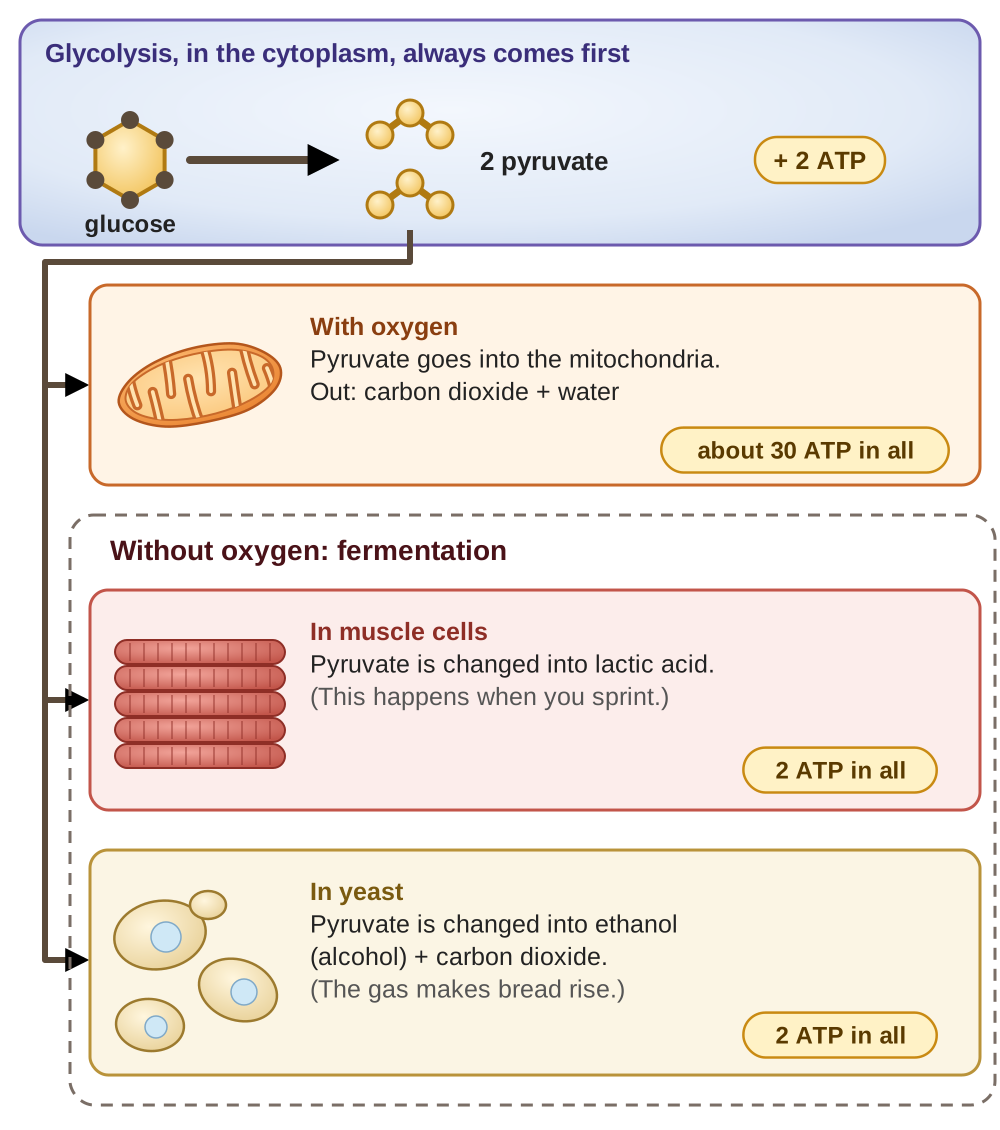
How much less energy fermentation gives
| ATP from one glucose | |
|---|---|
| With oxygen (aerobic respiration) | about 30 |
| Without oxygen (fermentation) | 2 |
Aerobic means using oxygen. This difference is why aerobic organisms, the living things that use oxygen, were able to evolve to be larger, more complex, and more active. They have far more energy available to them.
Photosynthesis in the ocean
When we think about photosynthesis, we usually picture forests and fields. But a very large share of Earth's photosynthesis happens in the ocean.
Phytoplankton: tiny ocean life that makes much of Earth's oxygen
- Phytoplankton are living things too small to see without a microscope that float in the ocean and carry out photosynthesis. They include algae and cyanobacteria. (Cyanobacteria are bacteria that carry out photosynthesis.)
- They produce about half of Earth's oxygen, by most estimates. The estimates range from 50 to 80 percent.
- That means the ocean, not the forests, is where about half of the oxygen made by photosynthesis comes from.
Why this matters:
- The health of the ocean affects the oxygen in the air.
- Ocean warming and ocean acidification (the ocean becoming more acidic, explained in Part 8) threaten phytoplankton.
- Protecting the ocean is not only about fish. It is also about the air we breathe.
The Great Oxygenation Event
About 2.4 billion years ago, something changed Earth's air for good. By then, cyanobacteria had been producing oxygen for hundreds of millions of years. But that oxygen had not stayed in the air. It had been taken up by iron and other chemicals in the ocean and in rocks. Scientists call these places "oxygen sinks," because oxygen went into them and stayed there, the way water goes down a sink. Eventually the sinks could take no more, and oxygen began to build up in the atmosphere.
What followed:
- It was a disaster for anaerobic organisms, the living things that lived without oxygen. Oxygen was poisonous to them.
- Over a long time, it opened the way for complex life: much later, it made possible the evolution of large, many-celled living things.
- It changed Earth's air from air with almost no free oxygen to air with oxygen in it.
The oxygen we breathe was made by living things, starting with ancient bacteria, and it is kept in the air by living things today.
Energy flows one way; matter cycles
This is an important idea in ecology (the study of how living things interact with each other and their surroundings). It helps explain why Earth's systems work the way they do.
Energy flows in one direction
- The sun: light energy reaches Earth.
- Photosynthesis: light energy is changed into chemical energy, stored in glucose.
- Eating: chemical energy is passed along food chains, from plants to the animals that eat them, and on to the animals that eat those.
- Cellular respiration: chemical energy is changed into ATP, which is used for the work of staying alive.
- Heat: the energy eventually spreads out as heat and radiates into space.
Energy is not recycled. Life on Earth needs a steady supply of new energy from the sun. Without the sun, photosynthesis would stop, food webs would collapse, and life as we know it would end.
Matter goes round and round
Matter is the stuff things are made of: atoms. The atoms that make up your body have been used again and again, countless times. Here is one path a carbon atom might travel:
- It is part of a CO₂ molecule in the air.
- A plant captures it during photosynthesis.
- It is built into glucose, and then into proteins, DNA, and the parts of the plant's cells.
- A rabbit eats the plant.
- The atom is used to build the rabbit's muscle.
- The rabbit dies and decomposes (breaks down).
- Decomposers, such as bacteria and fungi, release the atom back into the air as CO₂.
- Another plant captures it, and the cycle continues.
The same atoms of carbon, oxygen, hydrogen, and nitrogen have been moving through living things for billions of years. Some atoms in your body right now may once have been part of a dinosaur, a fern, a fish, or a raindrop.
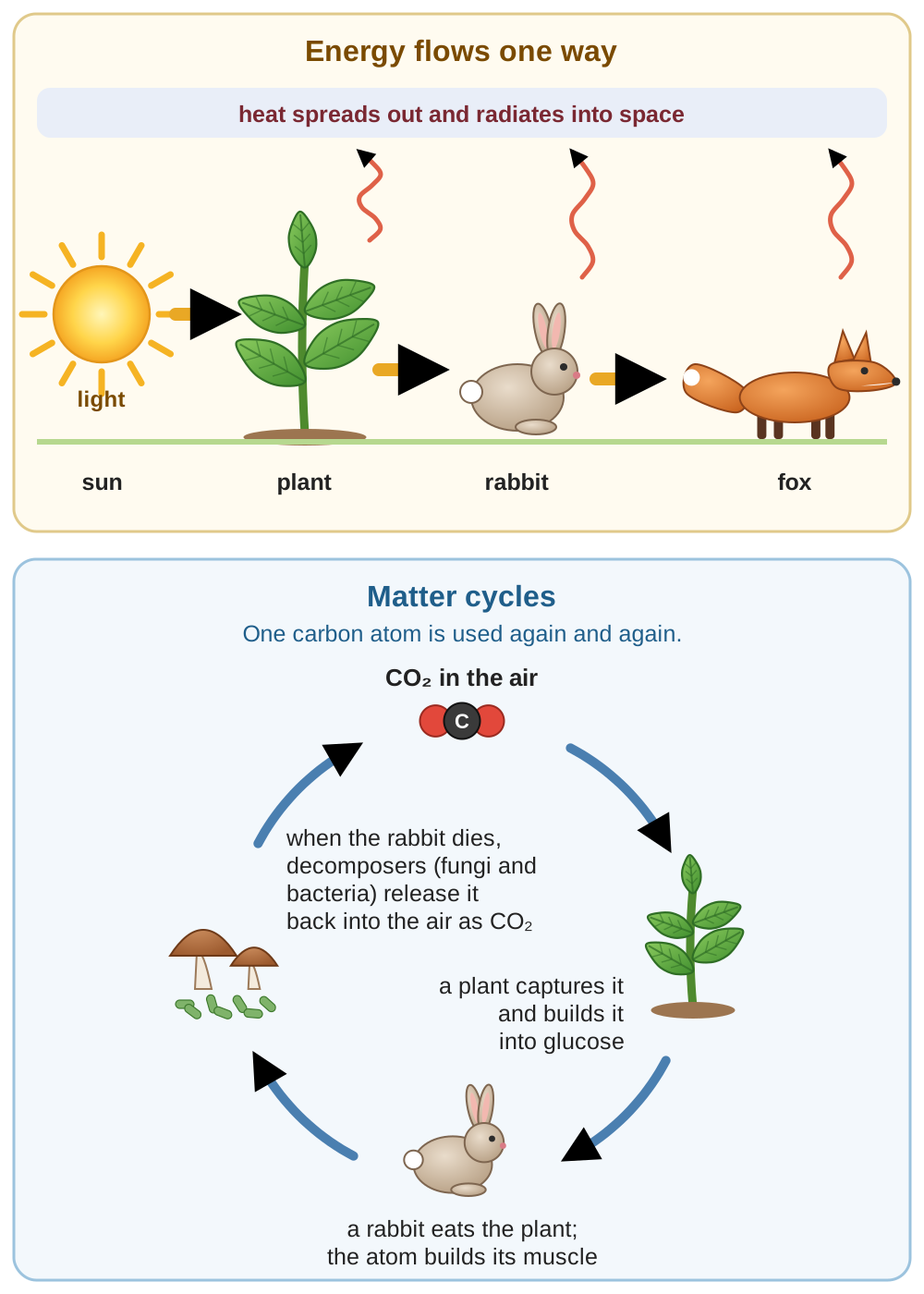
Why the difference matters
- We need the sun all the time, because energy is used up. But Earth does not need new supplies of carbon, because matter is recycled.
- Disturbing a matter cycle, such as the carbon cycle, can have large effects even though no matter is destroyed.
- Understanding this helps explain problems like climate change, pollution, and soil that has lost its nutrients.
Limiting factors: when an input runs short
Both photosynthesis and cellular respiration can be slowed down when one of their inputs runs short. The input in shortest supply is called the limiting factor, because it limits how fast the process can go. Understanding limiting factors helps explain many things we see in the real world.
What limits photosynthesis
1. Light intensity (how bright the light is)
- Too little light makes photosynthesis slow. This is why plants in the shade grow poorly.
- In deep ocean water there is almost no photosynthesis, because little light reaches below the photic zone. The photic zone is the top layer of water, where there is enough sunlight for photosynthesis.
- Even too much light can damage the parts of the leaf that capture light.
2. Carbon dioxide
- Low CO₂ makes photosynthesis slow.
- Some greenhouses pump in extra CO₂ to make plants grow faster.
- When the stomata close to keep the plant from losing water, CO₂ stops coming in. (Stomata are tiny openings on the leaf that let gases in and out.)
3. Water
- In a drought, the stomata close to save water, so CO₂ cannot get in, and photosynthesis slows.
- So a wilted plant is not only droopy. It is also short of the CO₂ it needs to make food.
4. Temperature
- Too cold: enzymes work slowly, so photosynthesis slows. (Enzymes are proteins that speed up the chemical reactions in living things.)
- Too hot: enzymes denature, which means they lose their shape and stop working, so photosynthesis stops.
- Each kind of plant has a range of temperatures where it works best.
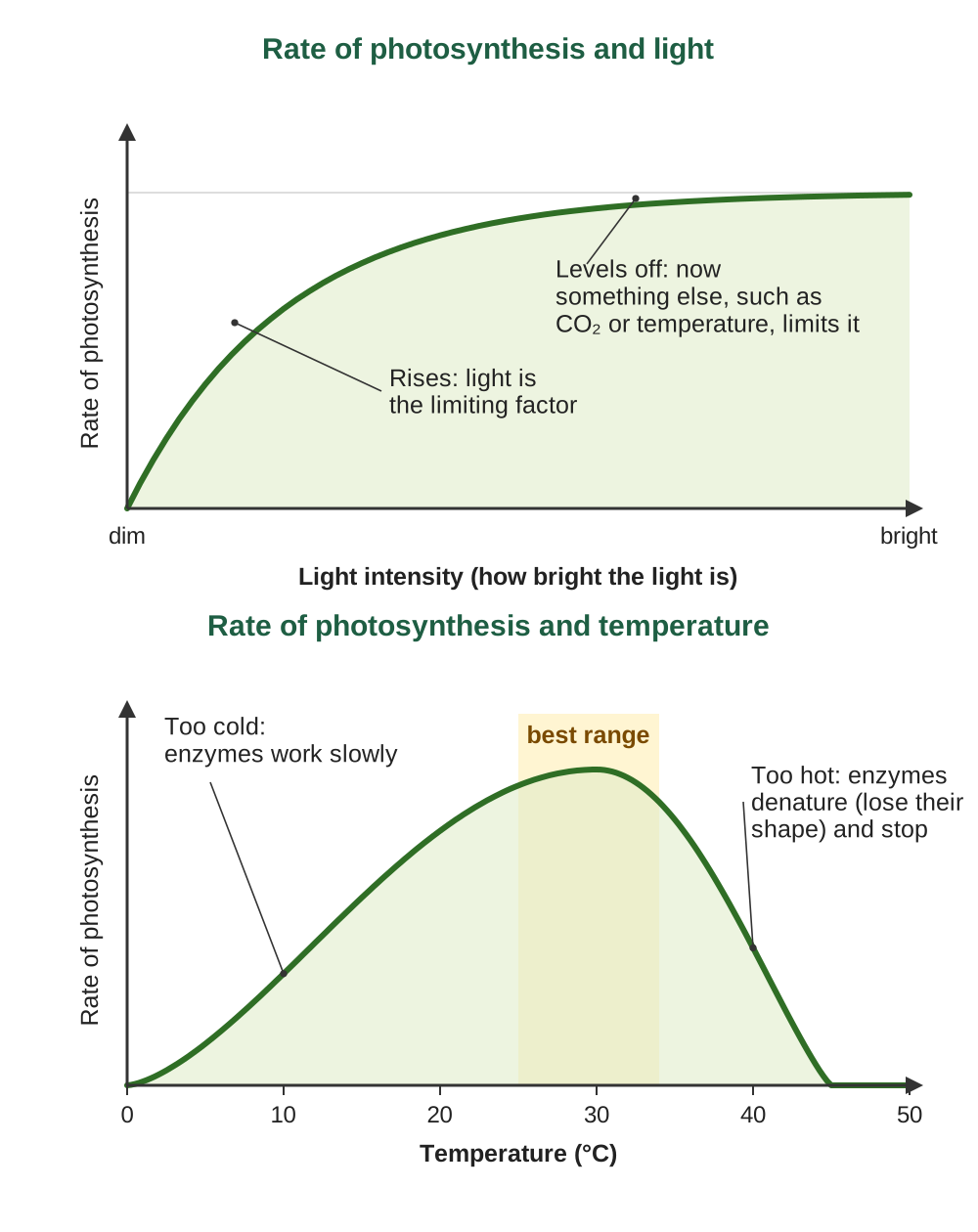
A plant in deep shade has enough water, enough CO₂, and a good temperature. Light is the limiting factor that keeps it from growing faster. Adding fertilizer will not help. Moving it to a sunnier spot will.
What limits cellular respiration
1. Glucose
- With no food coming in, there is no new glucose, so cells must break down stored fats and proteins for energy.
- In a long fast, the body begins breaking down proteins it needs, and cells can be damaged.
2. Oxygen
- Exercise harder than your body can supply oxygen for: the muscles switch to fermentation.
- High altitude: the air is thinner, so each breath brings in less oxygen, and it is harder to keep aerobic respiration going. This is why you get out of breath more easily.
- Suffocation or drowning: the stages of respiration that need oxygen stop, and cells soon die.
When you exercise hard, you breathe faster and deeper. Why? Your muscles need more ATP, and making it takes more oxygen and more glucose. Your heart and blood vessels try to deliver both faster. If oxygen becomes the limiting factor, your muscles switch to fermentation, lactic acid builds up, and you tire.
Common misconceptions
These are mistaken ideas that many people hold. Test questions often use them as wrong answers.
Misconception 1: "Plants only do photosynthesis; animals only do cellular respiration."
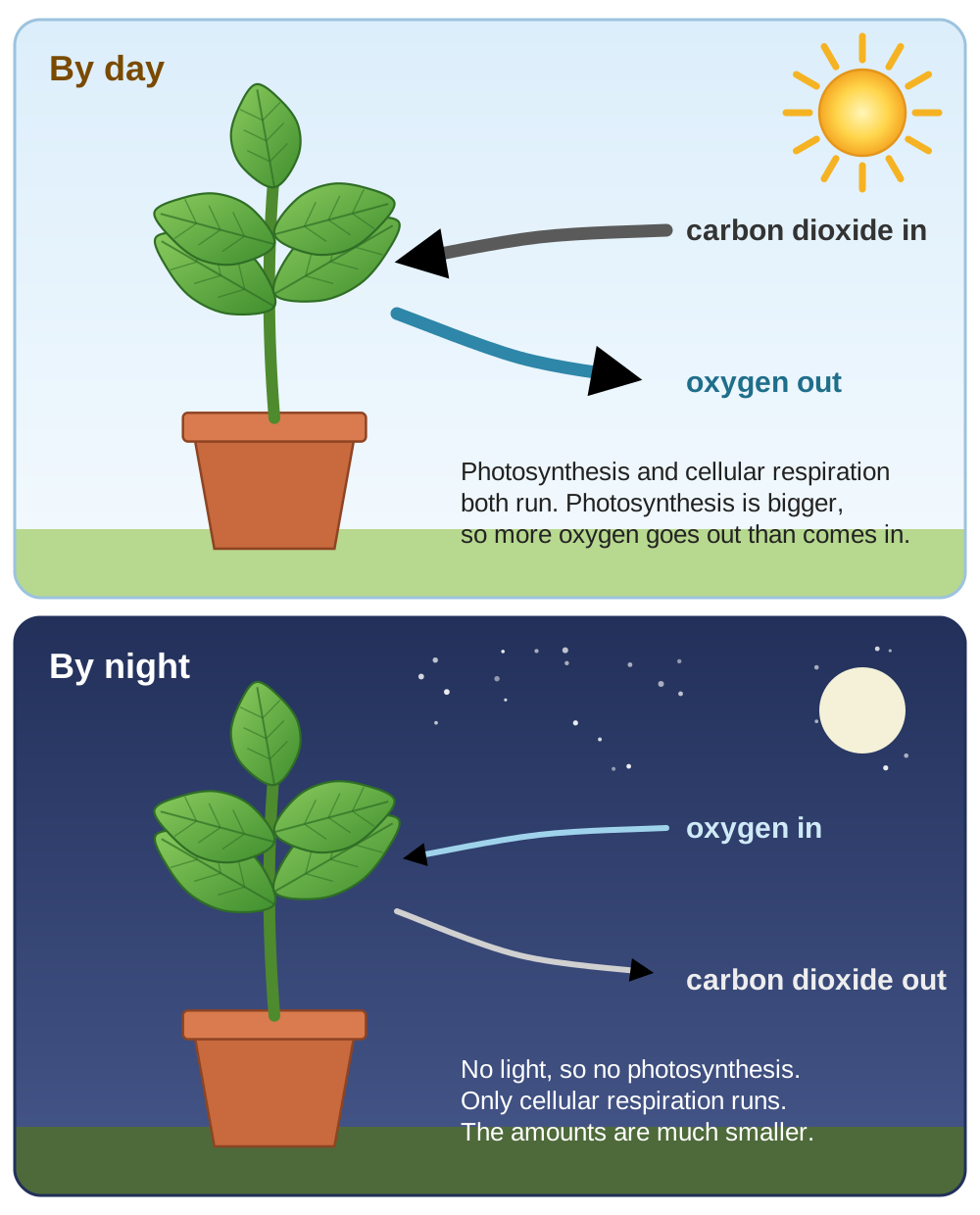
The truth: plants do both. During the day, they carry out photosynthesis, making more oxygen than they use and more glucose than they need right away. But all day and all night, plant cells also carry out cellular respiration to make ATP for growing, repairing themselves, and staying alive, just as animal cells do. Animals carry out only cellular respiration, because they cannot do photosynthesis.
Misconception 2: "Plants breathe CO₂; animals breathe O₂."
The truth: this makes gas exchange sound simpler than it is. Plants need oxygen for cellular respiration. They take in some oxygen and give off some CO₂ through their stomata. But during the day, photosynthesis is the bigger process: plants take in more CO₂ and give off more oxygen than respiration uses, so overall they give off oxygen. At night, with no photosynthesis, plants take in oxygen and give off CO₂ overall, though in much smaller amounts than the oxygen they give off during the day.
Misconception 3: "Plants make oxygen for us, to help animals."
The truth: for the plant, oxygen is a waste product of photosynthesis. Plants split water molecules to get hydrogen, which they need to build glucose, and oxygen is left over. They release it because they have no use for all of it. It is very lucky for us, but the plant is not doing it on purpose.
Misconception 4: "Photosynthesis only happens in leaves."
The truth: photosynthesis happens in any green part of a plant. This includes:
- Green stems, like those of a cactus.
- Unripe fruit, which is often green before it ripens.
- Even some green roots, when they are exposed to light.
The key is chlorophyll. If a part of a plant is green, it is probably carrying out photosynthesis. (There are rare exceptions, in plants with other colored substances.)
Misconception 5: "Trees make all our oxygen."
The truth: as Part 4 explained, phytoplankton in the ocean make about half of the oxygen, by most estimates. Trees are important (they also store carbon in their wood), but the ocean is at least as large a source of oxygen as all the land plants together.
How people are changing these cycles
For billions of years, photosynthesis and cellular respiration stayed roughly in balance. Human activity is now upsetting that balance all over the world.
Climate change: too much carbon dioxide, too fast
The problem:
- Fossil fuels (coal, oil, and natural gas) are the remains of living things that carried out photosynthesis long ago. Burning them releases CO₂ that was stored underground for millions of years.
- We are adding CO₂ to the air faster than photosynthesis can remove it.
- The result: CO₂ builds up and traps heat (this is the greenhouse effect), and the planet warms.
The current rate:
- The natural carbon cycle stays in balance over thousands of years.
- Human emissions are about 40 billion tons of CO₂ a year (as of 2024).
- Photosynthesis can take up some of this, but not all. The extra stays in the air or dissolves in the ocean.
Why photosynthesis cannot keep up:
- We are releasing carbon faster than it can be captured.
- At the same time, we are cutting down forests (deforestation), which removes the plants that capture it.
- Ocean warming may reduce the number of phytoplankton.
Deforestation: cutting down the forests
The Amazon rainforest has been called "the lungs of the Earth." As Part 4 showed, ocean phytoplankton matter at least as much for oxygen. But forests still matter a great deal.
What forests do:
- They take CO₂ out of the air and hold on to the carbon. This is called carbon sequestration.
- They store carbon in wood, roots, and soil for decades or centuries.
- They produce oxygen, and they cool the climate through transpiration (water evaporating from their leaves).
What deforestation does:
- It removes plants that do photosynthesis, so less CO₂ is taken out of the air.
- It releases the stored carbon when the trees are burned or rot.
- It changes weather and climate, both nearby and around the world.
So we are cutting down the forests at the very time we most need them to take up the extra CO₂.
Ocean acidification: a danger to phytoplankton
What is happening:
- Extra CO₂ from the air dissolves in ocean water.
- It forms carbonic acid, which lowers the ocean's pH. (pH is a scale that measures how acidic something is; the lower the pH, the more acidic.)
- The result is ocean acidification: the ocean is now about 30 percent more acidic than it was before industry began, around 1750.
Why it matters:
- Many sea creatures, such as corals, shellfish, and some plankton, have trouble building shells and skeletons in more acidic water.
- If phytoplankton decline, less oxygen is produced.
- It disrupts ocean food webs and threatens fish that people depend on for food.
A feedback loop is a chain of events in which the result makes the starting condition stronger. Here is how it works in this case:
More CO₂ in the air → more CO₂ dissolves in the ocean → phytoplankton are harmed → less photosynthesis → less CO₂ taken out of the air → even more CO₂ builds up.
What can be done
Understanding these cycles helps us understand the solutions:
- Use less fossil fuel: switch to renewable energy, such as solar and wind, to stop adding ancient carbon to the air.
- Protect and restore forests: trees take in CO₂ and store carbon.
- Protect the ocean: phytoplankton need a healthy ocean to thrive.
- Improve farming: good soil care can store carbon, and farms can cut their emissions.
- Act as individuals: use less, support practices that can last, and push for changes in public policy.
Earth's systems are connected, and disturbing one cycle affects all the others. We are part of these cycles, not separate from them.
How these processes came to be: a history
Knowing the history of these processes helps make sense of them. Here is how scientists believe it happened.
Early Earth: life without oxygen
- About 4 billion years ago, Earth's air had almost no oxygen. It was mostly nitrogen, carbon dioxide, methane, and ammonia.
- The earliest living things were anaerobic: they lived without oxygen.
- They got their energy from fermentation and other processes that do not use oxygen.
Photosynthesis that makes oxygen begins
- Cyanobacteria evolved the ability to use sunlight to split water and give off oxygen. Scientists still debate when this happened; many place it around 3 billion years ago, and some earlier. The earliest signs of life of any kind go back about 3.5 billion years.
- At first, the oxygen was taken up by iron dissolved in seawater and by other chemicals. This made layers of red, rust-colored rock that can still be seen in very old rock formations.
- Oxygen was poisonous to most living things at the time.
The Great Oxygenation Event: about 2.4 billion years ago
- The oxygen sinks in the ocean and rocks could take no more.
- Oxygen began to build up in the air.
- This caused an oxygen crisis: many anaerobic organisms died out, because oxygen was poison to them.
- The survivors did one of three things:
- They adapted to put up with oxygen.
- They retreated to places without oxygen, such as vents in the deep ocean floor and deep underground.
- They evolved to use oxygen (aerobic respiration).
Complex life appears: about 600 million years ago
- Aerobic respiration gives about 15 times as much energy from each glucose as fermentation does.
- This extra energy made possible:
- Larger bodies
- Large living things made of many cells
- Active movement
- Complex nervous systems
- In time, the animals, plants, and fungi we know today
The oxygen you breathe was once a deadly poison. The living things that learned to use it gained a big advantage over those that could not. You exist because your ancient ancestors evolved to make use of a waste product given off by bacteria.
Endosymbiotic theory: where mitochondria and chloroplasts came from
This idea surprised many scientists when it was first proposed, but it is now widely accepted. "Endo" means inside, and "symbiosis" means two kinds of living things living closely together.
Mitochondria, the parts of the cell where cellular respiration happens, were once free-living bacteria. A larger cell swallowed them. Instead of being digested, they stayed, and both sides gained:
- The bacteria got protection and food.
- The larger cell got a very good way of making ATP.
Chloroplasts, where photosynthesis happens, have a similar origin. They were once free-living cyanobacteria that were swallowed by a larger cell, one that already had a nucleus.
The evidence:
- Mitochondria and chloroplasts have their own DNA, separate from the DNA in the cell's nucleus.
- They reproduce on their own by dividing, the way bacteria do.
- Their DNA is in a circle, like bacterial DNA.
- They have two membranes: one from the original bacterium, and one from the larger cell when it swallowed the bacterium.
So every time your cells make ATP, you are relying on an ancient partnership between two different kinds of living things. In a sense, each of your cells is two living things that came to live as one.
The numbers behind the cycles
Knowing the size of these processes helps show how large they are.
How efficient photosynthesis is
- Plants capture only about 1 to 3 percent of the sunlight energy that reaches them.
- That sounds low, but it is enough to support nearly all life on Earth.
- Most of the light is reflected or turned into heat.
Why so low?
- Chlorophyll absorbs only certain colors of light, mainly red and blue. (Each color of light has its own wavelength.)
- Some energy is lost at each step of changing it from one form to another.
- Plants spend energy on growing, defending themselves, and reproducing, not only on photosynthesis.
A human comparison: our best solar panels turn 15 to 25 percent of sunlight into electricity. That is better than plants do, but solar panels cannot grow, repair themselves, or reproduce.
The carbon cycle in numbers
- On land, photosynthesis captures about 120 billion tons of carbon a year.
- Cellular respiration and decomposition on land release about 119 billion tons a year.
- Today, the ocean and forests take up somewhat more carbon than they release. This is largely because burning fuels has put extra carbon dioxide in the air. They absorb part of what people add, not all of it.
What humans add:
- Burning fossil fuels adds about 10 billion tons of carbon a year.
- Deforestation adds about 1 to 2 billion tons a year.
- Total human addition: about 11 to 12 billion tons a year.
That seems small next to the natural flow of about 120 billion tons. But it builds up year after year. That is why the amount of CO₂ in the air has risen from about 280 parts per million before industry began to over 420 parts per million (as of 2024). ("Parts per million," or ppm, means how many molecules out of every million molecules of air are CO₂.)
Part 8 gave human emissions as about 40 billion tons of CO₂. Here they are given as about 11 billion tons of carbon. These describe the same thing. The first counts the whole CO₂ molecule; the second counts only the carbon in it. Carbon is a little over one quarter of the weight of CO₂.
Oxygen production
- Photosynthesis on land and in the ocean produces an estimated 300 billion tons of oxygen a year.
- Respiration and burning use up about as much.
A reassuring fact: even if all photosynthesis stopped tomorrow, we would not run out of oxygen for thousands of years. About 21 percent of the air is oxygen.
A worrying fact: the problem is not the amount of oxygen; it is the amount of carbon dioxide. CO₂ is only about 0.04 percent of the air, so adding even a little of it raises its amount by a large share, and that change has large effects on the climate.
Connecting to everyday life
Ideas like these are easier to hold on to when you connect them to things you see every day.
Why you cannot hold your breath very long
Most people think it is the lack of oxygen that makes you desperate to breathe. In fact, it is the buildup of CO₂. Your brain keeps track of the CO₂ level in your blood. When it rises, you feel a powerful urge to breathe out and breathe in. Even if there were plenty of oxygen, high CO₂ would set off the urge to breathe.
Why you breathe harder when you exercise
Your muscles are carrying out cellular respiration faster than usual:
- More glucose is being broken down, so they need more oxygen.
- More CO₂ is being produced, so you need to breathe it out.
Your heart beats faster to deliver more oxygen through the blood, and you breathe faster to bring in oxygen and get rid of CO₂.
Why plants near windows grow toward the light (phototropism)
Light is the energy source for photosynthesis. Plants have evolved ways to catch as much light as they can. Growing toward light is called phototropism.
- Stems bend toward the light. A plant hormone called auxin moves to the shaded side of the stem, and that side grows faster, so the stem bends toward the light.
- Leaves turn to face the light straight on.
- Plants grown in the shade often have larger, thinner leaves, which give more surface to catch the little light there is.
Why greenhouses work
Greenhouses create the best conditions for photosynthesis:
- Light: the glass lets sunlight in.
- Temperature: the heat trapped inside keeps enzymes working well.
- CO₂: some greenhouses add CO₂ to speed up photosynthesis.
- Water: plants are watered on a schedule, so they never suffer drought.
The result is growing all year round, faster growth, and bigger harvests.
Why fish die in polluted or warm water
Fish take oxygen that is dissolved in the water through their gills. Warm water holds less dissolved oxygen than cold water. Pollution, especially too many nutrients such as fertilizer running off farms, can cause algae to grow in huge numbers (an algae bloom). When the algae die, bacteria decompose them, and the bacteria use up even more of the oxygen. The fish suffocate, not necessarily from poison, but from a lack of oxygen for cellular respiration.
Ways to study this guide
If drawing helps you
- Draw a chloroplast and a mitochondrion side by side, and label where each stage happens.
- Make a flowchart of the three stages of cellular respiration.
- Sketch the carbon cycle, showing how atoms move from the air → a plant → an animal → back to the air.
Memory aids
- Light-dependent and light-independent: "The light reactions happen in the light (thylakoids); the Calvin cycle can happen in the dark (stroma)."
- Aerobic and anaerobic: "AERO = AIR = oxygen needed; AN-AERO = no air = no oxygen needed."
- The two kinds of fermentation: "LActic acid in your Legs when you run; Alcoholic in Ale (beer)."
Putting it to use
- Explain to someone else why bread rises (fermentation).
- Look at a plant and predict where photosynthesis is most active.
- During your next workout, notice when you start breathing hard (cellular respiration speeding up) and when you feel the burn (the acid that builds up during fermentation).
Connections to remember
- Photosynthesis stores energy, by building glucose.
- Cellular respiration releases energy, by breaking glucose down.
- Both processes have several stages; neither is a single reaction.
- The ocean matters more for oxygen than most people think.
- These cycles connect us to all living things and to Earth's long history.
The terms in this guide
Aerobic Using oxygen.
Anaerobic Not using oxygen.
ATP The small molecule cells use to carry and spend energy.
Calvin cycle Stage 2 of photosynthesis, in the stroma, where carbon dioxide is built into glucose using energy from Stage 1. Also called the light-independent reactions.
Chloroplast The part of a plant cell where photosynthesis happens.
Cyanobacteria Bacteria that carry out photosynthesis.
Electron transport chain Stage 3 of cellular respiration, in the inner membrane of the mitochondria, where most ATP is made and oxygen is needed.
Endosymbiotic theory The theory that mitochondria and chloroplasts were once free-living bacteria that came to live inside larger cells.
Enzyme A protein that speeds up a chemical reaction in a living thing.
Fermentation Getting energy from sugar without oxygen, by running glycolysis again and again. It gives 2 ATP per glucose.
Glycolysis Stage 1 of cellular respiration, in the cytoplasm, where glucose is split into two pyruvate. It does not need oxygen.
Krebs cycle Stage 2 of cellular respiration, inside the mitochondria, where CO₂ is released and energy carriers are loaded with electrons. Also called the citric acid cycle.
Light-dependent reactions Stage 1 of photosynthesis, in the thylakoids, where light splits water, oxygen is released, and energy is stored in ATP and NADPH.
Limiting factor The input in shortest supply, which limits how fast a process can go.
Mitochondria The parts of a cell where most of cellular respiration happens.
Phytoplankton Tiny living things that float in water and carry out photosynthesis.
Stomata Tiny openings on a leaf that let gases in and out.
Stroma The fluid inside a chloroplast, where the Calvin cycle happens.
Thylakoids Stacks of flat sacs inside a chloroplast, where the light-dependent reactions happen.
12 questions on this guide
Check yourself
Choose an answer, then press Check. The explanation opens either way.
During the light-dependent reactions of photosynthesis, water molecules are split. What happens to the oxygen atoms from these water molecules?
The water is split into hydrogen and oxygen. The hydrogen is used later to help build glucose, but the oxygen is released as a waste product. This is the oxygen we breathe. It happens in the thylakoid membranes, during Stage 1. The tempting mistake is choice A: it is the hydrogen from water, not the oxygen, that ends up in glucose.
A student keeps a plant in complete darkness for 48 hours. Which of these describes what happens in the plant's cells during that time?
Photosynthesis needs light for the light-dependent reactions, so without light it cannot go on. But plant cells need energy all day and all night for growing, repair, and staying alive, so cellular respiration continues in the mitochondria, breaking down stored glucose to make ATP. If the darkness lasts too long, the plant uses up its stored glucose. The tempting mistake is choice B, which comes from the idea that plants only do photosynthesis. Plants do cellular respiration all the time.
Lactic acid fermentation in muscle cells makes only 2 ATP from each glucose, while aerobic respiration makes about 30. Why does aerobic respiration get so much more energy?
Fermentation only partly breaks down glucose (just glycolysis), which gives 2 ATP. Aerobic respiration runs glucose through glycolysis, the Krebs cycle, and the electron transport chain, where oxygen is the final electron acceptor. Most of the ATP is made in the electron transport chain, and without oxygen that chain cannot work. The tempting mistake is choice C: carbon dioxide is a waste product of aerobic respiration, not a source of energy.
Which statement about phytoplankton is most accurate?
Phytoplankton are tiny living things in the ocean, such as algae and cyanobacteria, that carry out photosynthesis. There are so many of them, across so much of the ocean, that they make about half of Earth's oxygen by most estimates (the estimates range from 50 to 80 percent). This is why the health of the ocean matters for the air. The tempting mistake is choice A, which comes from picturing forests as the main source of oxygen.
A plant is growing in soil with enough water and nutrients, in a warm place, but it is still growing very slowly. What is the most likely limiting factor?
The question tells you water, nutrients, and temperature are fine. Too much oxygen is not a usual limiting factor. Carbon dioxide can limit photosynthesis, but outdoor air has about the same amount of CO₂ everywhere, while light changes a great deal from one spot to another. So not enough light is the most likely cause, and moving the plant to a sunnier spot would be the first thing to try. The tempting mistake is choice A, because CO₂ is a real limiting factor, but nothing in the question points to it.
The Great Oxygenation Event, about 2.4 billion years ago, was:
Before this event, Earth's air had almost no oxygen. Cyanobacteria had been making oxygen through photosynthesis, and at last it built up in the air. Oxygen was poisonous to most of the living things of the time, which lived without it, and many died out. But living things that evolved to use oxygen got far more energy from their food, and this later made larger, more complex life possible. The tempting mistake is choice A: oxygen is good for us, but it was poison to most life then.
In the carbon cycle, energy flows one way while matter cycles. This means:
Matter (atoms of carbon, oxygen, nitrogen, and others) moves through ecosystems again and again; the same atoms are used by different living things over time. Energy moves in one direction: from the sun, through photosynthesis and food chains, and finally out as heat. It cannot be recycled, so life needs a steady supply from the sun. The tempting mistake is choice C, which mixes up the two ideas: it is matter, not energy, that is recycled.
During intense exercise, your muscles may switch from aerobic respiration to lactic acid fermentation. What is the immediate result of this switch?
Aerobic respiration makes about 30 ATP from each glucose; lactic acid fermentation makes only 2. When muscles switch to fermentation because they cannot get oxygen fast enough, they get much less energy from each glucose. That is part of why you tire quickly during very hard exercise. The tempting mistake is choice C: the switch happens because the muscles cannot get enough oxygen, and fermentation uses no oxygen at all.
The Krebs cycle (citric acid cycle) is the stage of cellular respiration where:
The Krebs cycle, Stage 2 of cellular respiration, happens in the fluid inside the mitochondria. It breaks down the products of glycolysis completely, releasing CO₂ (which we breathe out) and loading energy carriers (NADH and FADH₂) with high-energy electrons. Those carriers take the electrons to the electron transport chain, Stage 3, where most of the ATP is made. Only 2 ATP are made directly in the Krebs cycle. The tempting mistake is choice B: the Krebs cycle sets up the big ATP harvest, but the harvest itself happens in Stage 3.
Human activities add about 11 to 12 billion tons of carbon to the air each year, while photosynthesis on land takes in about 120 billion tons a year. Why is the human addition causing climate change?
The natural carbon cycle was roughly in balance before human activity. The added carbon builds up over time, because photosynthesis and the ocean cannot take it up as fast as we add it. Think of a bathtub whose drain can handle the water from the faucet. If you pour in extra water, even a small amount compared with the total, and the drain cannot take it, the water level rises year after year. The tempting mistake is choice C: photosynthesis has not been cut in half; the problem is the extra carbon added on top of a balanced cycle.
Which of these correctly explains why chloroplasts and mitochondria have their own DNA?
Endosymbiotic theory says that mitochondria and chloroplasts began as free-living bacteria that were swallowed by larger cells and stayed on as partners. The evidence includes their own circular DNA (like bacteria), their two membranes, and the way they reproduce on their own. Their DNA is left over from when they were separate living things. The tempting mistake is choice A: their DNA is not a copy of the DNA in the nucleus; it is different DNA of their own.
A scientist measures the rate of photosynthesis in water plants at different depths in a lake. Photosynthesis decreases with depth, even though CO₂ and nutrients are available at all depths. What is the most likely explanation?
Water absorbs and scatters light as the light passes through it, so less light reaches deeper water, and there is less energy for the light-dependent reactions. The question says CO₂ and nutrients are present at all depths, so light must be the limiting factor. This is why photosynthesis in lakes and oceans happens mostly in the top layer of water, the photic zone. The tempting mistake is choice A: water pressure does increase with depth, but it is not what limits photosynthesis here, and it does not explain the steady drop the way light does.