What this guide is for
This guide is about two big ideas in life science. The first is evolution: how a kind of living thing changes over many generations. The second is ecology: how living things depend on one another and on the place where they live.
The guide has seven parts. Part 1 is about evolution and natural selection. Parts 2 through 7 are about ecosystems: what they are made of, how energy and matter move through them, how living things affect one another, how populations grow and shrink, the large regions of the Earth called biomes, and what people are doing to ecosystems.
Take the parts one at a time. At the end there are questions on the whole guide. Each one tells you right away whether you chose the right answer, and explains why.
Goes with: Start Here, Part 10: Evolution by natural selection · Start Here, Part 11: Ecosystems · Evolution flash cards · Ecosystems flash cards
In this guide:
Evolution and natural selection
Evolution is the way a kind of living thing changes over time. When scientists say a species "evolved," they do not mean that individual animals changed during their lifetimes. A species is one kind of living thing, such as the polar bear. Evolution describes how a population (all the members of one species living in one area) changes over many generations. A generation is one step from parents to their children.
Here is how it works. A trait is a feature that a living thing has, such as the color of its fur or the shape of its beak. Individuals with traits that help them survive are more likely to live long enough to reproduce, and they pass those helpful traits on to their young. Over time, the population as a whole changes. This process is called natural selection.
The three requirements for natural selection
| Requirement | What it means |
|---|---|
| 1. Variation | Individuals differ from one another because of differences in their genes. (Genes are the instructions, passed from parents to children, that shape a living thing's traits.) |
| 2. Selection pressure | Something in the environment makes survival hard: predators (animals that hunt and eat other animals), climate, disease, or competition for food and space. |
| 3. Heredity | Traits are passed from parents to their young. The survivors reproduce and pass on the traits that helped them. |
Animals do NOT "choose" to evolve. Evolution happens because individuals with helpful traits survive longer, reproduce more, and pass those traits on to their young. Over many generations, the helpful trait becomes common in the population.
Case study: the peppered moth
The peppered moth is a moth that lives in England. It is the best-known example of natural selection that people have watched happen, over a period of years. Its story shows all three requirements at work.
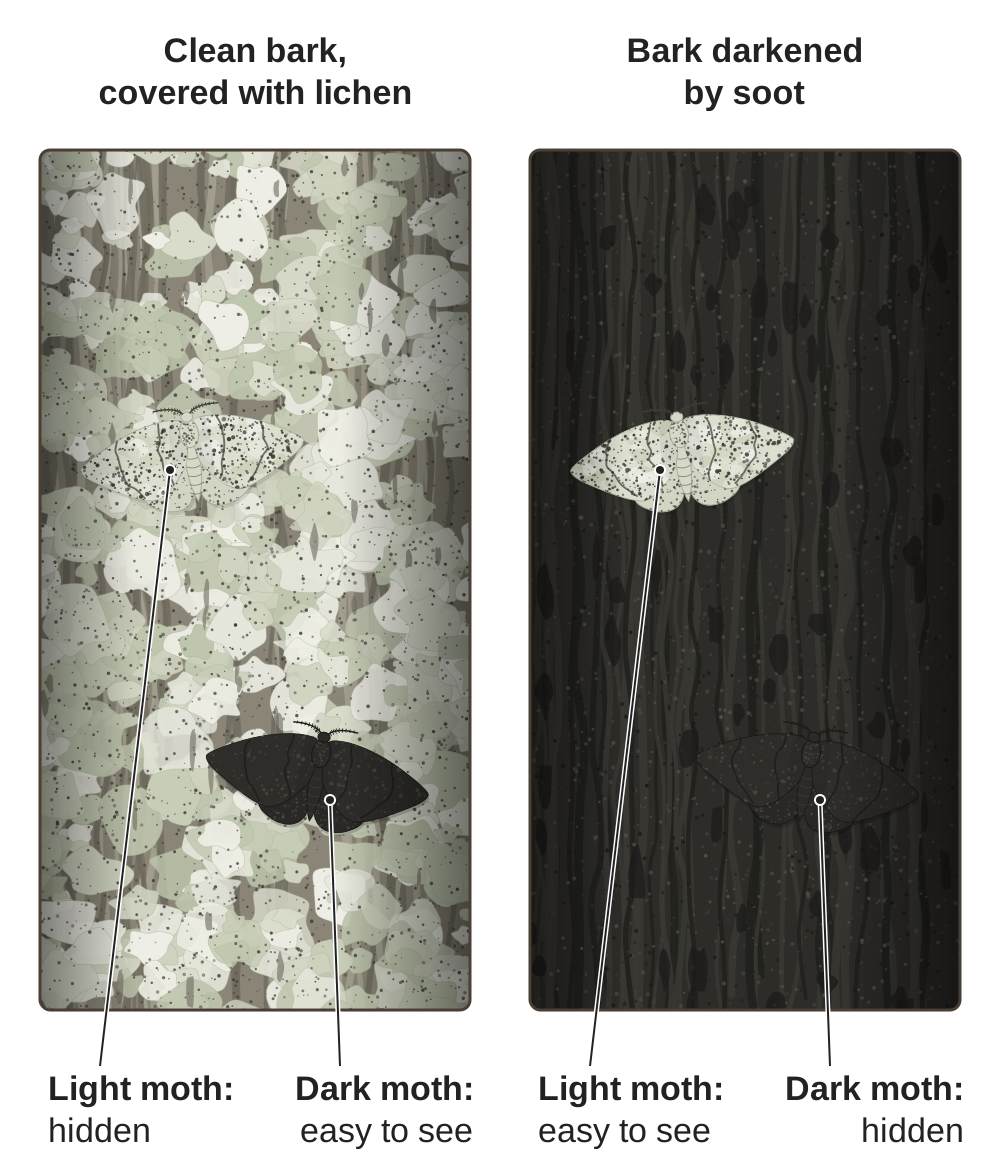
Before England's Industrial Revolution (the period, starting in the late 1700s, when England began making goods in large factories), most peppered moths were light-colored with dark speckles. On trees, the light moths were camouflaged: their color matched what was behind them, so they were hard to see. The trees they rested on had pale bark covered with lichen (a pale, crusty growth made of a fungus and an alga living together). Dark-colored moths were rare. The first dark one recorded near the city of Manchester was caught in 1848. Birds that hunt by sight found the dark moths easily and ate them, while the light moths blended in and survived.
Then factories began burning coal. The coal smoke coated the trees with black soot (fine black powder left by burning) and killed the lichen. Now the light moths stood out against the darkened bark, and the dark moths were the ones that were camouflaged. Birds ate the light moths at higher rates. By 1895, about 98 out of every 100 peppered moths near Manchester were dark.
The story does not end there. Britain passed clean air laws in the 1950s and 1960s. The soot cleared, the lichen grew back, and light-colored moths became common again. When the environment changed back, natural selection changed direction too.
| Requirement | In the peppered moth story |
|---|---|
| Variation | Some moths are light, and some are dark. |
| Selection pressure | Birds that hunt by sight eat the moths they can see. |
| Heredity | Moths pass their color on to their young. |
Case study: Darwin's finches
Charles Darwin was an English scientist. In 1835 he visited the Galápagos Islands, a group of islands in the Pacific Ocean about 600 miles west of South America. He collected many small birds there. Back in England, a bird expert, John Gould, showed that they were a group of closely related species of finch (a small, seed-eating kind of bird). The birds looked much alike, but their beaks were very different.
The beaks match the food each kind of finch eats. Finches that eat hard seeds and nuts have thick, powerful beaks for cracking them. Finches that eat insects hiding in tree bark have long, thin beaks for probing, which means poking into narrow places. Finches that feed on cactus flowers have long, slightly curved beaks that reach into the flowers.
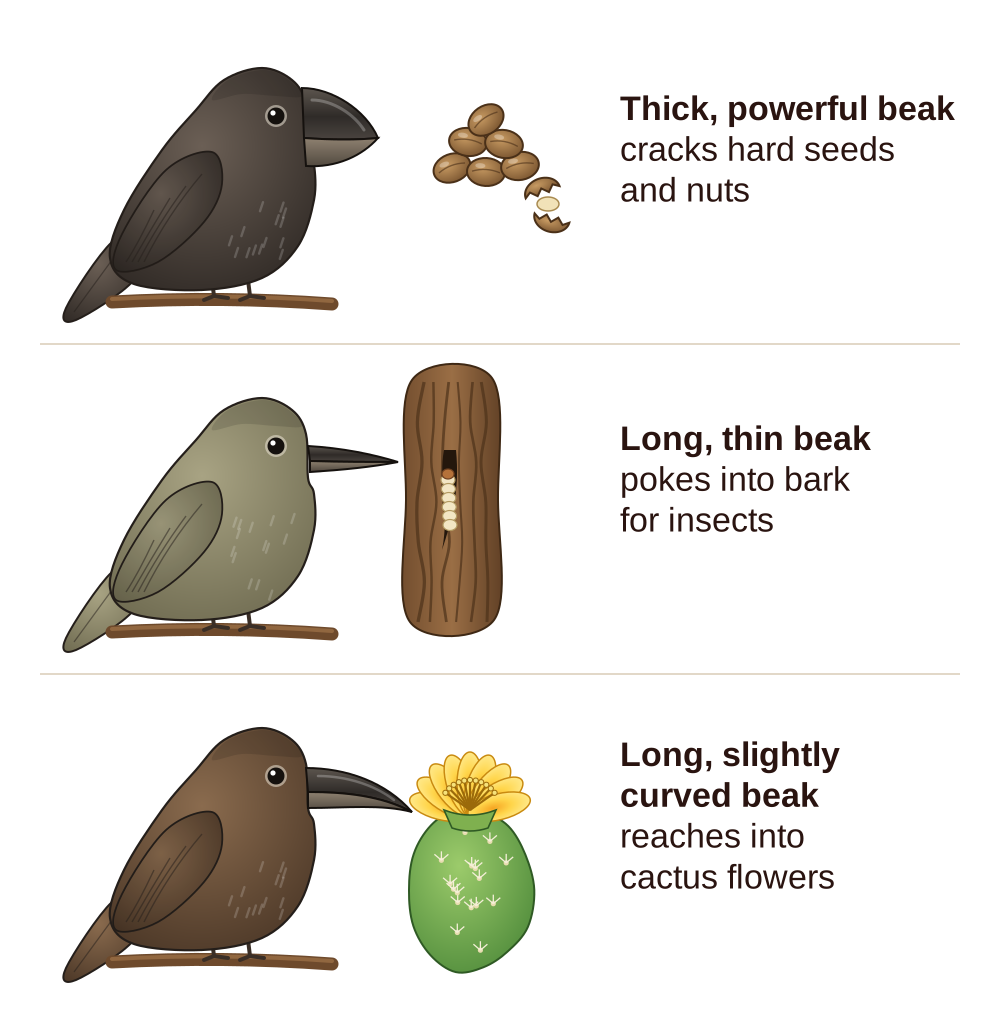
All of these finches descended from one ancestor species that reached the islands from the mainland long ago. Over many generations, each population adapted to its own local food supply. The variation was in beak size and shape. The selection pressure was the kind of food that was available. Heredity made sure that beak shapes were passed from parents to their young.
Darwin's finches are now one of the most important pieces of evidence for evolution by natural selection. Scientists have measured beaks changing in as little as one or two generations. During a drought, when there is little rain, the small, soft seeds get eaten up and mostly the large, hard seeds remain. Birds with thicker beaks can crack those seeds, so more of them survive and have young, and the next generation has thicker beaks on average.
Case study: the polar bear
Polar bears show how natural selection can shape a whole body for survival. Over hundreds of thousands of years, populations of bears that moved into the Arctic, the frozen region around the North Pole, gradually came to have many adaptations that work together. An adaptation is an inherited trait that helps a living thing survive in its environment.
| Feature | How it helps the bear survive in the Arctic |
|---|---|
| Small ears | Less body heat escapes through small ears. |
| Short tail | Less body heat escapes through a short tail. |
| Hollow fur | The long outer hairs are hollow and hold air, which keeps heat in. The fur looks white, which hides the bear against the snow. |
| Thick blubber | A layer of fat under the skin, up to about 4 inches thick, keeps heat in, especially in the water, and stores energy. |
| Black skin | Dark skin takes in heat from any sunlight that reaches it. |
| Large paws | Wide paws grip the ice and work like paddles when the bear swims. |
The polar bear's fur is one of its most surprising adaptations. The fur looks white, but the hairs have no pigment (coloring) at all. They are clear, like glass or ice. The long outer hairs, called guard hairs, are also hollow. The clear hairs scatter and reflect visible light, and that makes them look white against the snow, in the same way that crushed ice or snow looks white even though each piece of ice is clear. Under all that fur, the polar bear's skin is black.
For a time, people believed that polar bear hairs work like fiber-optic cables, the thin glass threads that carry light inside them, and that the hairs carried sunlight down to the black skin. In 1998 a physicist named Daniel Koon tested this and found that the hairs carry almost no light down their length. What actually keeps the bear warm is its layers. From the outside in, there are four layers: the guard hairs, the underfur, the black skin, and the blubber, a layer of fat under the skin. The two layers of fur and the blubber hold heat in. The black skin, between the fur and the blubber, takes in heat from any sunlight that reaches it.
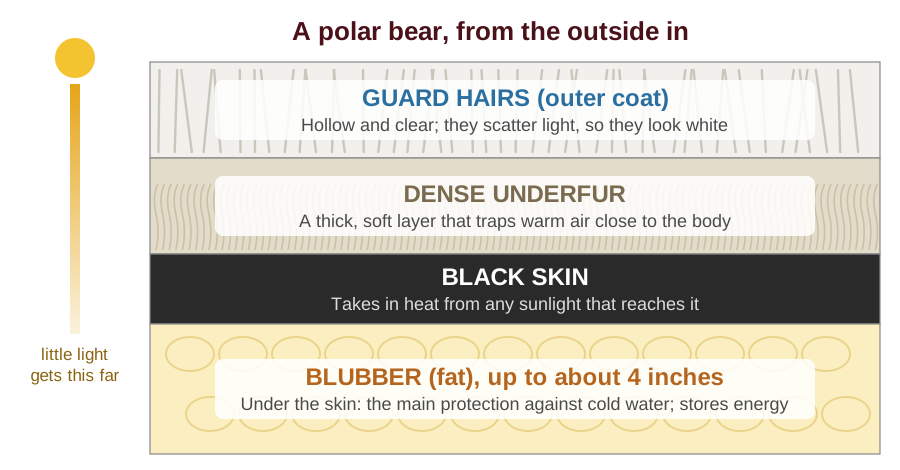
Under a microscope, you can see the hollow center of a guard hair. The hollow center holds air. Air is a poor conductor of heat, which means heat does not travel through it easily, so the trapped air helps keep the bear's body heat in. The hairs are also oily. The oil makes water run off, which helps the bear shake itself dry after swimming.
The polar bear shows how many adaptations can work together as a system. A GED question may ask you which feature does which job. It may also ask you to explain why a trait is an adaptation and not a learned behavior. An adaptation is inherited: the bear is born with it, and it passes it on to its cubs. A learned behavior is something an animal picks up during its own life.
Other examples of natural selection
Natural selection works on every kind of living thing. Here are two more examples.
- The fennec fox. This small fox lives in the Sahara Desert in Africa. Its very large ears let body heat escape, which helps it stay cool. This is the opposite of the polar bear's small ears, which keep heat in. Both are adaptations shaped by climate.
- Bacteria that resist antibiotics. An antibiotic is a medicine that kills bacteria. By chance, a few bacteria may have a mutation (a change in their genes) that lets them survive the antibiotic. When the antibiotic is used, those few survive and multiply, and the others die. Over time, the resistant kind becomes the most common. Because bacteria reproduce so fast, this can happen within days.
What an ecosystem is made of
An ecosystem is a community of living things that interact with each other and with their physical surroundings: the soil, water, air, and climate. To understand ecosystems, you need to know both the living and the non-living parts, and how life is organized at different sizes, from one living thing up to the whole planet.
Abiotic and biotic factors
Every ecosystem has two kinds of parts. Abiotic factors are the non-living, physical parts: sunlight, temperature, water, soil, and air. Biotic factors are the living things: plants, animals, bacteria, fungi, and every other form of life. (A-biotic means "not living"; biotic means "living.") Both kinds of factors decide which species can survive in a place.
| Abiotic factors (non-living) | Biotic factors (living) |
|---|---|
| Sunlight | Plants |
| Temperature | Animals |
| Water | Bacteria |
| Air and oxygen | Fungi |
| Soil and minerals | Other microorganisms (living things too small to see without a microscope) |
Levels of organization
Life can be organized from the smallest level to the largest. On the GED, you may be asked which level a description is talking about.
| Level | What it includes |
|---|---|
| Organism | A single living thing (one deer, one oak tree) |
| Population | All the members of one species in an area (all the deer in a forest) |
| Community | All the populations of different species in an area (deer, wolves, trees, and birds together) |
| Ecosystem | A community plus its physical surroundings (the forest with its soil, water, and climate) |
| Biosphere | All the ecosystems on Earth: every place where life exists |
A habitat is WHERE a living thing lives, for example a pond. A niche is its ROLE there: what it eats, when it is active, and how it interacts with other living things. Two species can share a habitat and still have different niches. A frog and a duck may live in the same pond, but they eat different foods.
How energy flows and matter cycles
Almost all the energy in an ecosystem comes from the sun. Plants capture sunlight through photosynthesis, the process in which plants use the energy of sunlight to make sugar (glucose) out of carbon dioxide and water. The energy of the sunlight is now stored in the sugar as chemical energy. That energy then moves through the ecosystem as living things eat one another. How energy moves is one of the most tested ideas on the GED Science test.
Trophic levels
Scientists sort living things into feeding levels called trophic levels ("trophic" comes from a Greek word about food). Each level is one step in the passing of energy along a food chain.
| Level | Type | Examples |
|---|---|---|
| Producers | Autotrophs: living things that make their own food, usually from sunlight | Plants, algae, phytoplankton (tiny floating plant-like living things in water) |
| Primary consumers | Herbivores: animals that eat plants | Rabbits, deer, grasshoppers |
| Secondary consumers | Carnivores: animals that eat other animals | Frogs, small fish, snakes |
| Tertiary consumers | Carnivores that eat other carnivores; often top predators, which nothing else hunts | Hawks, wolves, sharks |
| Decomposers | Recyclers: living things that break down dead matter | Bacteria, fungi, earthworms |
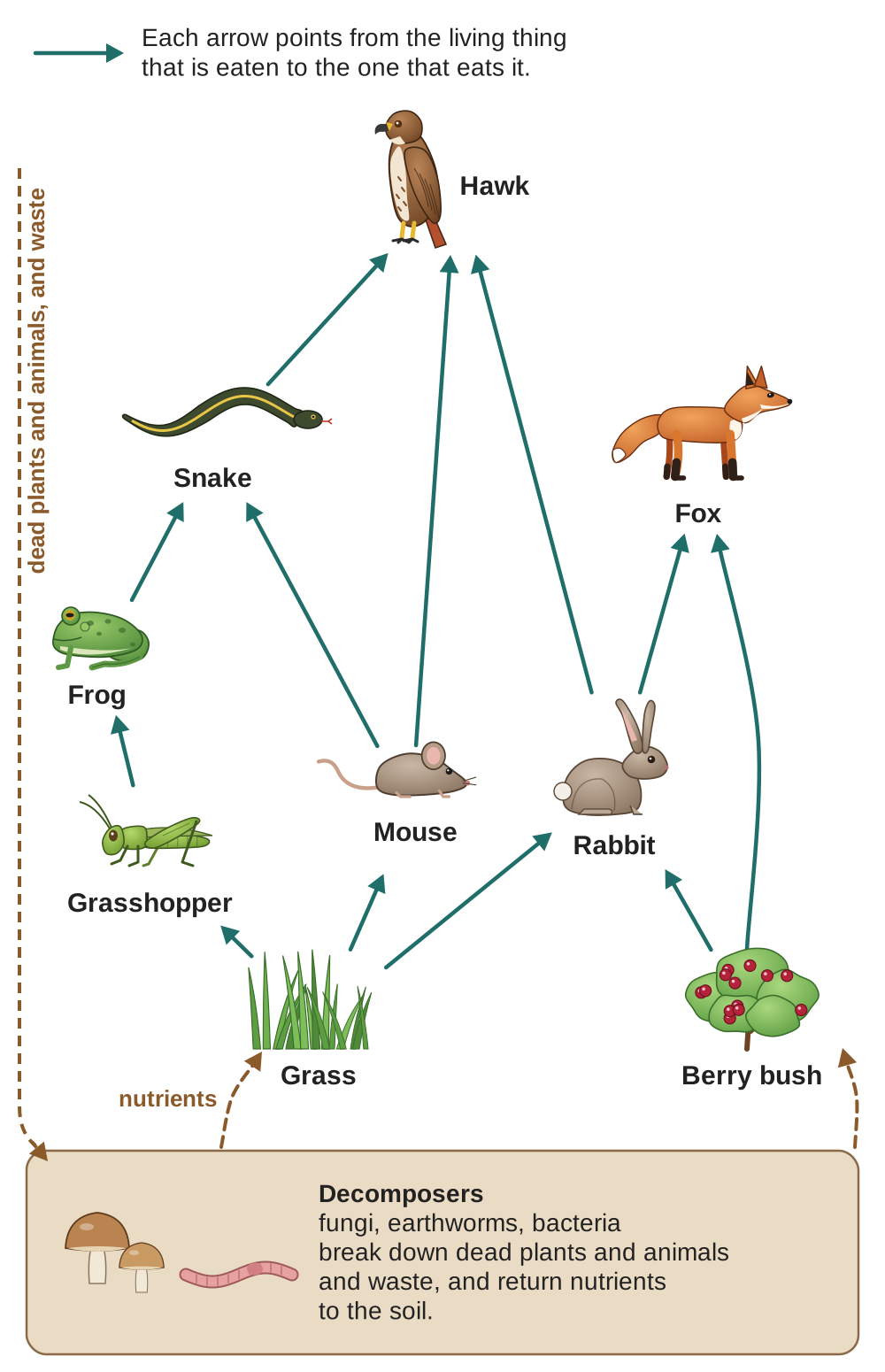
Decomposers need special attention. Bacteria, fungi, and earthworms break down dead plants and animals and their waste. This returns nutrients to the soil, where producers can take them up again. Without decomposers, dead matter would pile up, and the nutrients in it would be locked away for good. Decomposers are the link that connects the end of the food chain back to its beginning.
The 10% rule
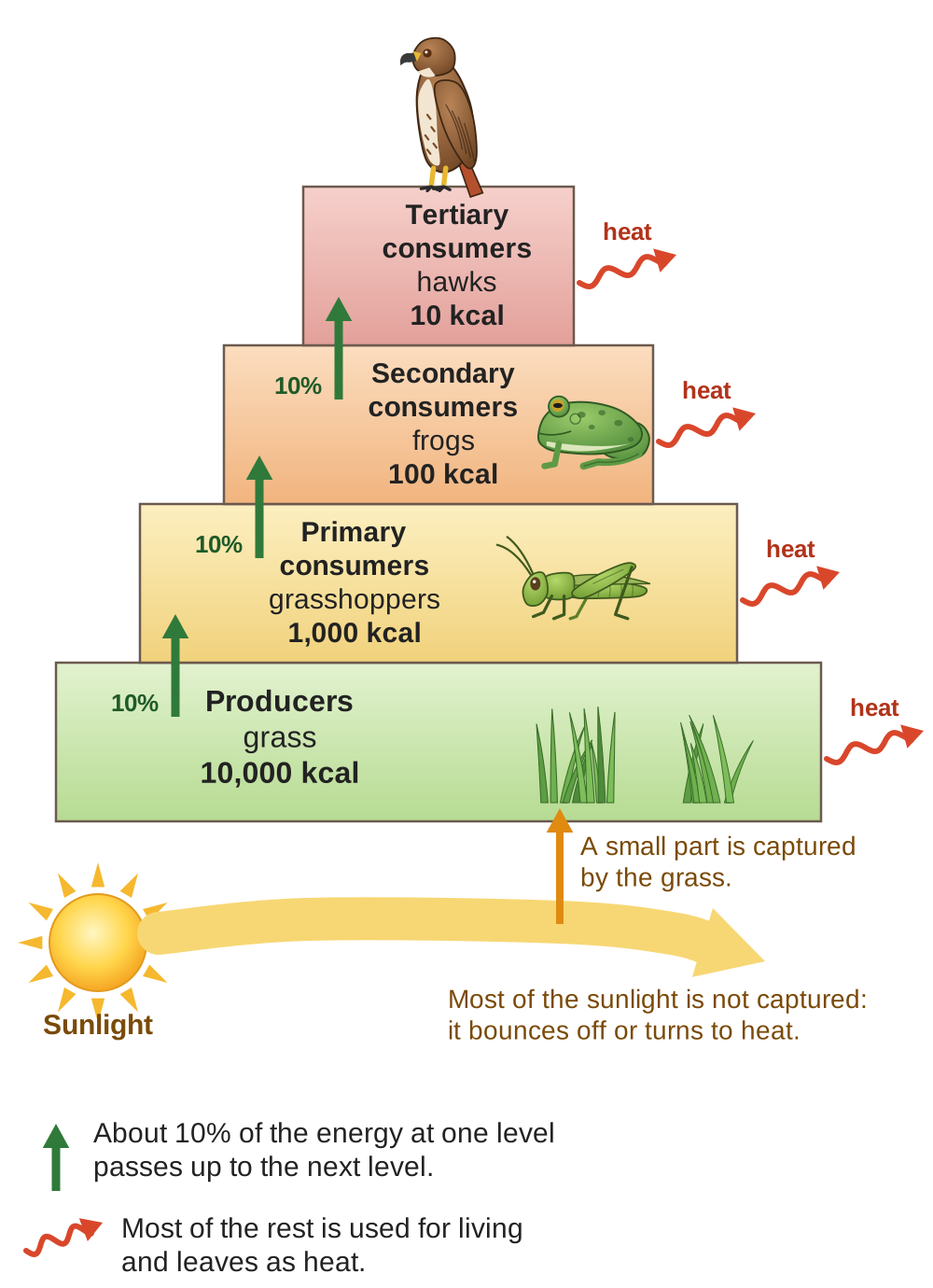
When energy moves from one trophic level to the next, only about 10% of it is passed on. The rest, about 90%, is not passed up. Most of it is used by the living things at that level for their own life processes, such as breathing, moving, and keeping their bodies warm, and it leaves the ecosystem as heat. Some of it is in parts that never get eaten, such as roots and bones, or in waste; that part goes to the decomposers.
Energy here is measured in kilocalories (kcal), the same unit used for the calories on a food label.
| Level | Energy | Example |
|---|---|---|
| Producers | 10,000 kcal | Grass |
| Primary consumers | 1,000 kcal | Grasshoppers |
| Secondary consumers | 100 kcal | Frogs |
| Tertiary consumers | 10 kcal | Hawks |
Each step divides by 10: 10,000 → 1,000 → 100 → 10.
Video: Energy Pyramid, by Christopher Rafalik (YouTube).
The 10% rule explains why there are so few top predators. There is not enough energy at the top of the pyramid to feed large numbers of them. That is why there are always far fewer wolves than deer, and far fewer sharks than small fish.
Food chains and food webs
A food chain is a simple line that shows who eats whom, for example grass → rabbit → fox. A food web shows all the connected feeding relationships in an ecosystem. Food webs are closer to real life, because most living things eat more than one kind of food, and are eaten by more than one kind of animal.
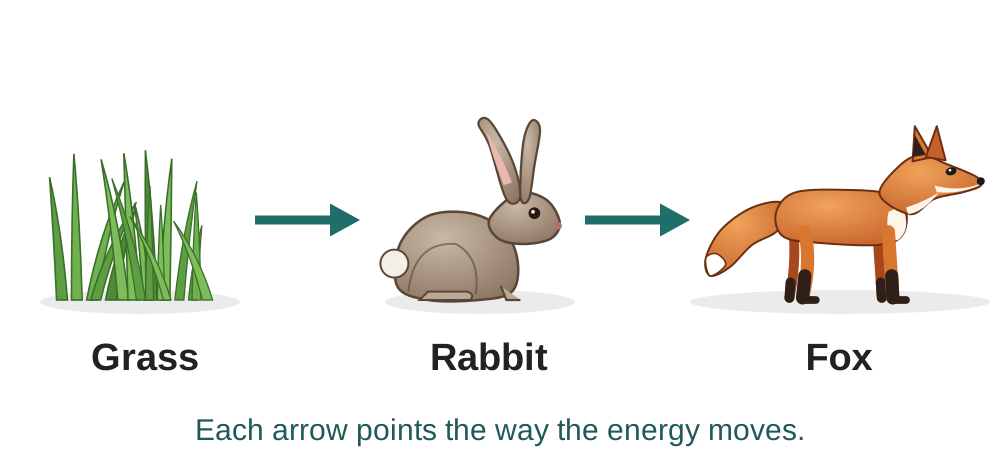
In a food web diagram, the arrows point the way energy moves: FROM the living thing that is eaten TO the living thing that eats it. This confuses many people. The arrow does not mean "eats." It means "gives energy to."
If a question asks what happens when one species declines, follow the arrows. The animals that ate it will decrease, because they have less food. The living things it ate will increase, because fewer of them are being eaten. The effects spread outward through the web.
Biogeochemical cycles
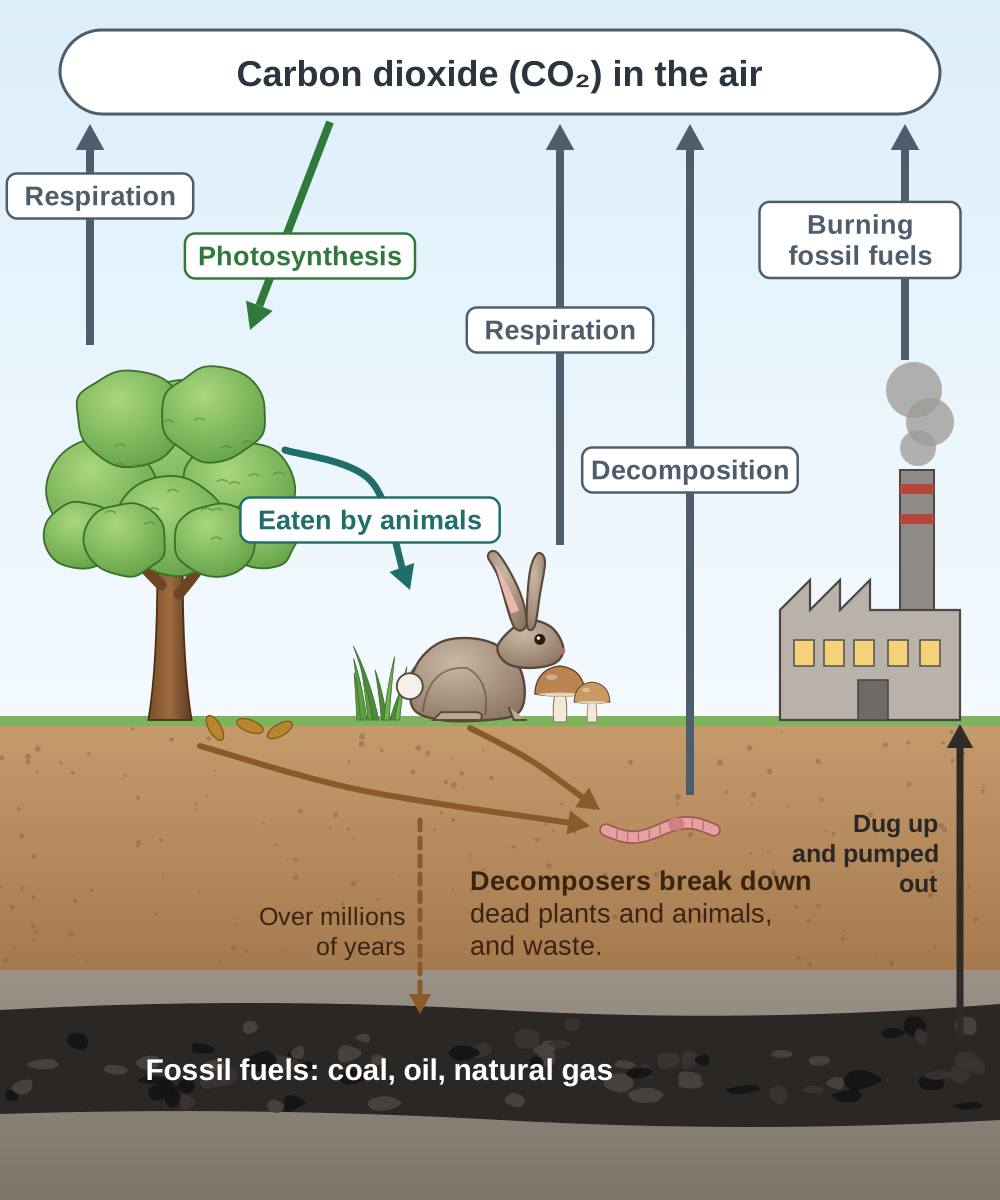
Energy moves through an ecosystem in one direction: from the sun, through producers and consumers, and out as heat. Matter is different. The atoms that make up living things are used over and over. The carbon in your body was once in the air as carbon dioxide (CO₂). A plant took it in, an animal ate the plant, and in time the carbon went back to the air or the soil through respiration (the process in which living things break down food for energy and give off carbon dioxide) or through decomposition (being broken down by decomposers). These repeating paths of matter are called biogeochemical cycles. The name puts together "bio" (life), "geo" (the Earth), and "chemical."
| Cycle | The main steps |
|---|---|
| Water cycle | Evaporation (liquid water turns to vapor in the air) → condensation (vapor cools and forms clouds) → precipitation (rain or snow) → collection (runoff over land into rivers, lakes, and oceans, and groundwater under the ground) |
| Carbon cycle | CO₂ is taken in by plants during photosynthesis → eaten by animals → given off again by respiration and decomposition → back to the air |
| Nitrogen cycle | Nitrogen gas (N₂) in the air → "fixed" by bacteria in the soil, which means changed into a form plants can use → taken up by plants → eaten by animals → broken down by decomposers and returned to the soil and air |
Energy flows: it moves in one direction and is always lost as heat along the way. Matter cycles: its atoms are used again and again. Burning fossil fuels (coal, oil, and natural gas) upsets the carbon cycle, because it releases carbon that was stored underground for millions of years.
Video: Biogeochemical Cycles, by Beverly Biology (YouTube).
How living things affect one another
In Part 3, we traced how energy moves through food chains and food webs. But those diagrams only show who eats whom. The real relationships between species go further than that. Living things compete for the same resources, form long-lasting partnerships, and keep each other's numbers in check. For the GED, you need to understand three main kinds of relationship: predator and prey, symbiosis, and competition.
Predator and prey
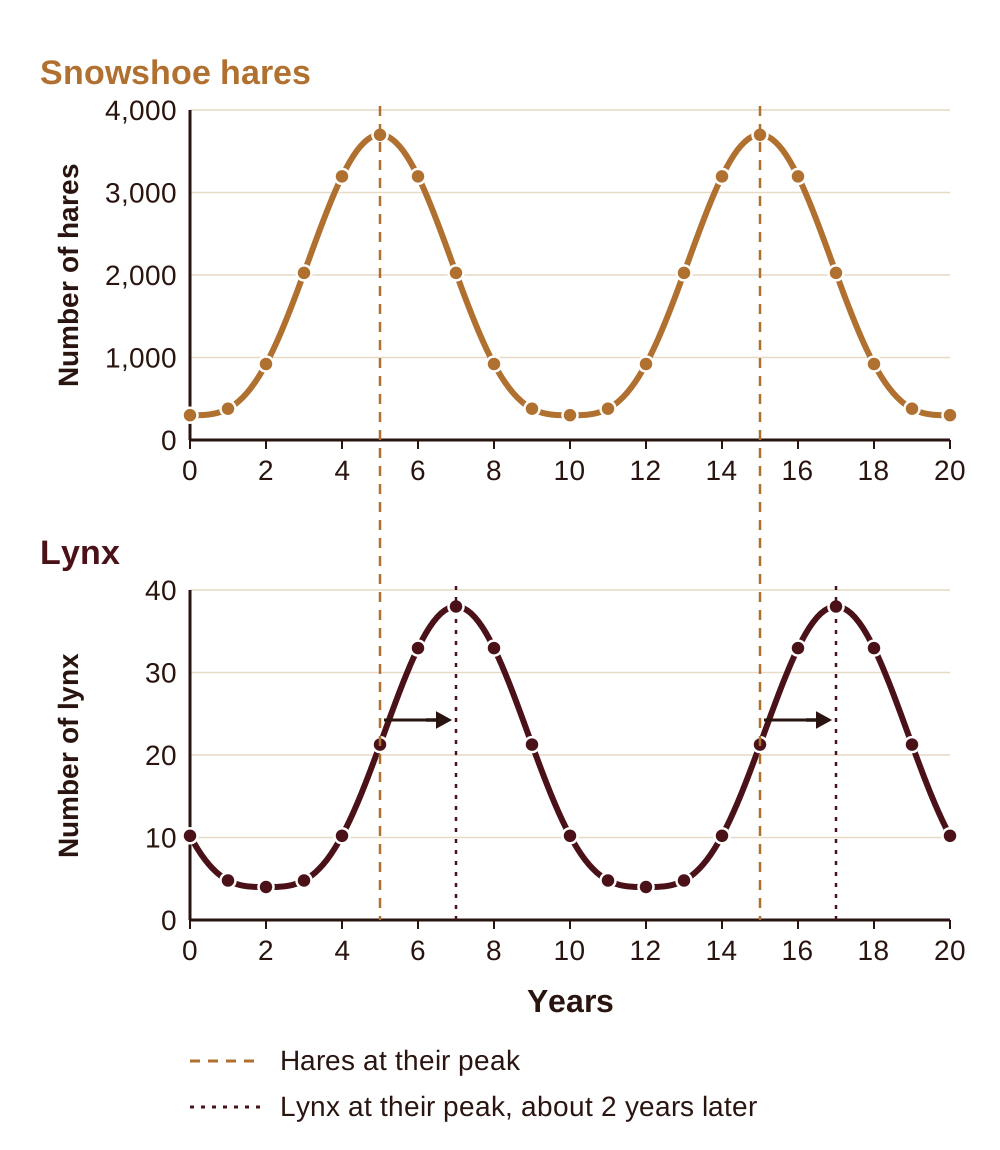
A predator is an animal that hunts and eats other animals. Its prey is the animal it eats. Predators and prey keep each other's numbers in check in a repeating cycle. When there is a lot of prey, predators have plenty of food, and their numbers go up. As the number of predators rises, more prey are eaten, so the prey population drops. With less food, the number of predators then drops, and that lets the prey population grow again. Then the cycle starts over.
The snowshoe hare and the lynx
In Canada, the number of snowshoe hares rises and falls in a cycle of about 10 years. The lynx, a wild cat that eats hares, follows the same pattern a little later. Lynx numbers go up after hares become plentiful (more food), and go down after hares decline (less food). This delay, with the predator's numbers following the prey's, is a typical sign of a predator and prey relationship.
Symbiosis
Symbiosis means "living together." It is any close, long-lasting relationship between two different species. On the GED, what matters is who is helped and who is harmed, because that decides which kind of symbiosis it is. You need to know three kinds and be able to sort examples into them. The signs in parentheses show the effect on each species: + means helped, − means harmed, and 0 means not affected.
Mutualism (+/+) is a relationship in which both species are helped. The best-known example is bees and flowers. Bees get nectar for food, and flowers get pollinated, which means the bees carry pollen from flower to flower so the plants can make seeds. Neither would do as well without the other. Another example is the fungi that grow on and around tree roots. Underground, their threads connect the roots of many trees, and people call this network the "Wood Wide Web." The fungi bring water and minerals to the trees, and the trees share sugars with the fungi.
Commensalism (+/0) is a relationship in which one species is helped and the other is neither helped nor harmed. Barnacles (small shelled sea animals) attach themselves to whales and get carried to waters rich in food, while the whale is not affected. Birds that nest in trees get shelter, and the tree is not really affected either.
Parasitism (+/−) is a relationship in which one species is helped and the other is harmed. The one that is helped is called the parasite, and the one that is harmed is called the host. Ticks feed on a dog's blood, which weakens the dog. Tapeworms live in a host's intestines and take its nutrients. Unlike a predator, a parasite usually does not kill its host quickly. The parasite does better when its host stays alive.
| Type | Who is helped? | Examples |
|---|---|---|
| Mutualism (+/+) | Both | Bees and flowers; fungi and tree roots |
| Commensalism (+/0) | One; the other is not affected | Barnacles on whales; birds nesting in trees |
| Parasitism (+/−) | One; the other is harmed | Ticks on dogs; tapeworms in intestines |
Competition
When living things need the same limited resources, such as food, water, space, or sunlight, they compete. Competition can happen within one species, as when two male deer fight over mates. It can also happen between species, as when lions and hyenas go after the same prey. The competitive exclusion principle says that two species cannot fill exactly the same niche in the same place for long. Either one will push the other out, or one will change over time to use slightly different resources.
How populations grow and shrink
Carrying capacity
Carrying capacity is the largest population that an environment can support over a long time. Scientists write it with the letter K. You can compare it to the "maximum occupancy" sign in a restaurant or a subway car: a room can safely hold only so many people, and an environment can feed and shelter only so many animals, because there is only so much food, water, shelter, and space.
The resources run out, and the population crashes. Many individuals die from hunger, disease, or lack of other resources, until the population falls back below carrying capacity. A fast rise followed by a crash like this is sometimes called a "boom and bust."
Limiting factors
A limiting factor is anything that keeps a population from growing. There are two kinds. Density-dependent factors have a bigger effect as a population gets more crowded. (The density of a population is how crowded it is: how many individuals live in a given amount of space.) Density-independent factors affect a population the same way no matter how crowded it is.
| Density-dependent | Density-independent |
|---|---|
| The effect gets STRONGER as the population grows: | The effect is the SAME whatever the population size: |
| Food supply | Natural disasters (floods, fires) |
| Disease (spreads more easily in crowds) | Extreme weather |
| Predation (being hunted by predators) | Changes of season |
| Competition for space | Pollution events, such as an oil spill |
Population growth curves
The GED often shows graphs of how a population grows. Know these two patterns.
| Exponential growth (J-curve) | Logistic growth (S-curve) |
|---|---|
| The population keeps growing faster and faster, with no limit. | Growth slows down as the population nears carrying capacity. |
| It happens when resources are unlimited. | It is closer to what happens in nature. |
| The graph is shaped like the letter J. | The graph is shaped like the letter S. |
| Example: bacteria placed in a fresh supply of food | Example: most animal populations in a stable habitat |
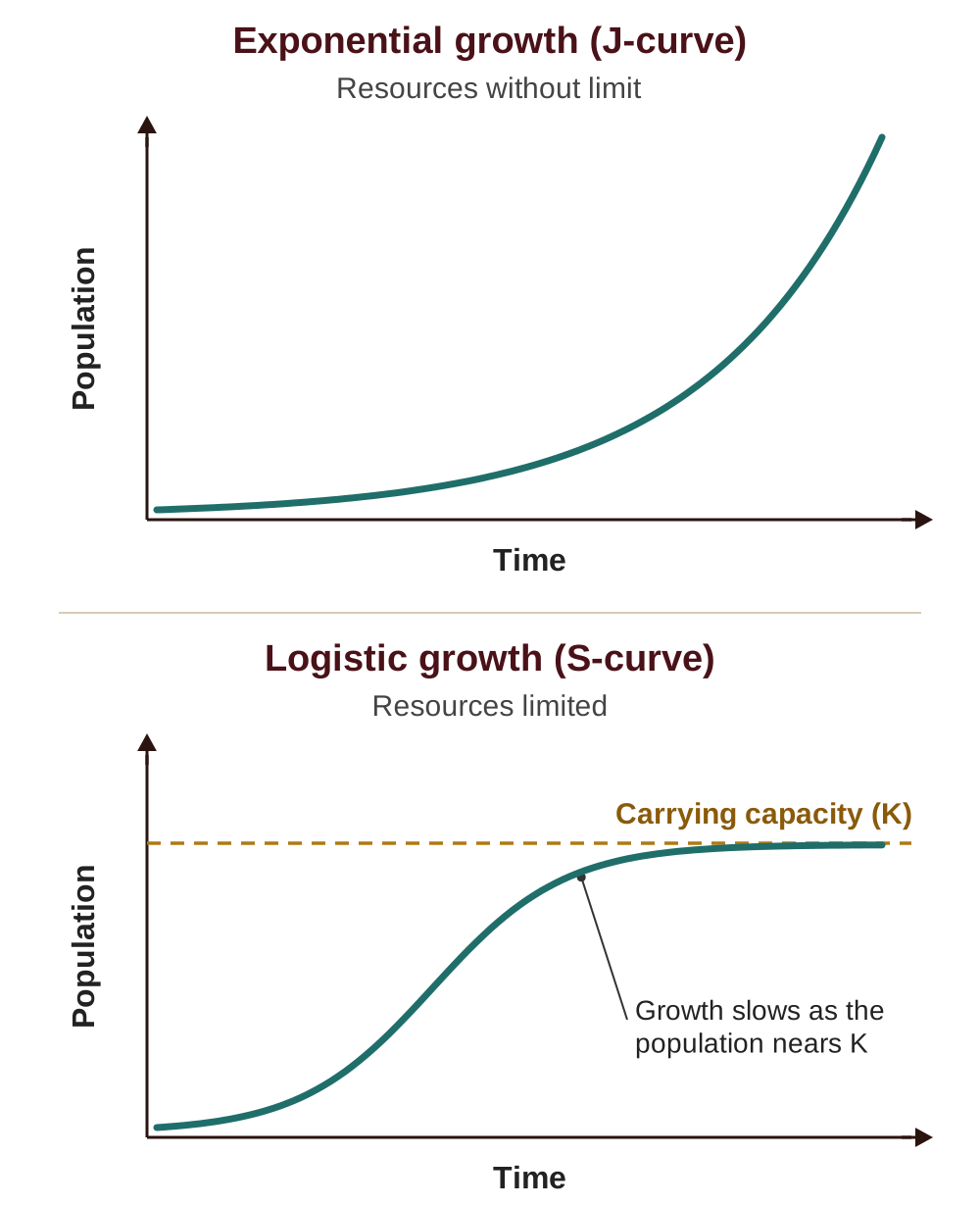
Look for three things. (1) Is the curve shaped like a J or like an S? (2) Where does the growth slow down? That is near the carrying capacity. (3) If the population drops suddenly, look for a limiting factor, such as disease, a drought, or a new predator.
Biomes
A biome is a large region of the Earth with its own climate and its own plants and animals that are adapted to live there. Climate, especially temperature and precipitation (rain and snow), is the main thing that decides which biome is found in a place.
Land biomes
| Biome | Climate | Main features |
|---|---|---|
| Tropical rainforest | Warm and wet all year | More kinds of living things than any other biome; trees grow in layers, with a high "canopy" (the roof of leaves) on top |
| Desert | Very dry; can be hot or cold | Cacti, reptiles; plants and animals that save water |
| Grassland or savanna | Rain in some seasons, dry in others | Grasses and grazing animals; fires from time to time |
| Temperate forest | Four seasons; a moderate amount of rain | Deciduous trees (trees that lose their leaves every fall); deer, squirrels |
| Taiga (also called boreal forest) | Cold, long winters; short summers | Coniferous trees (evergreens with needles and cones); moose, wolves |
| Tundra | Extremely cold; permafrost (ground that stays frozen all year) | No trees; lichens, mosses, caribou |
Water biomes
| Biome | What it is |
|---|---|
| Freshwater | Lakes, ponds, rivers, streams, and wetlands. Little salt in the water. Home to fish, amphibians (such as frogs), and water plants. |
| Marine | Oceans and coral reefs. A lot of salt in the water. Phytoplankton form the base of the food web. |
| Estuary | A place where a freshwater river meets the salty ocean, so the water is a mix of both. Extremely productive, which means a great deal of life grows there. Many sea animals spend their early lives in estuaries. |
How people affect ecosystems
Human activity has changed ecosystems at every size, from a local pond to the air around the whole planet. GED Science questions on this topic usually ask you to name the cause of an environmental problem, predict what it will do to an ecosystem, or judge whether a proposed solution would work.
Biodiversity
Biodiversity is the variety of life in an ecosystem: how many different kinds of living things live there. Higher biodiversity usually makes an ecosystem more stable and better able to recover from harm. If one species declines, others can take over its role. Biodiversity is threatened by habitat destruction, pollution, invasive species, overexploitation, and climate change. Each of these is explained in the table below.
How people affect the environment
| Impact | What it is and what it causes |
|---|---|
| Pollution | Harmful substances in the air, water, and soil. It causes acid rain (rain made acidic by pollution in the air), eutrophication (overgrowth of algae caused by too many nutrients in the water), and health problems. |
| Deforestation | Clearing forests for farming or building. It causes loss of habitat, soil erosion (soil washing or blowing away), and more CO₂ in the air. |
| Climate change | Rising temperatures around the world, caused mostly by greenhouse gases that people release, such as the CO₂ from burning fossil fuels. It causes habitats to shift, more extreme weather, rising sea levels, and ocean acidification (the ocean becoming more acidic as it takes in CO₂). |
| Invasive species | Species brought by people to a place where they did not live before. They can crowd out the native species and badly damage an ecosystem. Examples: zebra mussels, kudzu (a fast-growing vine). |
| Overexploitation | Taking a species faster than it can reproduce. Examples: overfishing, poaching (illegal hunting), and cutting down forests faster than they can grow back. |
Renewable and non-renewable resources
A renewable resource can be replaced by nature within a human lifetime. A non-renewable resource exists in a limited supply, or takes so long to form that, once it is used up, it is gone for us.
| Renewable (can be replaced) | Non-renewable (limited supply) |
|---|---|
| Solar energy | Fossil fuels (coal, oil, natural gas) |
| Wind energy | Minerals and metals |
| Water (hydropower, electricity made from moving water) | Nuclear fuels (uranium) |
| Trees (if forests are managed so they regrow) | Topsoil (takes centuries to form) |
| Geothermal energy (heat from inside the Earth) |
The terms in this guide
Adaptation An inherited trait that helps a living thing survive in its environment.
Natural selection The process in which living things with helpful traits survive and reproduce more, so the population changes over generations.
Abiotic / biotic Non-living parts of an ecosystem (sunlight, water, temperature) / living parts (organisms).
Trophic level A feeding level in a food chain (producer, primary consumer, and so on).
10% rule Only about 10% of the energy at one trophic level is passed to the next; most of the rest leaves as heat.
Decomposer A living thing that breaks down dead matter and returns nutrients to the soil.
Carrying capacity (K) The largest population an environment can support over a long time.
Limiting factor Anything that keeps a population from growing.
Mutualism A symbiotic relationship in which both species are helped (+/+).
Commensalism A symbiotic relationship in which one species is helped and the other is not affected (+/0).
Parasitism A symbiotic relationship in which one species is helped and the other is harmed (+/−).
Competitive exclusion Two species cannot fill the same niche in the same area for long.
Biodiversity The variety of life in an ecosystem; higher biodiversity usually means a more stable ecosystem.
Eutrophication Too many nutrients cause algae to overgrow; when the algae decay, the oxygen in the water is used up and water animals die.
Biome A large region defined by its climate (temperature and precipitation) and the living things adapted to it.
Niche A living thing's role in its ecosystem: what it eats, when it is active, and how it interacts with others.
12 questions on this guide
Check yourself
Choose an answer, then press Check. The explanation opens either way.
Desert foxes have much larger ears than Arctic foxes. Which statement BEST explains this difference?
Natural selection works through which individuals survive. Foxes born with larger ears lost heat more easily in the desert, so they survived longer, had more young, and passed on large ears. Choice A is the most common mistake: an animal cannot stretch a body part and pass the stretched part to its young. The environment does not cause the mutations that are needed (B). Choice D may be partly true, but it does not explain why Arctic foxes have small ears; only C explains both.
Phytoplankton in an ocean food chain contain 100,000 kcal of energy. About how much energy would reach the tertiary consumers?
Use the 10% rule three times, once for each step up: 100,000 → 10,000 (primary consumers) → 1,000 (secondary consumers) → 100 kcal (tertiary consumers). A common mistake is to stop too early and choose 1,000 kcal, which is the energy at the secondary consumers. Another is to count the producers as the first step and choose 10 kcal.
Deer are brought to an island with no predators. Their numbers grow quickly, and then the population crashes. What MOST likely happened?
This is a boom and bust. With no predators, the deer grew past the island's carrying capacity, used up their food, and many died. Choice A is tempting because predators do lower populations, but the question says there are no predators, and nothing says one was added.
Clownfish get protection by living among the stinging arms of sea anemones. The anemones are helped too, because the clownfish chase away fish that eat anemones. What kind of relationship is this?
Both species are helped, so it is mutualism (+/+). The most tempting wrong answer is commensalism, but commensalism means only one species is helped and the other is not affected. Here the anemone gains something too.
Which of these is a density-INDEPENDENT limiting factor?
A wildfire affects a population the same way whether it is crowded or not. Disease (B), competition (C), and predation (D) all get stronger as a population gets more crowded, so they are density-dependent. Disease is the most tempting wrong answer, but notice the word "crowded": disease spreads more easily when a population is crowded.
On a Galápagos island, the main food is seeds with hard shells. Which kind of finch beak would natural selection MOST likely favor there?
Finches with thick, strong beaks can crack the hard seeds and get food, so more of them survive and have young. Over generations, thick beaks become common. The long, thin beak (A) is a real finch beak, but it is suited to catching insects, not to cracking seeds.
A scientist finds a biome with permafrost, no trees, and caribou. Which biome is it?
Permafrost (ground that stays frozen all year) and no trees are the marks of the tundra. The taiga (A) is the most tempting wrong answer, because it is also cold, but the taiga is covered with coniferous trees. A temperate forest (B) has deciduous trees and milder temperatures.
Fertilizer washes from farms into a lake and causes a huge growth of algae. When the algae die, bacteria break them down and use up the oxygen in the water. Fish begin to die. What is this process called?
Eutrophication is when too many nutrients cause algae to overgrow, and their decay then uses up the oxygen that fish need. Biomagnification (A) is the most tempting wrong answer because it also involves pollution in water, but it means something different: a poison building up to higher and higher amounts in animals as you go up a food chain.
All the deer, wolves, oak trees, and birds living in one forest, taken together, make up which level of organization?
A community is all the populations of different species living in one area. The most tempting wrong answer is population, but a population is only one species, such as just the deer. If the soil, water, and climate were added, it would be an ecosystem.
In a food web diagram, an arrow goes from a grasshopper to a frog. What does the arrow mean?
Arrows in a food web point the way energy moves: from the living thing that is eaten to the one that eats it. The most common mistake is to read the arrow as "eats," which leads to choice B, the grasshopper eating the frog.
Which statement about energy and matter in an ecosystem is correct?
Energy flows in one direction, from the sun through the food chain, and leaves as heat. Matter cycles: its atoms are reused again and again. Choice B is the most tempting wrong answer, because it uses the right words but swaps energy and matter.
Why is a polar bear's thick layer of blubber called an adaptation and not a learned behavior?
An adaptation is an inherited trait: bears are born with the ability to build a thick layer of blubber, and they pass it on to their cubs. Choice C is the most tempting wrong answer, because mother bears really do teach their cubs many things, such as how to hunt. But teaching produces learned behaviors, and blubber is part of the body, not something learned.