What this guide is for
This guide is about homeostasis (say it: hoe-mee-oh-STAY-sis): the way your body keeps the conditions inside it steady, even when the world around you changes. You will learn how the body notices a change and corrects it, using what are called feedback loops, and you will follow two examples step by step: keeping body temperature steady, and stopping the bleeding from a cut.
This is one of three parts of a single long study guide on the human body. Each part is its own page:
- Part 1 (this page): Homeostasis and Feedback. The idea that ties all the body systems together.
- Part 2: The Body Systems. The major systems one at a time: circulatory and respiratory, digestive, immune, nervous, endocrine, muscular, skeletal, skin, urinary, and reproductive.
- Part 3: Health, Disease, and Reading the Evidence. How diseases arise and spread, how our surroundings affect health, and how to read health data and judge health claims.
Read Part 1 first. The same pattern you learn here, a loop that notices a change and corrects it, comes back in almost every system in Part 2.
Goes with: Look Again Quiz 19: Homeostasis · The Feedback Loop handout · Life Science: Start Here, Part 8
In this guide:
The body as a balanced system
Your body is always working to keep the conditions inside it steady, even when the conditions around you change. Step outside on a cold day, and your body right away begins to hold on to its heat. Eat a meal, and your digestive system breaks the food down while the chemistry of your blood adjusts to handle the nutrients coming in. This constant balancing has a name: homeostasis.
Homeostasis matters for the GED Science test because it gives you a way to understand how all the body systems work together. Each system you will study in Part 2 (circulatory, respiratory, digestive, immune, nervous, endocrine, and the rest) plays its own part in keeping this inside balance. When homeostasis fails, disease can follow.
What is homeostasis?
The word homeostasis comes from two Greek words: one meaning “same” and one meaning “standing steady.” It means the body’s ability to keep its inside conditions stable: its temperature, its blood sugar (the amount of sugar in the blood), its water level, and its pH (how acidic the blood and other body fluids are). Each of these must stay within a narrow range, because that is the range in which cells can do their work.
It can help to think of a thermostat. A thermostat is the dial or panel on a wall that turns the heat on when a room gets too cold and turns it off when the room is warm enough. Your body does the same kind of job, but for dozens of different conditions at the same time, not just temperature.
The key point is that homeostasis does not mean staying perfectly still. It is a dynamic balance: a balance that is kept by making small corrections all the time, as conditions change. (“Dynamic” means always moving and changing.) Your body temperature does not stay at exactly 98.6°F every second. It rises and falls a little, and your body keeps correcting it so that it stays within a healthy range.
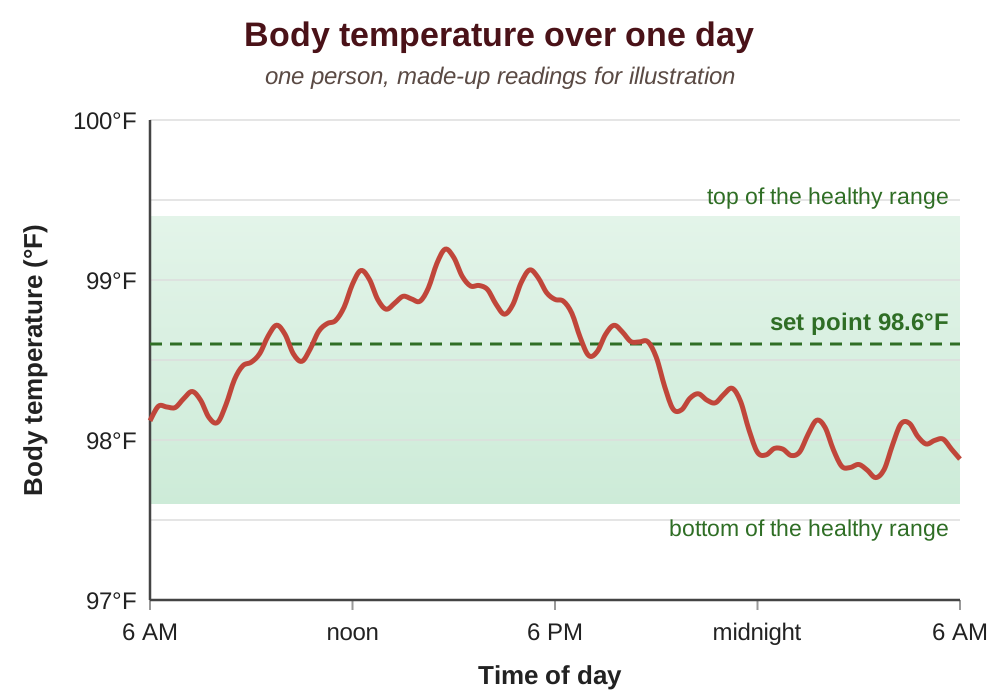
Homeostasis is the body keeping its inside conditions steady, within a healthy range, by making small corrections all the time.
Think it through. What is homeostasis, and why is it essential for survival?
Show a model answer
Homeostasis is the body’s ability to keep its inside conditions (such as temperature, blood sugar, water level, and pH) steady within a narrow range. It is essential because cells can only do their work inside that range. If a condition moves too far from normal and stays there, cells stop working properly, organs begin to fail, and the person can become seriously ill or die.
Feedback loops and negative feedback
The body keeps homeostasis by using feedback loops. A feedback loop is a chain of steps that notices a change, passes the information along, and sets off a response. The result of that response is then noticed in turn, so the information goes around in a circle. That circle is why it is called a loop: news of the result “feeds back” to the beginning.
There are two kinds of feedback loops: negative feedback loops, which are the most common, and positive feedback loops, which are rare but important.
Negative feedback: returning to normal
Every condition the body controls has a set point: the normal value the body aims for, such as a body temperature of about 98.6°F. In a negative feedback loop, the body notices a change away from the set point and sets off a response that reverses that change, bringing conditions back toward the set point.
The word “negative” does not mean bad. It means the response goes against the original change. If something goes up, the response brings it down. If something goes down, the response brings it up.
Every negative feedback loop has the same five basic parts:
- Stimulus: a change that moves conditions away from the set point.
- Receptor: a sensor that detects the change.
- Control center: the part (often in the brain) that takes in the information and decides on a response.
- Effector: the muscle, gland, or organ that carries out the response. (A gland is an organ that makes and releases chemicals the body uses.)
- Response: the action that works against the original change and brings the body back toward normal.
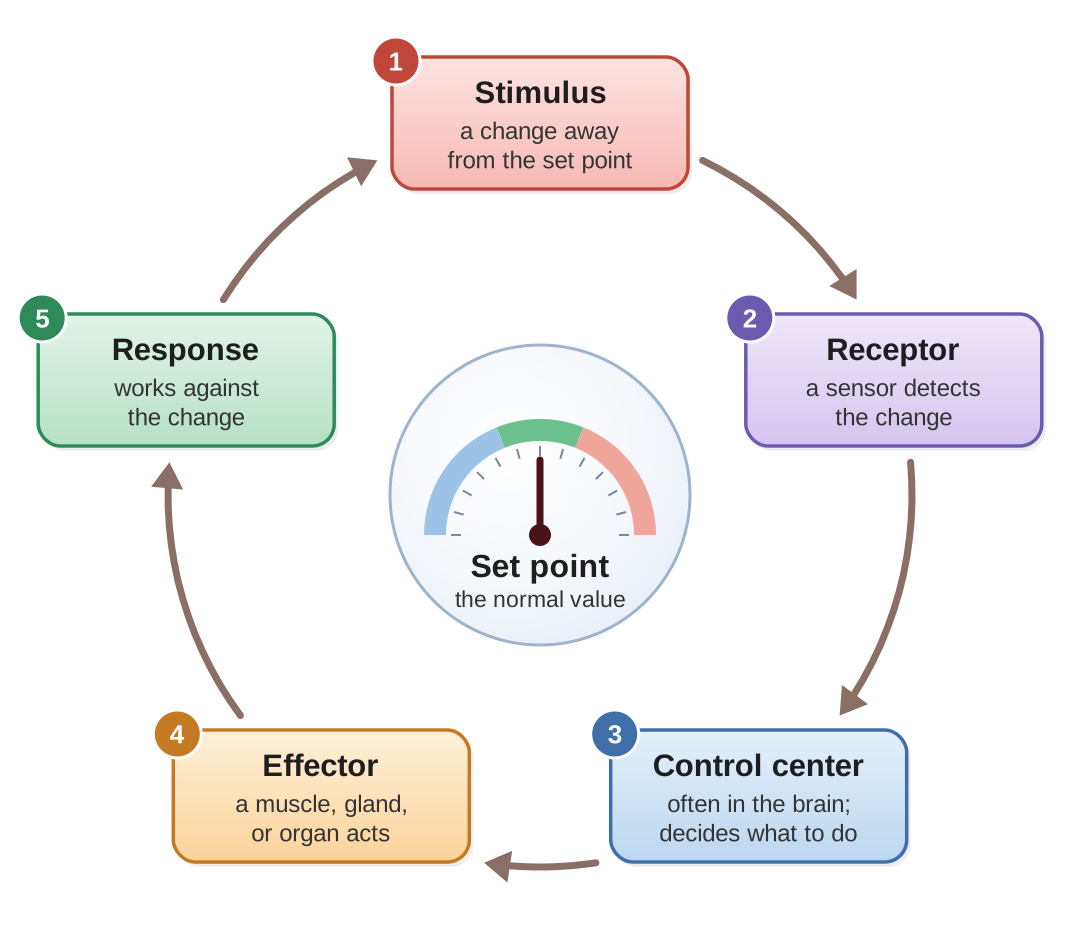
This same pattern will come back again and again. When you study blood sugar, body temperature, or the balance of hormones, you will see the same loop. Once you can recognize the pattern, you can predict how a system will behave, and you can understand what happens when the control breaks down.
Think it through. What are the five parts of a negative feedback loop?
Show a model answer
The stimulus (a change away from the set point), the receptor (the sensor that detects the change), the control center (often in the brain, which decides on a response), the effector (the muscle, gland, or organ that acts), and the response (the action that works against the change and brings the body back toward normal).
Positive feedback
Positive feedback loops are rare in the body because they do not keep things in balance. Instead, they amplify a change: they make it bigger and bigger until a process is finished. Instead of returning to a set point, positive feedback pushes the body further and further from where it started, until a final event, sometimes called the culminating event, brings the loop to an end. (To culminate means to reach the final point.)
That sounds dangerous, and it can be if it is not controlled. But the body uses positive feedback on purpose, for processes that need to happen quickly and completely: for example, blood clotting when you are injured, or the contractions of childbirth, which must grow stronger and stronger until the baby is delivered.
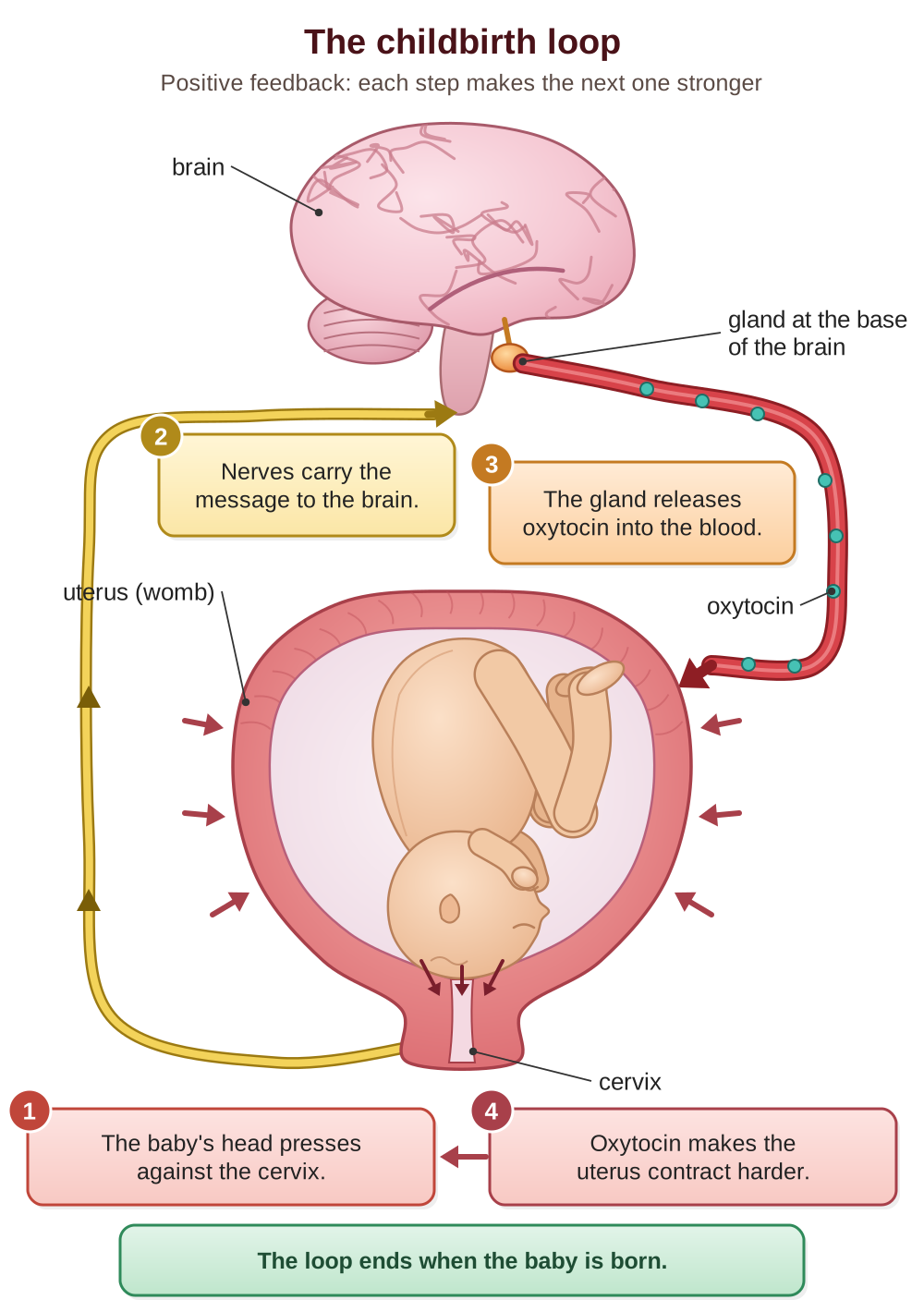
How the childbirth loop works
During labor, the baby’s head presses against the cervix, the opening at the lower end of the uterus (the womb). Nerves carry that message to the brain, and a gland at the base of the brain releases a hormone called oxytocin (ox-ee-TOE-sin). A hormone is a chemical messenger carried in the blood. Oxytocin makes the muscles of the uterus contract harder. Harder contractions press the baby’s head more firmly against the cervix, which leads to more oxytocin, which leads to even stronger contractions. The loop keeps building until the baby is born. Then the pressure on the cervix stops, and the loop stops with it.
Negative feedback works against a change and brings the body back to normal. Positive feedback makes a change bigger until a job is finished.
Example: keeping body temperature steady
Thermoregulation means the control of body temperature (thermo- means heat). Your body keeps its core temperature, the temperature deep inside, around the heart, brain, and other organs, at about 98.6°F (37°C). That number is an average: a healthy person’s temperature can be a little higher or lower, and it changes slightly over the course of a day.
The hypothalamus (hi-po-THAL-uh-mus), a small area at the base of the brain, acts as the body’s thermostat. It receives temperature information from sensors in the skin and in other parts of the body, and then sets off warming or cooling responses as needed.
This is negative feedback at work. Whether you are too hot or too cold, the response always opposes the change and moves you back toward normal.
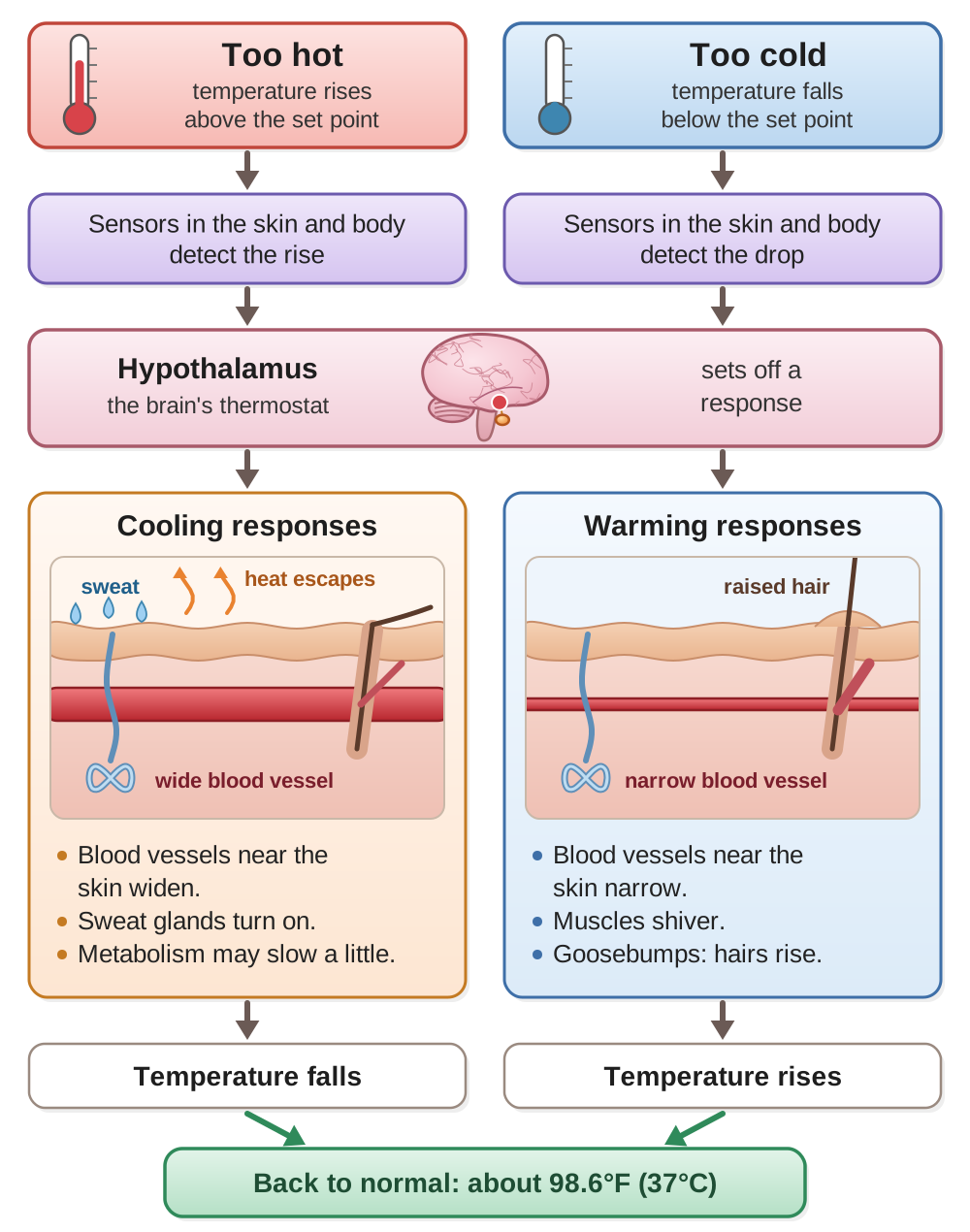
When you are too hot: Blood vessels near the skin dilate (widen), bringing more warm blood to the surface, where heat can escape into the air. Sweat glands turn on; as sweat evaporates (dries off into the air), it cools the skin. Your metabolism, the chemical work your cells do, which gives off heat, may slow slightly, so the body makes a little less heat inside.
When you are too cold: Blood vessels near the skin constrict (narrow), keeping warm blood closer to the core. Skeletal muscles (the muscles attached to your bones) begin quick contractions that you do not control. This is shivering, and it produces heat. Tiny muscles at the base of each hair tighten and pull the hair upright, making goosebumps. This is a leftover from our distant ancestors, who had much more body hair: for them, raised hair trapped a layer of warm air next to the skin.
Think it through. You step into a cold room. What happens in your body? Name the stimulus, receptor, control center, effector, and response.
Show a model answer
Stimulus: the body begins to lose heat, and temperature starts to fall below the set point. Receptor: temperature sensors in the skin (and inside the body) detect the drop. Control center: the hypothalamus in the brain receives the signal and decides the body needs to warm up. Effectors: the skeletal muscles (which shiver), the blood vessels near the skin (which narrow), and the tiny muscles at the base of the hairs (which make goosebumps). Response: shivering makes heat and the narrowed vessels keep warm blood in the core, so body temperature rises back toward normal. The response opposes the change, so this is negative feedback.
Example: blood clotting
When you cut yourself, the body needs to stop the loss of blood quickly. A slow, gradual response will not work: the wound needs to be sealed as fast as possible. This is where positive feedback is useful.
When a blood vessel is damaged, platelets (small cell fragments in the blood that help it clot) rush to the site and stick to the edges of the wound. As they pile up, they release chemical signals that attract more platelets. Those new platelets release more signals, attracting even more platelets. The response grows quickly in a cascade, a chain in which each step sets off a bigger next step, until a stable clot forms and seals the wound.
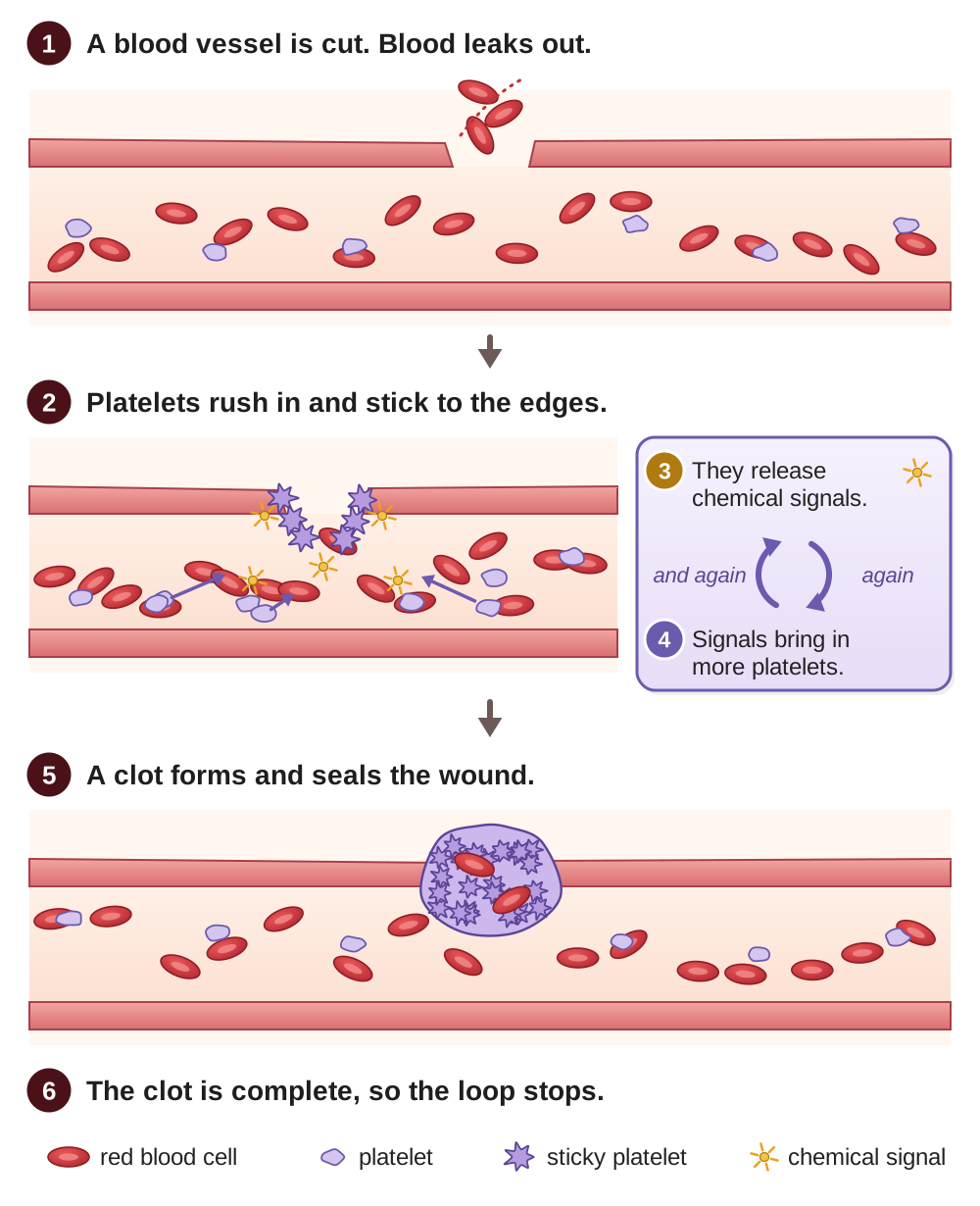
Notice the key difference. In thermoregulation, the response opposes the change: that is negative feedback. In blood clotting, the response amplifies the change until a final event, the completed clot, ends the cycle: that is positive feedback.
Think it through. Why does blood clotting use positive feedback instead of negative feedback?
Show a model answer
A cut has to be sealed quickly and completely, or the body keeps losing blood. Negative feedback makes small corrections back toward a set point, which would be too slow and too weak for this job. Positive feedback builds on itself: each platelet that arrives brings in more, so the response grows very fast until the clot is finished. Once the wound is sealed, the loop stops.
Comparing the two kinds of feedback
| Feature | Negative feedback | Positive feedback |
|---|---|---|
| Direction of response | Opposes the change | Amplifies (makes bigger) the change |
| Goal | Return to the set point | Drive a process to completion |
| How common? | Very common (most loops in the body) | Rare |
| Examples | Body temperature, blood sugar, blood pressure | Blood clotting, childbirth, milk release during breastfeeding |
Some charts list fever as an example of positive feedback. Most biology books describe it differently. During an infection, the hypothalamus raises the body’s set point, and ordinary negative feedback (shivering, narrowing of the blood vessels in the skin) then brings the body up to that new, higher temperature and holds it there. When the fever “breaks,” the set point goes back to normal, and the body sweats to cool down. That is why fever is not listed as positive feedback on this page.
Think it through. How does negative feedback differ from positive feedback?
Show a model answer
Negative feedback works against a change and brings conditions back to the set point, so it keeps things steady. It is very common, as in body temperature and blood sugar. Positive feedback makes a change bigger and bigger until a job is finished, and then it stops. It is rare, and it is used for processes that must be fast and complete, such as blood clotting and childbirth.
Homeostasis in every body system
As you move through Part 2, you will see feedback loops at work in every body system:
- Circulatory and respiratory systems keep the oxygen level and the blood pressure steady.
- Digestive system, working with the pancreas, keeps blood sugar steady through the feedback of two hormones, insulin and glucagon.
- Immune system tells the body’s own cells (“self”) apart from invaders (“non-self”), and adjusts how strongly it reacts, including how much inflammation (redness, heat, and swelling) it causes.
- Nervous system coordinates fast responses and regulates the other systems.
- Endocrine system uses hormones to keep many conditions balanced over the long term.
- Muscular system makes heat by shivering, and the muscle in the walls of blood vessels helps control blood pressure.
- Skeletal system stores calcium in the bones and releases it or takes it back in to keep the calcium level in the blood steady.
- Skin helps control body temperature through sweating and the widening or narrowing of blood vessels near the surface.
- Urinary system: the kidneys, guided by hormones, keep the balance of water and salt in the blood steady.
Understanding homeostasis now gives you a way to understand why each system works the way it does, and what goes wrong in disease when these feedback loops fail. When you are ready, go on to Part 2: The Body Systems.
The terms in this guide
Homeostasis The body keeping its inside conditions (temperature, blood sugar, water, pH) steady within a healthy range.
Dynamic balance A balance kept by making small corrections all the time, not by staying perfectly still.
Feedback loop A chain of steps that notices a change and responds to it; the result is noticed in turn, so the steps go around in a circle.
Set point The normal value the body aims for, such as a temperature of about 98.6°F.
Negative feedback A loop in which the response works against the change and brings conditions back to the set point. Very common.
Positive feedback A loop in which the response makes the change bigger until a process is finished. Rare.
Stimulus A change that moves conditions away from the set point.
Receptor A sensor that detects the change.
Control center The part, often in the brain, that decides on a response.
Effector The muscle, gland, or organ that carries out the response.
Response The action the effector carries out.
Thermoregulation The control of body temperature.
Hypothalamus A small area at the base of the brain that acts as the body’s thermostat.
Platelets Small cell fragments in the blood that gather at a wound and help form a clot.
Hormone A chemical messenger carried in the blood, such as insulin or oxytocin.
10 questions on this guide
Check yourself
Choose an answer, then press Check. The explanation opens either way.
In the phrase “negative feedback,” what does the word “negative” mean?
In negative feedback, the response opposes the change: if something goes up, the response brings it down, and the other way around. The most tempting wrong answer is “harmful,” because in everyday speech “negative” often means bad. Here it only means “against.”
Which of these best describes homeostasis?
Homeostasis is keeping inside conditions (temperature, blood sugar, water, pH) steady within a healthy range. The tempting mistake is “exactly 98.6°F every second”: homeostasis is a dynamic balance, and temperature rises and falls a little while the body keeps correcting it.
In the loop that controls body temperature, which part is the control center?
The hypothalamus, at the base of the brain, takes in the temperature information and decides on a response. The sweat glands may tempt you because they are part of the loop, but they are effectors: they carry out the response. The skin sensors are receptors.
You walk into a cold room and begin to shiver. In this feedback loop, the skeletal muscles that shiver are the
The muscles carry out the response (shivering, which makes heat), so they are effectors. A likely mistake is “stimulus”: the stimulus is the drop in temperature that started the loop, not the muscles that respond to it.
Which of these is an example of positive feedback?
At a cut, each platelet that arrives sends signals that bring in more platelets, so the response grows until the clot is complete: positive feedback. Insulin may tempt you because it is a well-known loop, but insulin works against a rise in blood sugar, so it is negative feedback. The other two choices are also negative feedback.
Why does the body use positive feedback for blood clotting?
A wound needs a fast, strong response that keeps building until the clot is finished. “It keeps the blood at its set point” is the tempting mistake: returning to a set point is what negative feedback does, not positive feedback.
When you are too hot, what do the blood vessels near your skin do?
Widened blood vessels bring more warm blood to the surface, where heat can leave the body. Narrowing (the first choice) is what happens when you are too cold; it is easy to mix the two up.
What brings a positive feedback loop to an end?
Positive feedback keeps building until a final (culminating) event, such as the completed clot or the birth of the baby, ends it. The first choice is tempting, but reversing the change describes negative feedback.
After lunch, a person’s blood sugar rises. The pancreas releases insulin, and blood sugar falls back to normal. What kind of loop is this?
The rise in blood sugar sets off a response (insulin) that brings it back down, so the response opposes the change: negative feedback. The second choice is tempting, but every loop starts with a change; what matters is whether the response works against the change or makes it bigger.
Which statement about negative feedback is true?
Most of the body’s control loops (temperature, blood sugar, blood pressure) use negative feedback. The other three choices describe positive feedback, which is rare, drives a process to completion, and makes a change bigger. If you picked one of them, you may have switched the two names.