The AI Debate as It Is Currently Conducted
The public debate over artificial intelligence is conducted almost entirely on the terrain of the technology itself — what it can do, when it will do more, whether it will harm us. The figures in this section disagree fiercely with one another. Some believe the technology will produce abundance; others believe it will produce extinction. Some are building it as fast as they can; others have left their positions in the firms building it to warn that it is being built too fast. They argue. They sometimes take each other to court. Most of them, across all their disagreement, share a frame: the question is what AI is and what it might become, with answers ranging from utopia to apocalypse but rarely turning to questions of ownership, governance, or distribution.
Two seams run through Part I where that shared frame is broken from inside, along two different axes. The first is epistemological: a group of figures — gathered here under "The Paradigm in Question" — argues that the dominant method does substantially less than its builders claim, on formal grounds drawn from causality, linguistics, cognitive science, and learning theory. They are not warning that AI is dangerous or unjust; they are arguing that it is conceptually incomplete, and that scale will not close the gap. The second seam is political: the accountability reporters in the final subsection describe AI as a labor supply chain, an extraction industry, a surveillance business model — and in doing so begin to ask the ownership question the rest of the discourse declines. These two breaks are independent. One can be persuaded by either without the other. Together they give the reader two distinct reasons the dominant framing is inadequate, one formal and one political, and the document follows the political one into Part II while the epistemological one stands on its own.
Part I presents the debate on its own terms, organized by the movements within it: existential warning; the figures who interrogate the paradigm itself; the critics of present, documented harm; the leaders building and accelerating the technology; the maximalists who hold the transformation is near; the alignment researchers working the engineering problem; and the accountability reporters who form the hinge into Part II. The order moves from the longest time horizon — extinction risk over decades — through the question of whether the method is even sound, toward the most immediate: this firm, this contract, this worker, this week. A reader who absorbs the paradigm critique early reads everything after it more carefully, which is why it sits second rather than buried.
i.Existential Warning and Long-Termism
These figures take seriously the possibility that AI systems will, within decades or sooner, become powerful enough to pose existential risks to human survival. They differ on timeline, on probability, and on what response is adequate. They share a willingness to make claims in public that most senior figures in the field will make only in private — that the technology being built may be qualitatively different from technologies that preceded it, and that the firms building it may not be steering toward outcomes humans can survive.
Geoffrey Hinton
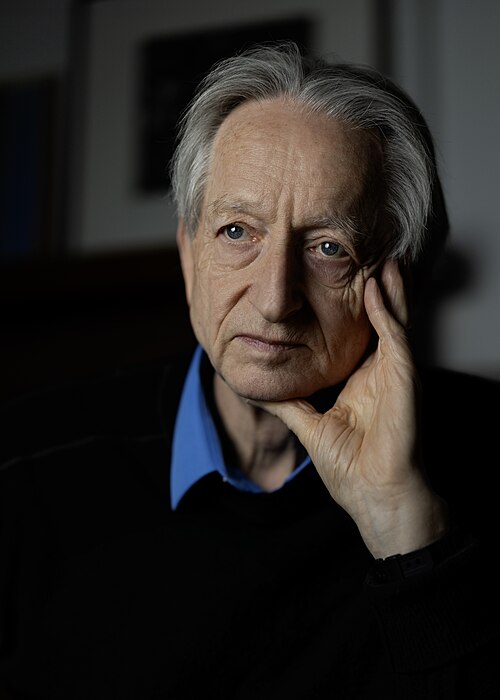
Cognitive scientist and Turing Award winner often called a "Godfather of AI" for his foundational work on neural networks and deep learning. In 2023 he resigned from Google in order to speak freely about what he sees as the near-term risks of the technology he helped build, including the possibility that AI systems will surpass human intelligence within decades and that the firms developing them lack adequate incentive to slow down. His turn from architect to critic is one of the most consequential repositionings in the field.
Yoshua Bengio
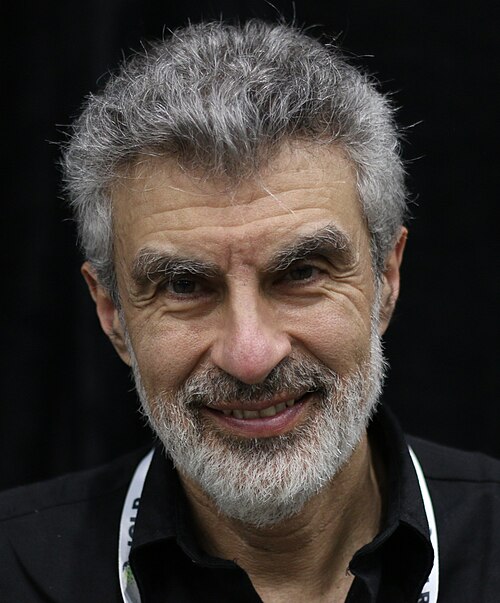
Turing Award winner alongside Hinton and LeCun, Bengio now leads the International AI Safety Report mandated by the 2023 Bletchley Declaration, and has called for binding international treaties on frontier model development. His position is distinctive within the "Godfather" generation because it combines technical credibility with explicit advocacy for democratic oversight rather than corporate self-governance.
Stuart Russell
Author of Artificial Intelligence: A Modern Approach, the standard textbook used in nearly every university AI course for three decades, Russell argues for what he calls "human-compatible AI": systems designed from the outset to be uncertain about human preferences and to defer to human judgment, rather than systems that optimize a fixed objective. His critique of the current paradigm is that it builds optimizers without building in the humility the optimizers would need to be safe.
Max Tegmark
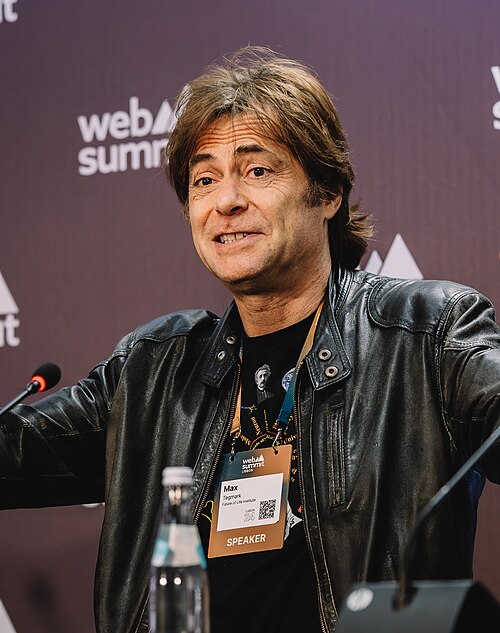
MIT physicist and co-founder of the Future of Life Institute, which in March 2023 published the open letter calling for a six-month pause on training models more powerful than GPT-4. The letter was signed by over thirty thousand researchers and technologists and was almost entirely ignored by the firms it addressed. Tegmark's continued work focuses on what he calls "provably safe AI" — systems with mathematical guarantees about their behavior, rather than empirical hope.
Nick Bostrom
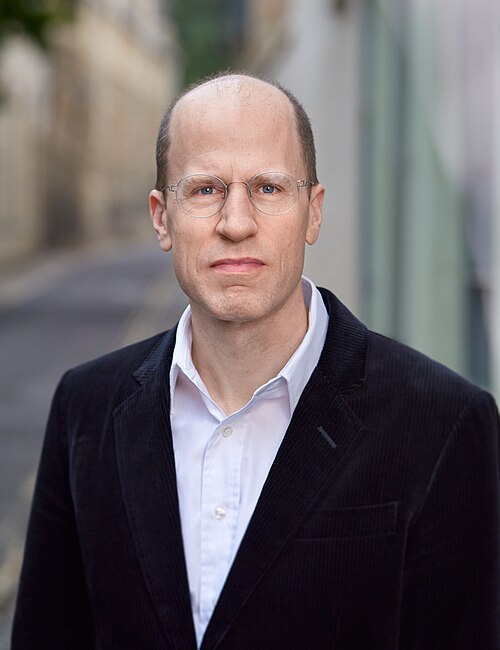
Oxford philosopher whose 2014 book Superintelligence introduced much of the conceptual vocabulary the existential-risk discourse still uses: instrumental convergence, the orthogonality thesis, the control problem. His influence on the field is structural — Altman, Musk, and many of the alignment researchers cite him as formative — even as his more recent work has been controversial.
Eliezer Yudkowsky
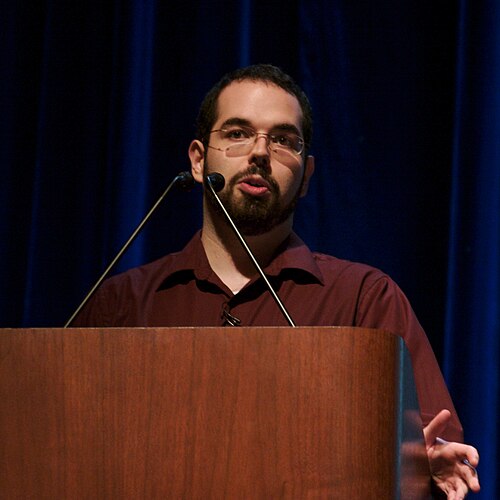
Co-founder of the Machine Intelligence Research Institute and co-author with Nate Soares of If Anyone Builds It, Everyone Dies (2025), which argues that the current trajectory of frontier AI development leads to human extinction and that the only adequate response is an enforceable international moratorium on large training runs. Yudkowsky is the most uncompromising voice in the existential-risk camp; his position is rejected by most researchers as too extreme and embraced by a smaller circle as the only honest reading of the evidence.
ii.The Paradigm in Question
These figures argue that the dominant method is conceptually incomplete — not dangerous, not unjust, but doing substantially less than its builders claim, on formal grounds. They come from four different disciplines and converge on a single conclusion: prediction is not understanding, and scale will not close the gap. This is the seam in Part I where the shared frame is broken on epistemological rather than political grounds. It is also the critique that depends least on values and most on the formal properties of the method, which is why it is the hardest for the field to wave away.
Judea Pearl
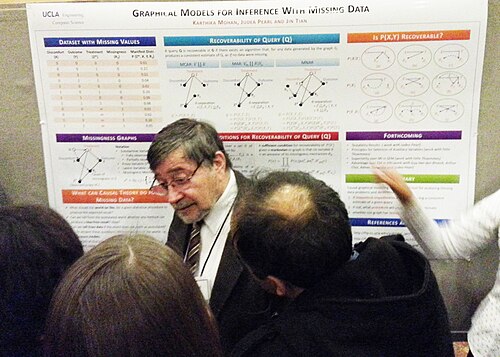
Turing Award winner (2011) and one of the most consequential figures in the history of AI, twice over: in the 1980s he developed Bayesian networks, the formalism that made probabilistic reasoning tractable and that still underlies an enormous amount of applied machine learning; and from the 1990s onward he formalized causal inference — the "do-calculus," Causality (2000), and the popular The Book of Why (2018, with Dana Mackenzie). His core claim is that statistical learning, which is essentially all that deep learning and large language models do, can represent correlation but is constitutionally incapable of representing causation, intervention, or counterfactuals without a causal model imposed from outside the data. His image is a "ladder of causation": current systems are stuck on the bottom rung — association — unable to climb to doing or imagining. Pearl is the most intellectually serious skeptic in the landscape, and his skepticism is of a different kind from the doom or ethics critiques: he is saying the paradigm is epistemologically limited in a way its builders systematically understate. He is sometimes overconfident — the LLM era has produced behaviors he tends to wave away — but the central point, that prediction is not understanding and that causal reasoning must be built rather than learned from observation alone, has aged well and grows more consequential as these systems are deployed into decisions where getting causation wrong has consequences.
Emily M. Bender
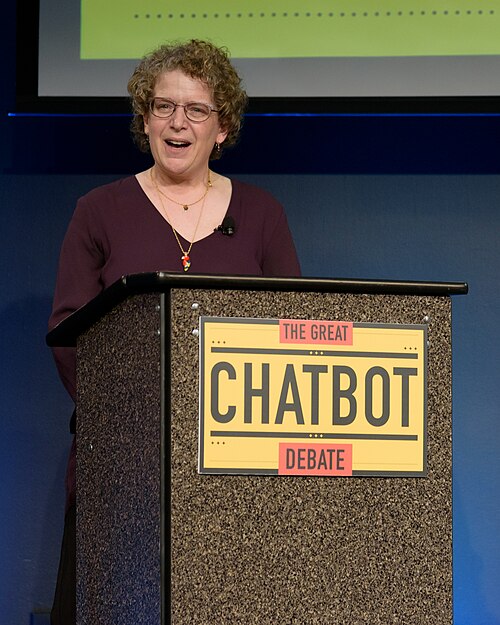
Professor of linguistics at the University of Washington and co-author, with Gebru, Mitchell, and Angelina McMillan-Major, of the 2020 "Stochastic Parrots" paper. Where Gebru's critique of large language models is primarily political and economic — and is treated under Ethics, below — Bender's is linguistic and epistemological: her sustained argument is that systems trained to predict plausible sequences of text have no access to meaning, reference, or communicative intent, and that describing them as "understanding" language is a category error with real consequences for how the public, courts, and policymakers reason about them. She coined, with Alexander Koller, the "octopus test" thought experiment, and has done as much as anyone to insist on the discipline of distinguishing what these systems do from what their marketing claims they do. Her insistence on precise language about language is not pedantry; it is the argument that the terms in which a technology is described determine the terms on which it can be governed.
Gary Marcus
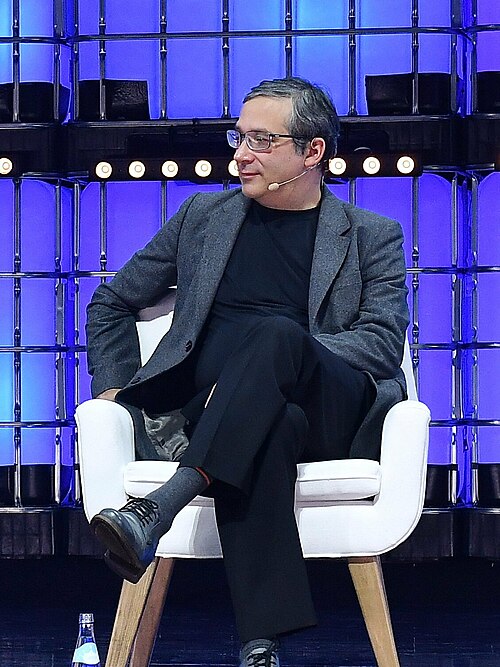
Cognitive scientist (NYU, emeritus) whose pre-AI work was on the development of language and cognition in children, in the nativist tradition that holds that minds come with built-in structure pure learning cannot account for. His AI critique is the application of that prior: deep learning is powerful pattern extraction but lacks compositionality, systematic generalization, and stable symbolic representation, and will therefore keep producing the same class of failures — confabulation, brittleness under distribution shift, unreliable variable binding — regardless of scale. His proposed remedy is neurosymbolic: hybrid systems combining learned representations with explicit symbolic structure, the same family of remedy Goertzel has pursued for decades. The substance is serious and converges with Pearl's and Bender's. The delivery is its own liability: Marcus has a documented pattern of staking strong predictive claims, having them partly overtaken by events, and reframing rather than conceding, while maintaining a high public profile relative to his current research output. He is included here because the tension is itself instructive — he demonstrates that the paradigm critique can be correct in substance and self-defeating in delivery, and the document is more honest naming that than canonizing or omitting him.
Yann LeCun

Chief AI Scientist at Meta and a Turing Award winner alongside Hinton and Bengio — and, in his discursive function rather than his org chart, the most prominent figure arguing the current paradigm is architecturally wrong. (He also appears in Acceleration and Industrial Leadership as the head of one of the largest research operations in the world; the entry there points back to this one, because the reason he matters to a reader is the argument made here.) LeCun's position, developed through his work on Joint-Embedding Predictive Architectures and "autonomous machine intelligence," is that generative token prediction is a dead end for genuine understanding: it wastes capacity modeling unpredictable surface detail and never builds an internal model of how the world behaves. His constructive alternative is a system whose primary competence is a world model — an abstract, predictive, manipulable representation of consequential structure, closer to how an animal learns that an unsupported object falls without predicting the trajectory of every leaf. This is the constructive form of his skepticism: not merely that LLMs are limited, but a formal account of why, and a proposed architecture that addresses it. It converges, from learning theory, with Fei-Fei Li's argument from perception and embodiment that the missing capability is spatial and physical grounding — the same diagnosis about world models reached through two different doors. The asymmetry is worth holding: LeCun declares the paradigm a category error and proposes its successor; Li builds the successor without declaring war on the predecessor.
iii.Ethics, Fairness, and Present Harm
These figures focus on the immediate, observable, documented harms produced by AI systems already in deployment — racial and gender bias in commercial recognition systems, the exploitation of clickworkers labeling training data, the leakage of private information through ostensibly anonymized systems, the use of algorithmic tools by state agencies and corporations in ways that compound rather than correct existing inequities. The frame is not what AI might become but what it is doing now, to whom, with what evidence.
Timnit Gebru
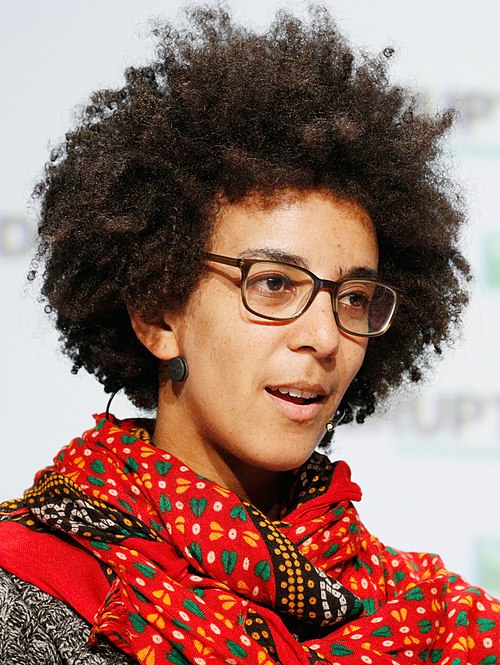
Co-founder of Black in AI and founder of the Distributed AI Research Institute (DAIR), Gebru's 2020 paper "On the Dangers of Stochastic Parrots" — co-authored with Mitchell, Bender, and McMillan-Major — is one of the most cited critiques of large language models, and the paper Google fired her over. DAIR was founded to do AI research independent of corporate funding, a structural answer to the problem the firing exposed. (Bender, her co-author, appears under "The Paradigm in Question" above, where her linguistic argument is treated alongside the epistemological critics; Gebru's contribution here is the political-economic one.)
Joy Buolamwini
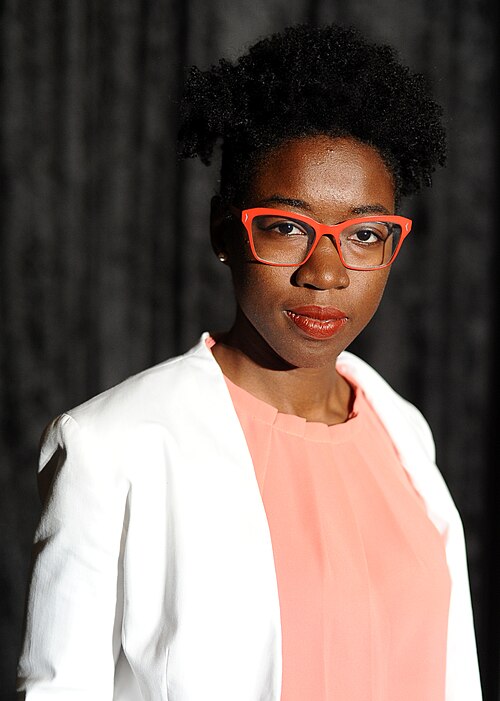
Founder of the Algorithmic Justice League and author of Unmasking AI (2023). Her Gender Shades research, conducted at MIT, demonstrated that commercial facial recognition systems from IBM, Microsoft, and Face++ had error rates near zero for light-skinned men and as high as 35% for dark-skinned women. The work directly produced policy change: IBM exited facial recognition, Amazon paused police sales, and several US cities banned the technology outright.
Inioluwa Deborah Raji
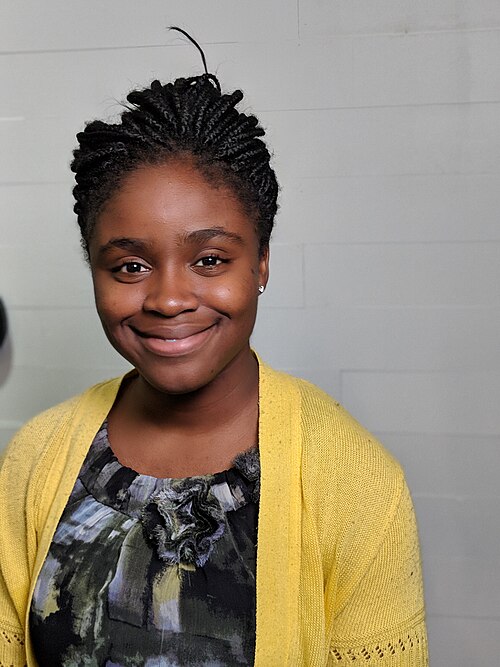
Researcher whose audits of commercial facial-recognition systems, beginning with the Actionable Auditing work that extended Buolamwini and Gebru's findings to Amazon's Rekognition, helped establish algorithmic auditing as a field. Her career is itself an argument about credit: the 2021 erasure of her, Gebru, and Buolamwini from mainstream coverage of the bias research they pioneered is a case study in how authorship of this critique gets reassigned. She works on accountability infrastructure — the unglamorous, institutional question of who is empowered to inspect a system and compel a change.
Safiya Noble
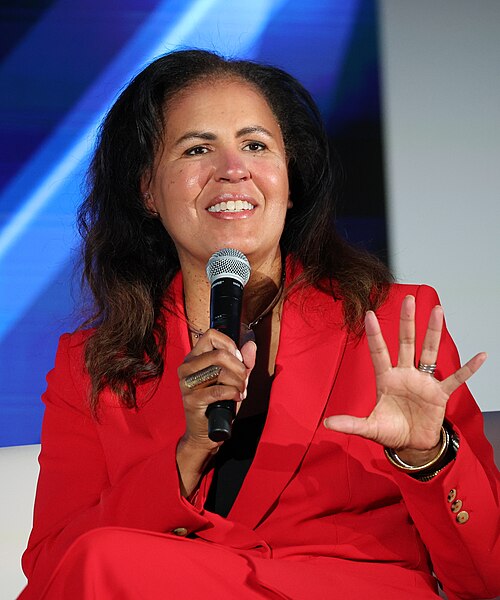
UCLA professor and author of Algorithms of Oppression (2018), Noble documented how search engines reproduce and amplify racism through ranking systems that present themselves as neutral. Her broader argument is that algorithmic systems are not glitched when they produce racist outputs — they are functioning correctly within an information economy that monetizes attention without responsibility for what attention finds.
Margaret Mitchell

Former co-lead of Google's Ethical AI team, fired alongside Gebru in 2021, Mitchell developed the "Model Cards" framework for documenting AI systems — what they were trained on, what they are designed for, what their known failure modes are. The framework is now used across the industry, including by firms that fired the people who built it.
Latanya Sweeney
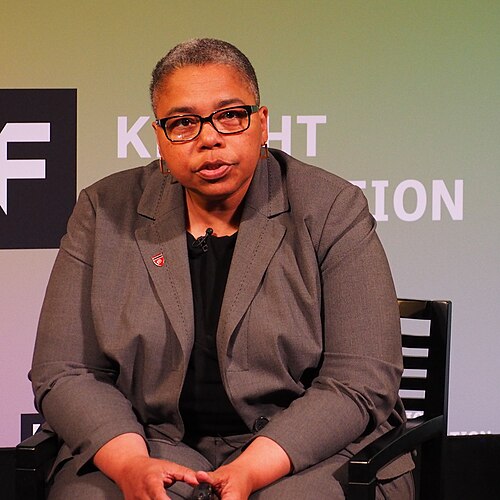
Harvard professor and former Chief Technologist at the Federal Trade Commission, Sweeney's work established the field of data privacy as a quantitative discipline. Her demonstration in the 1990s that 87% of Americans can be uniquely identified by birthdate, gender, and ZIP code alone forced a generation of policy and technical responses, and her continued work tracks how algorithmic systems leak the information they claim to protect.
Rumman Chowdhury
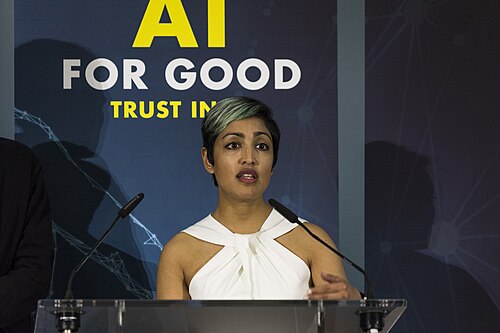
Founder and CEO of Humane Intelligence, former director of Twitter's ML Ethics, Transparency and Accountability team (disbanded after Musk's acquisition), Chowdhury organized the first major public red-teaming exercise of large language models at DEF CON 2023. Her work focuses on building the auditing infrastructure the AI industry will not build for itself.
Abeba Birhane
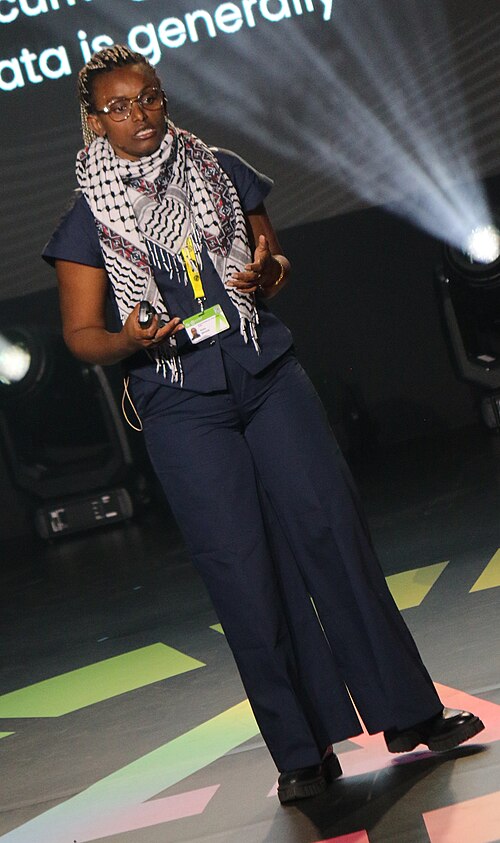
Cognitive scientist at Trinity College Dublin and senior advisor to the Mozilla Foundation, Birhane's audits of large-scale training datasets — LAION among others — have repeatedly demonstrated the presence of CSAM, racist imagery, and non-consensual private data in the corpora used to train commercial AI systems. The empirical force of her work is its specificity: not these systems might have problems but this dataset contains these specific harms, in these quantities, and it has been used to train these specific products.
iv.Acceleration and Industrial Leadership
These figures lead the firms building frontier AI and the infrastructure on which it runs. They are not interchangeable. Hassabis frames his work as scientific where Altman frames his as world-historical. Fei-Fei Li argues for human-centered design from inside the research establishment that produced the modern field. Yann LeCun runs one of the largest research operations in the world while making the architectural critique treated under "The Paradigm in Question" above. The Amodeis founded Anthropic explicitly to do safety-focused frontier development. What they share is a working assumption that the technology will be built, that they should be the ones building it, and that the rate of building should accelerate. The question of who owns what they build is not, in most of their public statements, treated as central.
Sam Altman
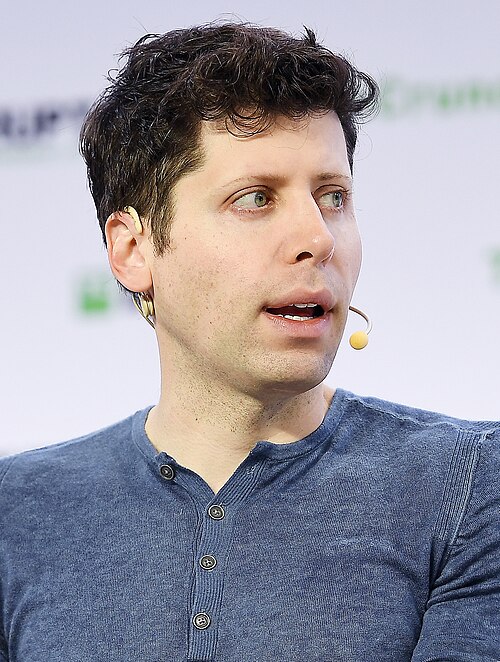
CEO of OpenAI and the central public figure of the current AI boom. His position is structurally unstable: he calls for federal regulation of AI while leading the firm whose products would be most affected by it, advocates for safety while presiding over the departure of most of OpenAI's senior safety researchers, and frames AGI as both humanity's greatest opportunity and its greatest risk. The contradictions are not incidental to his role; they are the role.
Jensen Huang
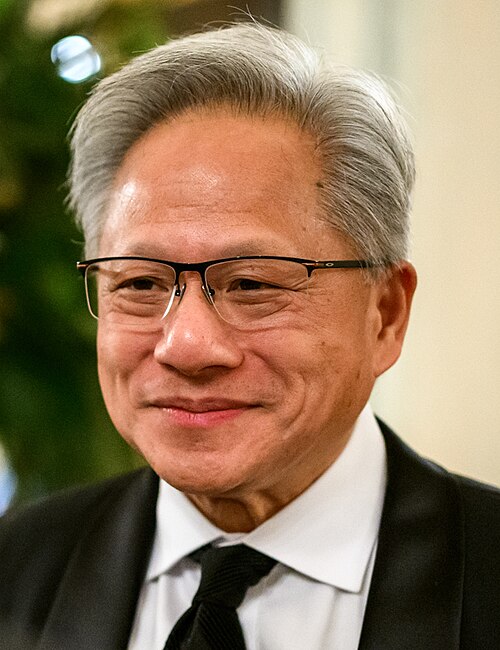
CEO of NVIDIA, whose GPUs power nearly all frontier AI training and most inference. Huang's significance is infrastructural rather than rhetorical: every AI debate in this document is conducted on hardware his company designs and sells, and NVIDIA's market capitalization briefly made it the most valuable company in human history in 2024. The question of who owns AI is, downstream, a question of who can buy his chips.
Demis Hassabis
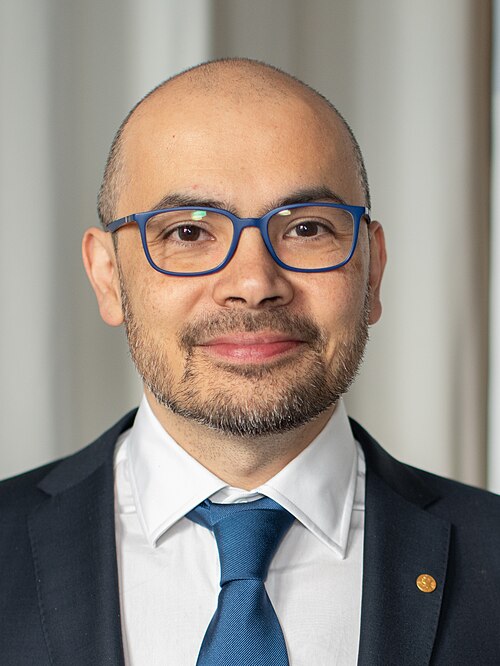
Co-founder and CEO of Google DeepMind, neuroscientist, and 2024 Nobel laureate in Chemistry for AlphaFold's protein structure predictions. Hassabis is the figure who most consistently frames frontier AI development as a scientific project — solving protein folding, modeling weather, mapping the brain — rather than a commercial one, even as DeepMind operates inside one of the largest advertising companies in the world.
Fei-Fei Li
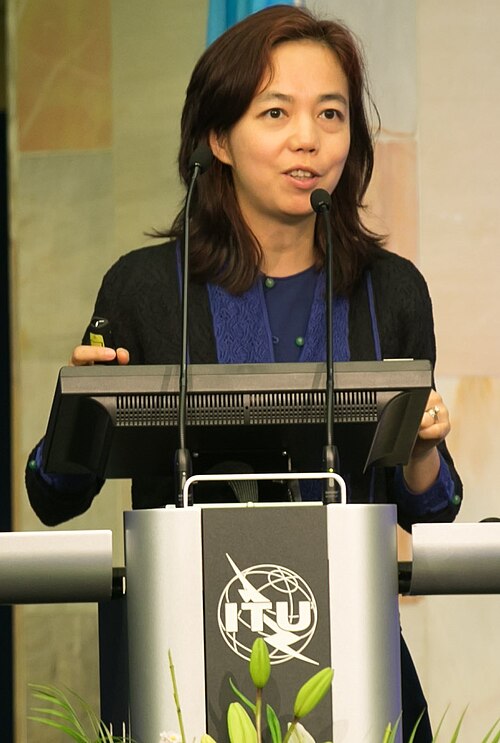
Stanford computer scientist, co-director of the Stanford Institute for Human-Centered AI (HAI), and founder of the spatial-intelligence company World Labs. Li led the creation of ImageNet, the large-scale labeled image dataset whose 2012 benchmark results are widely treated as the inflection point at which the modern deep learning era began — which makes her, by a reasonable accounting, one of the few people whose specific technical work made the rest of this document's subject matter possible. Often called a "Godmother of AI," she has spent the years since arguing — through HAI, through her memoir The Worlds I See (2023), and in congressional testimony — that "human-centered" should be a design constraint on AI development rather than a slogan appended to it. Her current work on "spatial intelligence" — machines that understand and generate 3D space and physical structure — converges, from perception and embodiment, with Yann LeCun's argument from learning theory that the missing capability is a world model: the same diagnosis reached through two different doors, treated under "The Paradigm in Question" above. The asymmetry is worth holding: Li builds the successor without declaring the predecessor a category error, which is why her entry sits here rather than there. Whether "human-centered" can be a meaningful constraint while the ownership question goes unaddressed is precisely the question Part II raises.
Dario Amodei
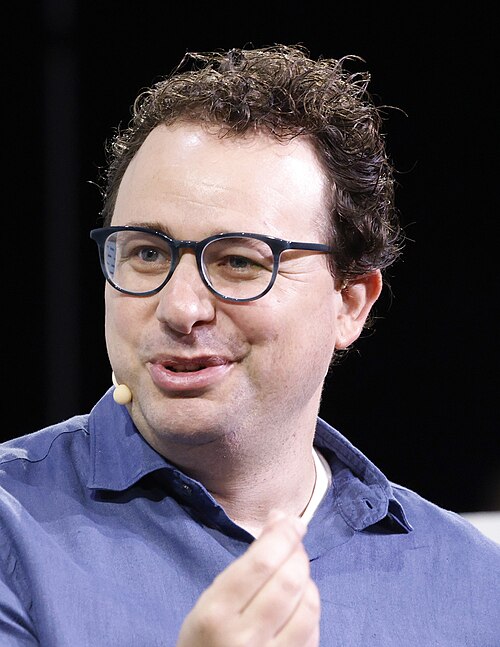
Co-founder and CEO of Anthropic, which he left OpenAI to start in 2021 along with several senior colleagues over disagreements about safety practices and commercial direction. Trained as a computational neuroscientist at Princeton and Caltech, he led the team at OpenAI that produced GPT-2 and GPT-3 before departing. His public writing — including the 2024 essay Machines of Loving Grace — argues that powerful AI is coming regardless of who builds it, that the responsible path is for safety-focused researchers to build at the frontier rather than cede it, and that the technology could plausibly compress decades of biomedical and scientific progress into a few years. Whether this thesis describes a genuine alternative to the acceleration dynamic or a sophisticated participation in it is the question his critics most often raise.
Daniela Amodei
President of Anthropic and the firm's operational architect. Her path to the role is unusual: an undergraduate degree in English literature and political science from UC Santa Cruz, several years in international development and global health policy (including work at the aid organization Direct Relief), then a move into operations at Stripe before joining OpenAI as VP of Operations and Safety in 2018. She co-founded Anthropic with her brother and six other former OpenAI colleagues in 2021. The literary and humanitarian background is not incidental to how the firm operates — Anthropic's internal culture, its approach to model character, and its public framing of AI as a question of values rather than only capabilities reflect a sensibility you would not predict from a frontier lab's org chart. She is, by some distance, the most senior woman running a frontier AI company, and the only one whose formation was in literature rather than engineering.
Yann LeCun
Chief AI Scientist at Meta and a Turing Award winner, LeCun runs one of the largest industrial AI research operations in the world — which is why he appears in this subsection at all. His load-bearing contribution to the discourse, however, is the architectural argument that the current paradigm is conceptually wrong and that the path forward requires world-model architectures not yet built. That argument, and its convergence with Fei-Fei Li's from a different direction, is treated in full under The Paradigm in Question earlier in Part I. He is named here so the industrial map is complete; he is understood there.
Elon Musk
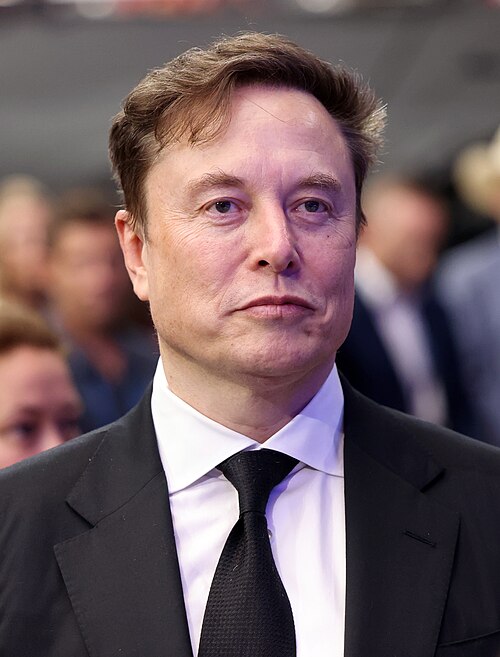
Early signatory of the 2015 open letter on AI risk and co-founder of OpenAI as a nonprofit, Musk has since become a central figure in physical AI deployment through Tesla's Optimus program and a competitor at the frontier through xAI. His position is structurally contradictory: he warns publicly about existential risk while accelerating both humanoid robotics and frontier model development, and his ownership of X gives him direct control over a major information channel shaping AI discourse itself. The contradiction is the point — Musk illustrates how "AI safety" rhetoric and aggressive deployment now routinely coexist within a single figure. Part IV returns to him in his other role, as a sovereign operator of digital infrastructure within state power.
Satya Nadella and Sundar Pichai
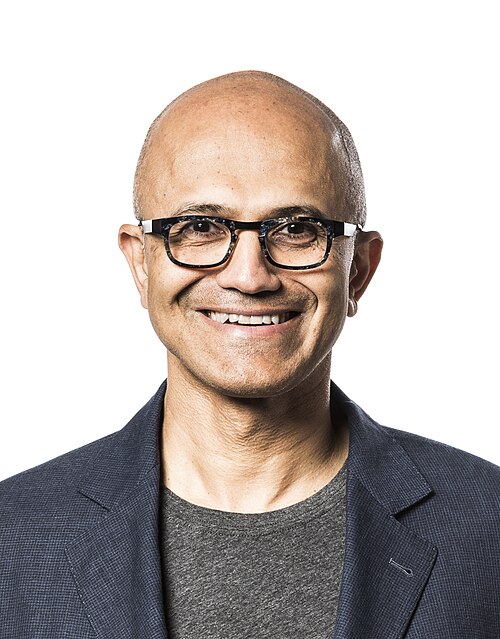
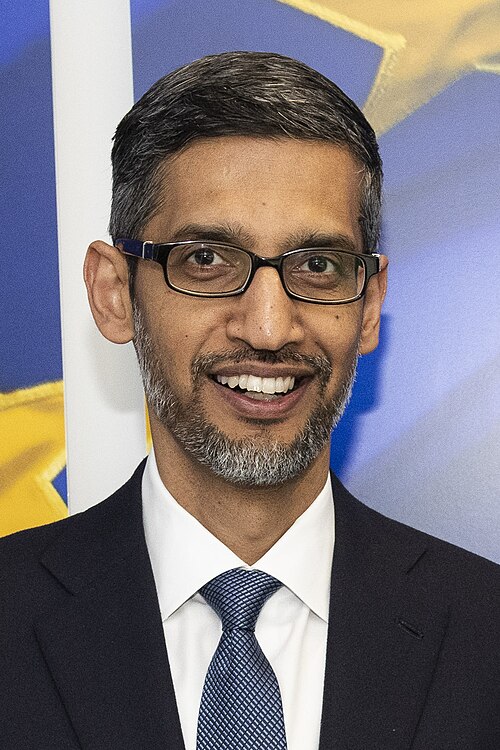
As CEOs of Microsoft and Alphabet respectively, Nadella and Pichai have directed the integration of AI into the operating systems, productivity software, search infrastructure, and cloud services used by billions of people. Their role in the discourse is less rhetorical than structural: they are not arguing for acceleration so much as enacting it through deployment decisions invisible to most users. The Microsoft–OpenAI relationship in particular illustrates how a single corporate alliance can shape the trajectory of the entire field.
Mustafa Suleyman
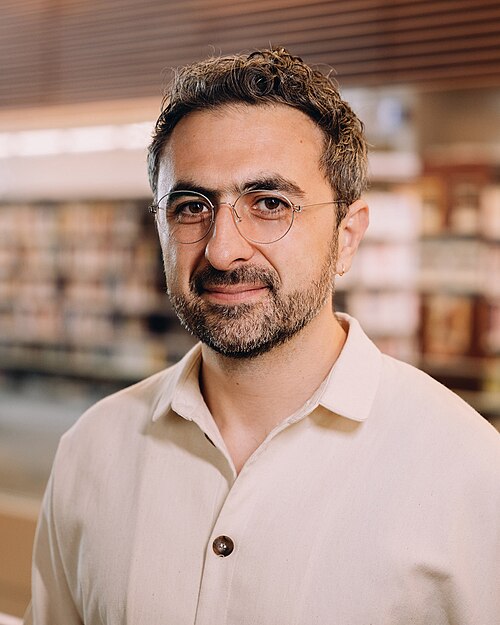
Co-founder of DeepMind, founder of Inflection AI, and currently CEO of Microsoft AI, Suleyman is the rare figure who has held senior positions across all three of the firms shaping the field. His 2023 book The Coming Wave argues that AI and synthetic biology together constitute a containment problem unlike any technology in human history, and that nation-states have roughly a decade to develop the institutions adequate to it.
v.Maximalists and the Singularity
These figures hold that AGI or superintelligence is near and transformative. That is the only thing they share. The decisive distinction this subsection insists on is not timeline but the politics of ownership: Kurzweil's singularity is something that happens to humanity, delivered, and is fully compatible with corporate consolidation; Goertzel's and Mostaque's maximalism is constitutively about who owns the road there — open weights, decentralized networks, the commons rather than the empire. To flatten them into "the hype people" is to miss the seam where the maximalist wing touches the Part II ownership argument from an unexpected direction. The abundance-delivered register (Diamandis and the exponential-growth utopians, encountered in passing elsewhere) belongs with Kurzweil, not with the open-and-decentralized wing, and the document keeps them apart deliberately.
Ray Kurzweil
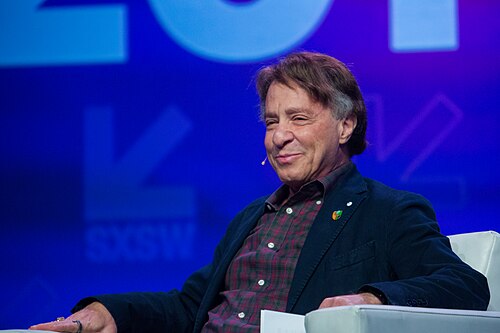
The canonical singularitarian. The Singularity Is Near (2005) and The Singularity Is Nearer (2024), and a long body of work arguing that exponential improvement in information technologies leads, on a datable schedule, to the merger of human and machine intelligence. Now a researcher at Google. Kurzweil's significance is that he supplied the narrative grammar — exponential curves, the singularity as an event with a date — that a great deal of contemporary acceleration rhetoric still runs on, often without attribution. His maximalism is essentially passive in the political sense: the transformation arrives, humanity is carried along, and the question of who owns the productive infrastructure that delivers it is not, in his frame, the central one. That is precisely the assumption Parts II through IV exist to contest, which makes Kurzweil useful here as the clearest statement of the position the rest of the document argues against.
Ben Goertzel
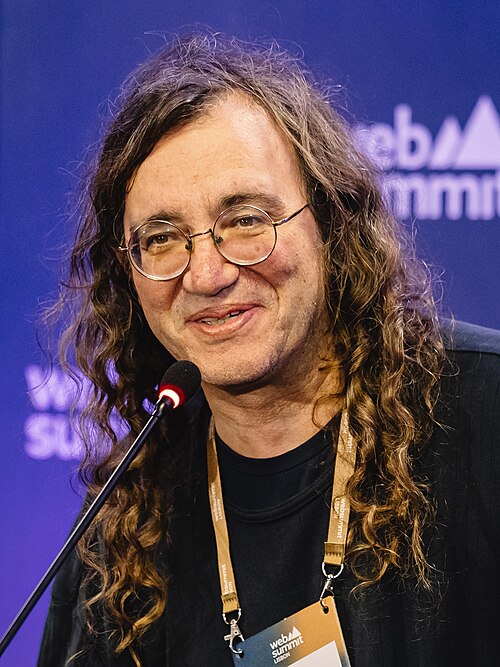
The figure who popularized — in its modern usage, effectively coined — the term "artificial general intelligence," now used daily by people who have never heard his name. Decades of work on OpenCog, a hybrid/neurosymbolic cognitive architecture pursuing AGI from a direction sharply different from pure deep learning, and CEO of SingularityNET, a decentralized AI marketplace. He is the figure most readily dismissed by mainstream researchers as a fringe self-promoter — but the dismissal misses what matters here. Goertzel is not funded by an empire; his stated thesis, years ahead of the current ownership discourse, is that AGI should be developed as a decentralized, open, commonly-owned network rather than the proprietary asset of a few corporations. He arrives at "AI should not be enclosed by Big Tech" from transhumanist and decentralization premises rather than cooperative or post-capitalist ones, and the crypto-token framing of SingularityNET carries its own enclosure risks that the document does not endorse. But the position is real and it predates the fashion. His presence demonstrates something true and worth a workshop's attention: discomfort with corporate AI enclosure is not confined to the labor left — it has a wing on the singularitarian fringe, arriving at a convergent conclusion from an entirely different tradition. The hybrid-architecture commitment also connects him to Marcus's neurosymbolic remedy under "The Paradigm in Question," from the opposite temperament.
Emad Mostaque
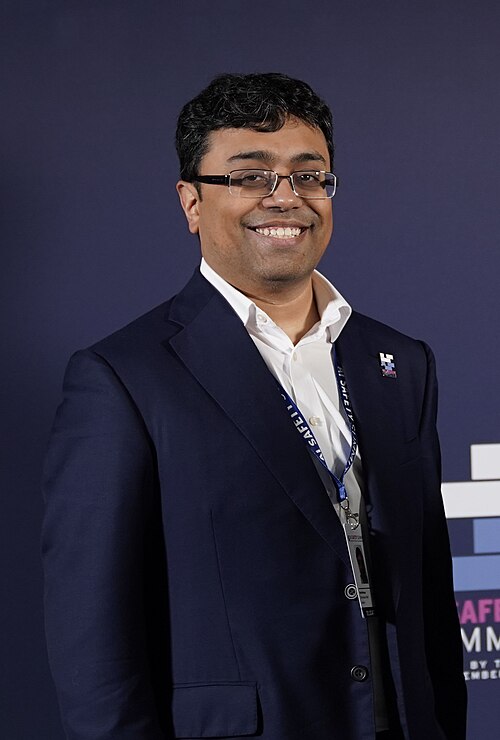
Founder of Stability AI and the figure who made open-weight image generation a fact on the ground rather than a position paper: Stable Diffusion's public release demonstrated that frontier-adjacent generative capability could be openly distributed, forcing the closed labs to argue against a working counterexample rather than a hypothetical. He left Stability in 2024 amid governance and financial turmoil — the instability is part of the record and should be named, not smoothed — and has since worked on decentralized AI. Mostaque's significance is not as a theorist but as a demonstration: open release at scale was not merely advocated, it was done, and the field's subsequent argument about open versus closed weights is conducted in a world he helped make concrete. He sits with Goertzel on the open-and-decentralized side of this subsection's central distinction, and apart from Kurzweil's delivered-singularity register.
vi.Technical Alignment and Safety Research
These researchers work on the engineering problem of making AI systems behave as intended — and the prior problem of specifying intent precisely enough that it can be engineered toward. Their work is technical, often mathematical, and proceeds inside the firms whose products would be most affected by it. The field has fractured in the past two years: several of its most prominent figures have left frontier labs, founded alternative organizations, or moved from leading alignment work to questioning whether the framing of alignment itself captures what needs to be done.
Ilya Sutskever
Co-founder of OpenAI, its former Chief Scientist, and one of the most influential technical figures in deep learning. He left OpenAI in 2024 and founded Safe Superintelligence Inc. (SSI), assuming the CEO role in July 2025 following the departure of co-founder Daniel Gross. SSI's stated and only product is safe superintelligence — no intermediate commercial releases, no consumer products — a "straight shot" approach distinct from the product-focused roadmaps at OpenAI and Google. Whether the model is viable, or whether it eventually produces the same dynamic OpenAI itself began with, is an open question.
Jan Leike
Former co-lead of OpenAI's Superalignment team, Leike resigned in May 2024 with a public statement that "safety culture and processes have taken a backseat to shiny products" at the firm, and joined Anthropic to lead Alignment Science. In May 2026 he transitioned to leading a new, undisclosed research project at Anthropic, stating in his announcement that "alignment is only one" of the necessary components for AGI to go well. The trajectory — from leading the most prominent alignment effort at OpenAI to leading it at Anthropic to stepping back from the framing itself — is one of the field's more telling signals about how the central problem is being reformulated by the researchers closest to it.
Amanda Askell
Philosopher and head of personality and alignment research at Anthropic since 2021, Askell works on the question of what kind of entity a language model should be — what character, values, and dispositions should be cultivated rather than only what behaviors prevented. Her work sits at an unusual seam in the alignment field, treating model character as a philosophical and ethical question rather than purely an engineering one.
Ajeya Cotra
Senior researcher at Open Philanthropy, Cotra's "biological anchors" framework — published in 2020 and revised since — is one of the most cited attempts to forecast AGI timelines by analogy to the computational requirements of biological evolution. Her work is methodologically careful in a field that mostly is not, and her timelines have shortened consistently as frontier model capabilities have advanced faster than her initial estimates predicted.
Rohin Shah
Senior research scientist at Google DeepMind and founder of the Alignment Newsletter, Shah's role in the field is partly synthetic: tracking, organizing, and translating alignment research across a community that produces faster than it can read itself. His own work focuses on the technical question of how to specify human values to systems that will be more capable than the humans specifying them.
vii.Accountability and Critical Reporting
These figures document what the firms building AI are actually doing — the labor supply chains, the energy and water demands, the contracts with state agencies, the internal cultures, the gap between public statements and operational reality. Their work begins to ask the question the rest of Part I largely declines to: not what AI is or might become, but who owns it, who profits from it, who pays for it in labor and resources, and who is being asked to assume the risks the firms themselves will not. This subsection is the hinge into Part II.
Karen Hao
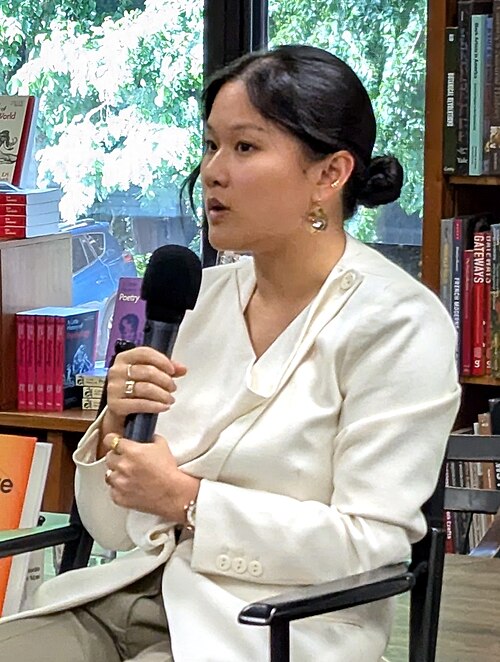
Investigative journalist and author of Empire of AI (2025), Hao has produced the most thorough on-the-record account of how frontier AI companies actually operate — their labor supply chains in Kenya and the Philippines, their water and energy demands in Chile and the American South, and the internal cultures that produced the technology. Her reporting reframes the AI debate from a question about machines to a question about empire: who extracts, who is extracted from, and who decides.
Mo Gawdat

Former Chief Business Officer at Google X and author of Scary Smart, Gawdat argues that the period between roughly 2025 and 2040 will produce severe social dislocation — what he calls a "short-term dystopia" — before any longer-term equilibrium emerges. His value to the discourse is the specificity of his timeline and his willingness, as a former insider at one of the firms building this technology, to describe what he believes its near-term consequences will be. He fits within accountability reporting rather than doom or acceleration: his claim is not that AI will end humanity but that the firms deploying it know what's coming and are deploying it anyway.
Kate Crawford
Senior principal researcher at Microsoft Research, professor at USC Annenberg, and author of Atlas of AI: Power, Politics, and the Planetary Costs of Artificial Intelligence (2021). Crawford's contribution is to insist on the materiality of AI — the lithium mined for batteries, the water consumed by data centers, the workers in Kenya and the Philippines labeling training data, the rare earths and the energy and the labor that "the cloud" makes invisible. Her work refuses the abstraction that lets AI be discussed as if it were ideas rather than infrastructure, and her atlas remains the most rigorous mapping of the technology's physical substrate.
Meredith Whittaker

President of the Signal Foundation, co-founder of the AI Now Institute, and one of the organizers of the 2018 Google Walkout. Her position is that AI as currently developed is a surveillance technology by structural necessity — the business model requires the data, the data requires the surveillance, and the technology is shaped accordingly. The alternative, which Signal embodies in the messaging space, is infrastructure designed from the outset to minimize what is collected and what is knowable. The argument is that "ethical AI" within the surveillance business model is a contradiction, and that the relevant work is building infrastructure that doesn't require the contradiction.
Brian Merchant
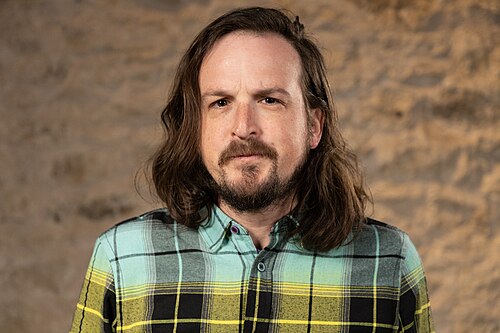
Technology journalist and author of Blood in the Machine: The Origins of the Rebellion Against Big Tech (2023). Merchant's reclamation of the Luddites is historically careful: they were not anti-technology but anti-enclosure, opposing the use of new machines to break skilled labor and concentrate wealth, and they were largely correct about what was happening to them. His current reporting traces how the same dynamic is playing out in the AI deployment cycle — call center workers, illustrators, copywriters, voice actors — and what worker organization in response actually looks like. The book has become required reading in labor circles thinking about AI.
The accountability reporters do not yet name the alternative — that is the work of Part II — but their reporting establishes the ground on which Part II's argument is built. Once AI is described as labor supply chain, as water and energy infrastructure, as surveillance business model, as material extraction with planetary consequences, the question of whose stops being avoidable. Part I has now broken its own shared frame twice: once epistemologically, where the paradigm critics argue the method does less than claimed, and once politically, here, where the reporters make ownership unavoidable. The document follows the political seam into Part II. The epistemological one stands on its own, and a reader persuaded by it should carry it forward as an independent reason for skepticism, not a subordinate one. The next section is what happens when the field's most rigorous political economists, technologists, and theorists take the ownership question seriously.