Who Owns It?
Part I asks whether AI will be safe, fair, aligned, or beneficial. Part II asks who owns the machines, who owns the data, and who decides — and treats those questions as logically prior to the questions Part I conducts. The Autotroph argument that organizes The People's Share applies here directly: the distributional question is logically prior to the productivity question, because the abundance a technology generates flows to whoever owns the productive capacity, regardless of how abundant the technology becomes. A technology can be perfectly safe and entirely fair in its outputs and still concentrate wealth and power radically, if its ownership is concentrated.
Part II proceeds in three movements. The first names the problem at the level of political economy and traces the specific labor regime through which AI is currently produced. The second examines proposals for democratic governance of data, compute, and the platforms built on them. The third turns to the post-capitalist tradition — the theorists, organizers, and historical experiments that have taken seriously the question of what democratic ownership of productive infrastructure actually looks like. The section moves from diagnosis to design, and ends — at the threshold of Part III — with the figures who insist that the alternative is not theoretical because it is already operating.
i.Redirecting the Economy
These figures name the problem at the level of political economy. They differ in framing — Acemoglu and Johnson speak in the vocabulary of mainstream economics, Varoufakis and Durand in the vocabulary of critical political economy, Sanders in the vocabulary of US legislative politics. They share an insistence that the distributional consequences of AI are not a downstream side-effect of the technology but a function of the institutions surrounding it, and that those institutions can be redirected. The subsection closes with three figures who document the specific labor regime through which AI is currently produced — the global supply chain whose existence the rest of the discourse is structured to obscure.
Daron Acemoglu and Simon Johnson


MIT economists and co-authors of Power and Progress: Our Thousand-Year Struggle Over Technology and Prosperity (2023), for which Acemoglu shared the 2024 Nobel in Economics. Their central argument is that the benefits of technological progress are not automatic — for most of the past millennium, new technologies have first enriched a narrow elite and have only been broadly shared when working people organized political power sufficient to claim a share. Applied to AI, the question is not whether the technology is productive but whether the institutions exist to direct that productivity toward broadly shared prosperity rather than further concentration. Their policy proposals — labor representation on corporate boards, taxation of automation that displaces workers, public investment in "human-complementary" rather than human-replacing AI — are deliberately modest and historically grounded. The book's force is less in its prescriptions than in its dismantling of the assumption that progress and prosperity travel together.
Mariana Mazzucato

Economist at University College London and founder of the UCL Institute for Innovation and Public Purpose. Her core argument, developed across The Entrepreneurial State (2013) and Mission Economy (2021), is that nearly every major technology associated with private innovation — the internet, GPS, touchscreens, the algorithms underlying Google Search, the foundational research behind mRNA vaccines — was funded by public investment that the public never recovered equity in. Her proposal is that public funding should come with public ownership stakes, and that the state should approach technology development as a mission-oriented investor rather than as a passive de-risker of private profit. For AI specifically, she advocates a "Public AI" option built on publicly-funded compute and open models, governed democratically rather than corporately.
Yanis Varoufakis

Greek economist, former finance minister, and author of Technofeudalism: What Killed Capitalism (2023). His thesis is that we no longer live under capitalism in any meaningful sense: the dominant economic actors are no longer firms competing in markets but platform owners extracting rent from digital territory they control. Amazon, Google, Meta, and increasingly the AI platforms are, in his analysis, the new feudal lords; the rest of us are vassals producing value on their land. The political alternative he proposes is a "cloud commons" — democratically governed digital infrastructure, including the AI systems built on top of it — and the socialization of payment systems and data flows. The frame is polemical, but the diagnostic core has been increasingly absorbed into more mainstream analysis.
Cédric Durand
French economist at the University of Geneva and author of Techno-féodalisme: Critique de l'économie numérique (2020), which preceded and substantially anchored Varoufakis's argument. Durand's work traces how digital platforms generate returns not through productive investment but through control of essential digital infrastructure — what classical political economy would have called rent extraction. His more recent work extends the analysis to AI, arguing that frontier models represent the most concentrated rent-extracting infrastructure yet built. Less widely read in English than Varoufakis but more rigorous in the underlying economic argument.
Bernie Sanders

US Senator from Vermont who has, more directly than any sitting American politician, named the AI question as a political-economic one rather than a technological one. His 2024 proposal for a 32-hour workweek with no loss of pay is built on the explicit claim that if AI and automation generate productivity gains, those gains should accrue to workers as time and wages rather than to shareholders as returns. He has called the firms developing frontier AI an "oligarchy" and has linked AI policy directly to antitrust, labor law, and tax reform. The proposals are unlikely to pass; the framing is the contribution.
Adrienne Williams
Former Amazon delivery worker turned organizer, now affiliated with the Distributed AI Research Institute. Williams has written and testified about algorithmic management — the surveillance, the impossible quotas, the firings by app — from inside the system, and her work is one of the principal channels through which the experience of AI-managed labor reaches the broader policy discourse. The DAIR affiliation is important: this is what Gebru built the institute to make possible — research grounded in the experience of the workers most directly affected.
Mercy Mutemi
Kenyan lawyer and managing partner at Nzili & Sumbi Advocates, representing the Kenyan content moderators who labeled toxic content for OpenAI and Meta under contracts that paid roughly two dollars an hour and produced documented psychological harm. Mutemi's litigation, ongoing in Kenyan courts, is among the first serious legal challenges to the global labor supply chain of frontier AI. Her work names what the Part II argument requires named: the abundance these firms market is built on labor most of their customers will never see.
Milagros Miceli
Sociologist at the Weizenbaum Institute in Berlin and DAIR. Miceli's empirical research traces the global supply chain of data annotation labor across Argentina, Bulgaria, Kenya, Syria, and Venezuela. Her work is the methodological backbone of the broader critique: not AI involves hidden labor as a general claim but this specific labor, in these specific places, under these specific conditions, produced this specific training data. The granularity is the contribution.
ii.Data Dignity and Democratic Governance
These figures develop alternative governance models for the inputs and infrastructure AI is built on. The framings differ — data dignity, data coalitions, data sovereignty, the commons — but the underlying move is the same: refusing the assumption that the firms training models on collective human production have any natural right to do so, and proposing concrete mechanisms by which the people whose lives generate the data, and the publics whose labor and resources subsidize the infrastructure, retain governance authority over both.
Ruha Benjamin
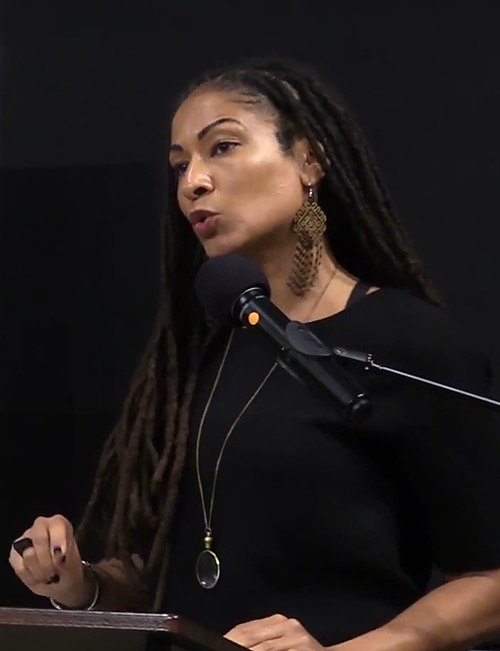
Princeton sociologist and author of Race After Technology (2019) and Viral Justice (2022). Her concept of the "New Jim Code" names the way that ostensibly neutral technological systems reproduce and intensify racial hierarchy precisely because they present themselves as objective. Her work bridges Part I's ethics critique and Part II's redirection argument: it is not enough to debias the algorithm if the algorithm is owned by parties whose interests the bias served. The deeper move is from AI is biased to AI is a property regime, and bias is one of the things property regimes produce.
Glen Weyl

Economist at Microsoft Research, founder of the RadicalxChange movement, and co-author with Audrey Tang of Plurality: The Future of Collaborative Technology and Democracy (2024). His work proposes mechanisms — quadratic voting, quadratic funding, data coalitions — through which collective decisions and collective value can be made legible and tradeable without collapsing into either market or state. Applied to AI, he argues that data should not be owned individually (the Lanier position) or collectively by firms (the current position) but by groups that can bargain on behalf of their members. The framework is technical but the political vision is democratic in a strong sense: more participation, more often, at finer grain than electoral democracy currently permits.
Audrey Tang

Taiwan's first Digital Minister (2016–2024) and a working demonstration that democratic governance of digital infrastructure is possible at the level of a nation-state. Tang built the vTaiwan platform, which uses AI and structured deliberation to surface consensus across politically polarized populations, and the platform was used to resolve concrete policy questions including Uber regulation and pandemic response. Her self-description as "conservative anarchist" reflects a politics that takes both institutions and individual agency seriously. The significance is empirical: this is what it looks like when AI serves democratic deliberation rather than corporate optimization, and it has been running for nearly a decade.
Jaron Lanier

Computer scientist, virtual-reality pioneer, and Microsoft Research interdisciplinary scientist. Across Who Owns the Future? (2013) and subsequent work, Lanier has argued that the foundational mistake of the contemporary internet was treating user contributions — text, images, attention, behavior — as free raw material rather than as labor. His "data dignity" proposal is that the people whose data trains AI systems should be paid for that contribution, structurally rather than charitably. The proposal has been criticized from the left (it monetizes what should be a commons) and from the right (it is unworkable at scale), but its diagnostic core — that we are unpaid laborers for the firms whose products we are also the product of — has reshaped the conversation.
Tahu Kukutai
Māori demographer at the University of Waikato and co-founder of Te Mana Raraunga, the Māori Data Sovereignty Network. She is one of the principal architects of the CARE Principles for Indigenous Data Governance — Collective Benefit, Authority to Control, Responsibility, Ethics — which are now cited alongside the FAIR principles in major data science and AI governance contexts. The Indigenous data sovereignty tradition has been doing for two decades what "data dignity" advocates have recently begun proposing: insisting that the communities whose lives generate data retain governance authority over its use. Her work is the most developed answer in the world to the question of what democratic data governance actually looks like in enacted policy.
Frances Haugen
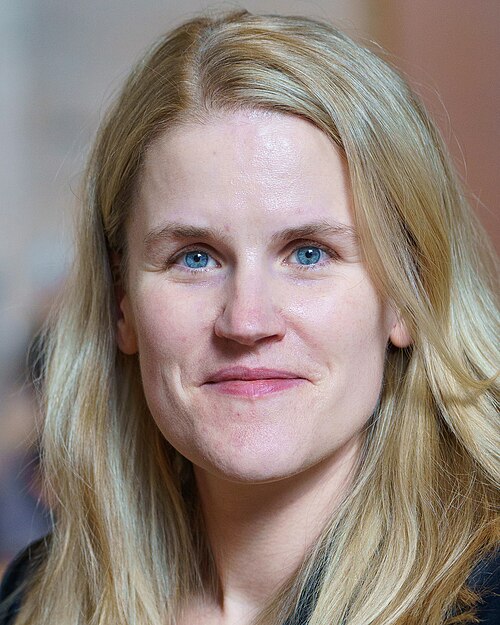
Former Facebook product manager who, in 2021, disclosed thousands of internal documents demonstrating that the company knew its products were causing measurable harm to teenage mental health, democratic discourse, and ethnic violence, and continued operating those products without substantial change. Her subsequent work, including the founding of Beyond the Screen, focuses on building the regulatory and auditing infrastructure that would make such disclosures unnecessary — algorithm transparency requirements, mandatory third-party audits, public-interest researcher access. The argument is that corporate self-regulation has been tried and has measurable failure modes, and that the alternative is institutional rather than aspirational.
Meredith Stiehm
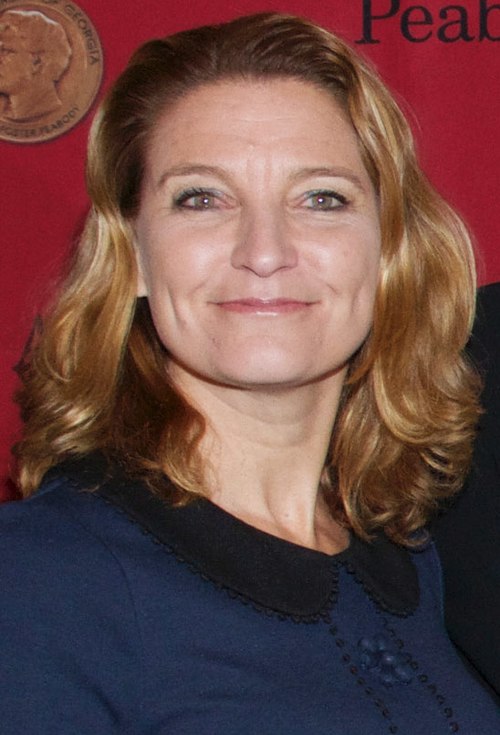
President of the Writers Guild of America West during the 2023 strike, which produced the first major collectively-bargained constraints on generative AI in any industry. The 2023 Minimum Basic Agreement (Article 72 and related sideletters) establishes that AI cannot be credited as a writer or treated as a "literary writer" under the agreement; that AI-generated material cannot be considered "source material" for adaptation, which prevents studios from using AI to generate a rough draft and then hiring a writer at the lower "rewrite" rate; that studios must disclose to writers whether material they receive was AI-generated; and that while writers may choose to use AI tools with company consent, companies cannot require writers to use AI. The settlement is significant beyond Hollywood because it demonstrated, in real time, that the question what protections can we force from AI deployment? admits of practical answers when workers are organized enough to ask it. The WGA contract is now the template several other unions are working from.
Pieter Verdegem
Communications and media researcher at the University of Westminster. Verdegem argues that AI is a General Purpose Technology — a category that includes electricity, the printing press, and the internet — meaning it reshapes economic and social structure rather than functioning as one product among many. GPTs left to private monopoly produce exactly the enclosure now visible in frontier AI: data commodified, talent and compute concentrated, value captured under a winner-take-all dynamic. His alternative is the commons: AI as public infrastructure, democratically governed, with the value it generates distributed rather than enclosed. The framing essay is titled Dismantling AI capitalism: the commons as an alternative to the power concentration of Big Tech.
iii.Post-Capitalist Frameworks
These figures take seriously the question of what democratic ownership of productive infrastructure would look like in operation. The theorists name the alternative; the platform-cooperativism architects build the institutional templates; the historians remind us that the question is not new and that one of the most serious attempts to answer it was destroyed by force. The subsection ends with two figures who insist that mutual aid and the solidarity economy are not adjuncts to political change but are themselves political infrastructure — and the proof, on the ground, that non-market coordination already functions at scale.
Aaron Benanav
Sociologist at Syracuse University and author of Automation and the Future of Work (2020). Benanav's argument is empirical and counterintuitive: the data does not support the claim that we are living through unprecedented automation-driven productivity gains. What we are living through is a long stagnation in productivity combined with the political destruction of labor's bargaining power, and the "robots are taking the jobs" narrative serves to obscure that political defeat. His more recent work develops a post-capitalist alternative — democratic economic planning supported by what he calls "Data Matrix" computational infrastructure — drawing on both the Project Cybersyn tradition and contemporary advances in optimization. The proposal is technical, serious, and rarely engaged on its actual terms.
Jathan Sadowski
Research fellow at Monash University, author of Too Smart: How Digital Capitalism Is Extracting Data, Controlling Our Lives, and Taking Over the World (2020), and co-host of the podcast This Machine Kills. His critique of AI capitalism is unsentimental: the technology is, on his reading, primarily a tool of labor discipline and capital accumulation, and the "safety" and "ethics" discourses largely function to legitimate continued deployment. The value of his position is that it refuses the framing of Part I on principle — the question is not whether AI is dangerous but what it is for, and for whom.
Nick Srnicek
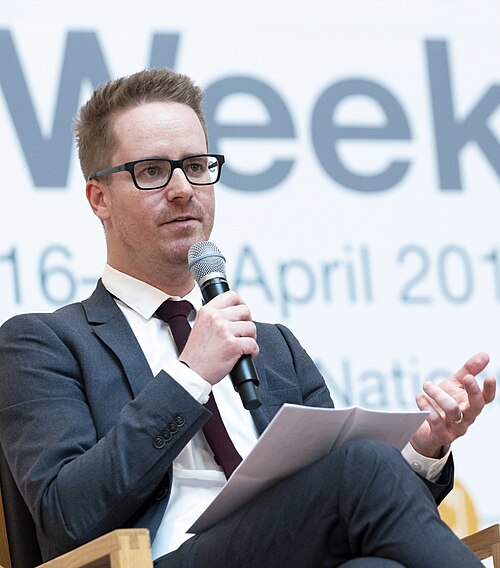
Lecturer in digital economy at King's College London, author of Platform Capitalism (2017) and co-author of Inventing the Future (2015). His analysis of the platform economy — that firms like Uber, Amazon, and Google are not service providers but infrastructure owners extracting value from interactions they don't produce — has become foundational to the post-capitalist tech critique. His policy direction is unambiguous: the major digital platforms should be nationalized or converted to platform cooperatives, because their current ownership structure is incompatible with democratic governance of the systems billions of people depend on.
Trebor Scholz
Professor at The New School and founder of the Platform Cooperativism Consortium. Scholz coined the term "platform cooperativism" in 2014 and has built the international infrastructure — research, convenings, legal templates, funding — that has translated the concept into operating cooperatives across more than thirty countries. His role is the bridge between Part II theory and Part III practice: he is the figure who has done the most to ensure the alternative is not only argued but built.
Nathan Schneider
Media studies scholar at the University of Colorado Boulder and author of Everything for Everyone: The Radical Tradition That Is Shaping the Next Economy (2018) and Governable Spaces (2024). Schneider's work on cooperative governance, exit-to-community frameworks, and democratic ownership models translates Scholz's broader vision into specific institutional designs that startups, nonprofits, and worker collectives can actually adopt. He is one of the most generative figures in the cooperative movement, working at the level where theory becomes infrastructure.
Cory Doctorow

Writer, activist, and special advisor to the Electronic Frontier Foundation. His coinage "enshittification" — the predictable lifecycle by which platforms degrade their service to users, then to business customers, then collapse — has become one of the most widely-used analytical frames for understanding what is happening to the digital economy in real time. His broader argument is that the problem is not technology but interoperability and lock-in: platforms become predatory when users cannot leave, and the policy fix is forcing the platforms open. Practical, accessible, and unsentimental about the firms involved.
Stafford Beer and Eden Medina

Beer was the British cybernetician who, between 1971 and 1973, designed and partially built Project Cybersyn for Salvador Allende's government in Chile: a real-time, distributed, democratic economic planning system intended to coordinate Chile's nationalized industries through computer networks and worker feedback. The project was destroyed in the 1973 US-backed coup, but it had begun to function, and during the October 1972 truckers' strike it kept the Chilean economy moving when conventional management could not. Eden Medina's Cybernetic Revolutionaries (2011) is the definitive history. Cybersyn is the answer to the question post-capitalist proposals always face — has anyone ever actually tried to do this? — and the answer is yes, it was working, and it was destroyed by force.
Dean Spade
Trans rights lawyer, professor at Seattle University School of Law, and author of Mutual Aid: Building Solidarity During This Crisis (and the Next) (2020). Spade's argument is that mutual aid — collective self-organization to meet survival needs outside both state and market — is not charity but political infrastructure, and that the mutual aid networks that emerged during COVID demonstrated capacities that the formal economy had abandoned. His work provides the connective tissue between large worker cooperatives and the broader question of how non-market coordination actually functions in practice, at every scale.
Emily Kawano
Coordinator of the US Solidarity Economy Network. Kawano has done more than nearly anyone to translate the Latin American solidarity economy tradition — economía solidaria, with deep roots in Brazil, Argentina, Quebec, and the Basque Country — into US contexts. The framework treats cooperatives, mutual aid, community land trusts, public banking, and participatory budgeting as a single integrated economic alternative rather than as scattered exceptions. The framework provides the vocabulary that lets Part III's cooperatives be seen as a system rather than as a list of admirable exceptions.
What Part II names in theory, Part III demonstrates in operation. The cooperatives in the next section are not theoretical claims about what could happen if democratic ownership were tried. They are the existing answer to that question — already tried, currently operating, at a scale that makes their absence from mainstream economic discourse one of this document's central exhibits.