What this guide is for
This guide is about how living things are put together. A living thing is built in levels. Small pieces are grouped into larger pieces, and those are grouped into still larger ones, all the way up from the tiniest particles to the whole living thing. The levels keep going past one living thing, too: to groups of living things, to the places they live, and finally to all life on Earth.
Part 3 of Life Science: Start Here gave a short version of this. This guide takes the same ideas slowly, one level at a time, with an example for every level. Wherever it can, it follows one example the whole way: a single person, and the stomach inside her, and the park near her home.
Read the parts in order, because each level is built from the level before it. Keep paper and a pencil beside you. Part 1 has a drawing of all the levels together; you may want to copy it out by hand. Part 8 explains the kinds of questions the GED asks about the levels and gives you practice with them. At the end there are questions that check themselves, and a list of all the terms in the guide.
Goes with: Look Again Quiz 8: What Is Life? · Life Science: Start Here, Part 3
In this guide:
- Living things are built in levels
- The smallest levels: atom, molecule, organelle, cell
- Inside one body: tissue, organ, organ system, organism
- The four kinds of animal tissue, and the organs of a plant
- Living things made of one cell
- Beyond one living thing: population, community, ecosystem, biosphere
- Each level can do things the level below cannot
- How the GED asks about the levels
- Check yourself
Living things are built in levels
Think about how a brick apartment building is put together. Clay is shaped and baked into bricks. Bricks are laid in rows to make a wall. Walls are put together to make a room. Rooms are put together to make an apartment, and apartments are put together to make the building. Each step uses the pieces from the step before.
Living things are built the same way, in steps. Biologists call the steps the levels of organization. "Organization" here means the way the parts are arranged and grouped. Each level is made of pieces from the level below it, and each level is part of the level above it.
Here are all the levels, from the smallest to the largest. Each one is explained in its own part of this guide, so do not worry if some of the words are new.
- Atom: the tiniest particle of a chemical substance.
- Molecule: two or more atoms joined together.
- Organelle: a small part inside a cell that has its own job.
- Cell: the smallest unit that is alive on its own.
- Tissue: a group of similar cells doing the same job.
- Organ: different tissues working together on one job.
- Organ system: organs working together on a larger job.
- Organism: one complete living thing.
- Population: all the members of one kind of living thing in one place.
- Community: all the populations of different kinds living in one place.
- Ecosystem: a community together with the nonliving things around it, such as soil, water, and air.
- Biosphere: all the ecosystems on Earth together; every place on Earth where there is life.
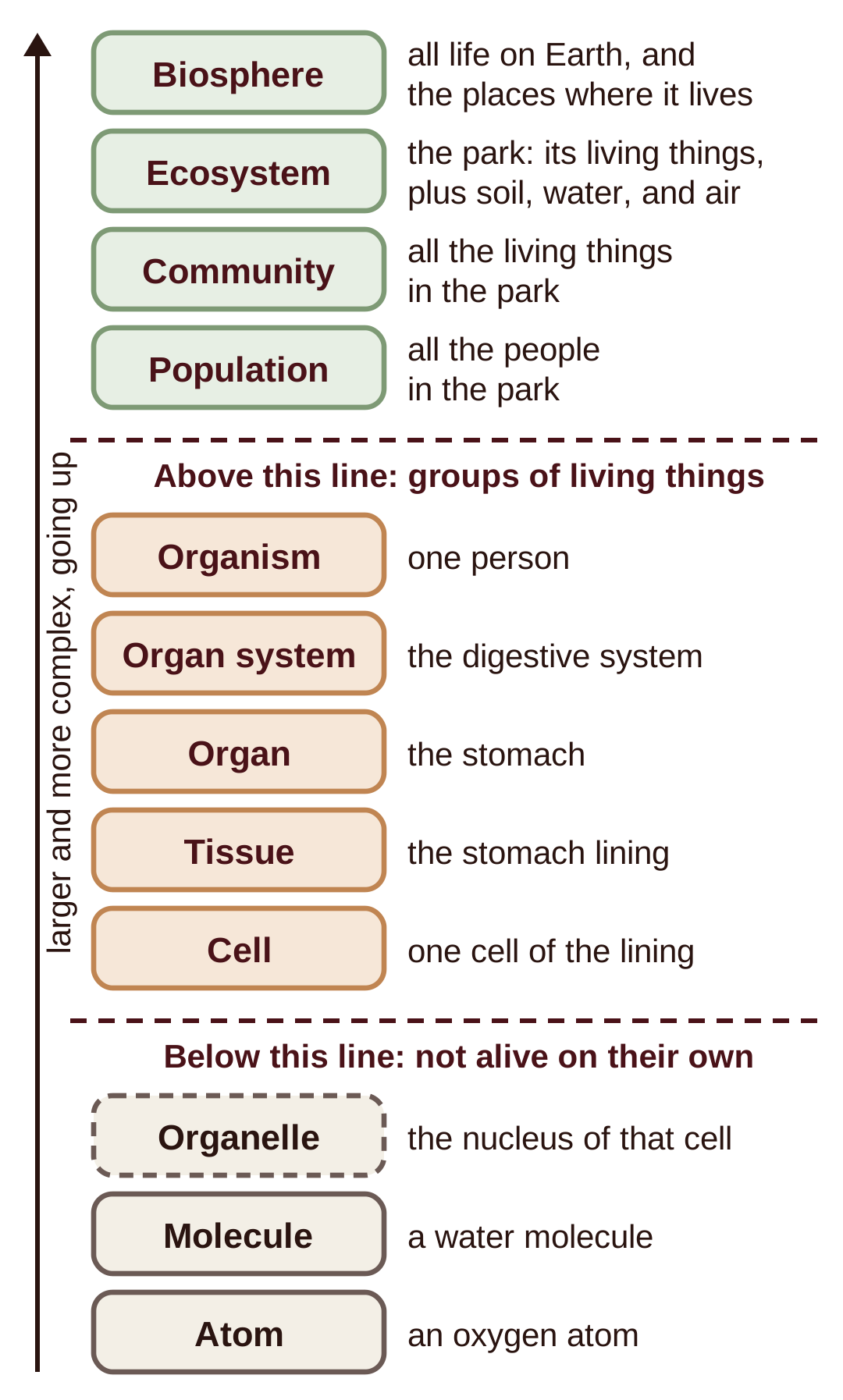
Two lines to notice on the ladder
The drawing has two dashed lines across it, and they mark the two most important places on the ladder.
The lower line is just under the cell. The levels below that line, the atom, the molecule, and the organelle, are not alive on their own. An oxygen atom is not alive. A water molecule is not alive. The cell is the first level that is alive. Every level from the cell upward is either alive or made of living things.
The upper line is just above the organism. Below that line, every level is a part of one living thing. Above that line, every level is a group of living things: first a group of one kind, then a group of many kinds, then those groups together with the place they live.
Living things are built in levels. Each level is made of the level below it: atom, molecule, organelle, cell, tissue, organ, organ system, organism, population, community, ecosystem, biosphere. The cell is the first level that is alive.
The one example this guide follows
It is easier to see the levels when one example runs through all of them. So picture one woman. Call her Ana. She lives in an apartment in Queens, a few blocks from a city park, and she walks through the park every morning on her way to the subway.
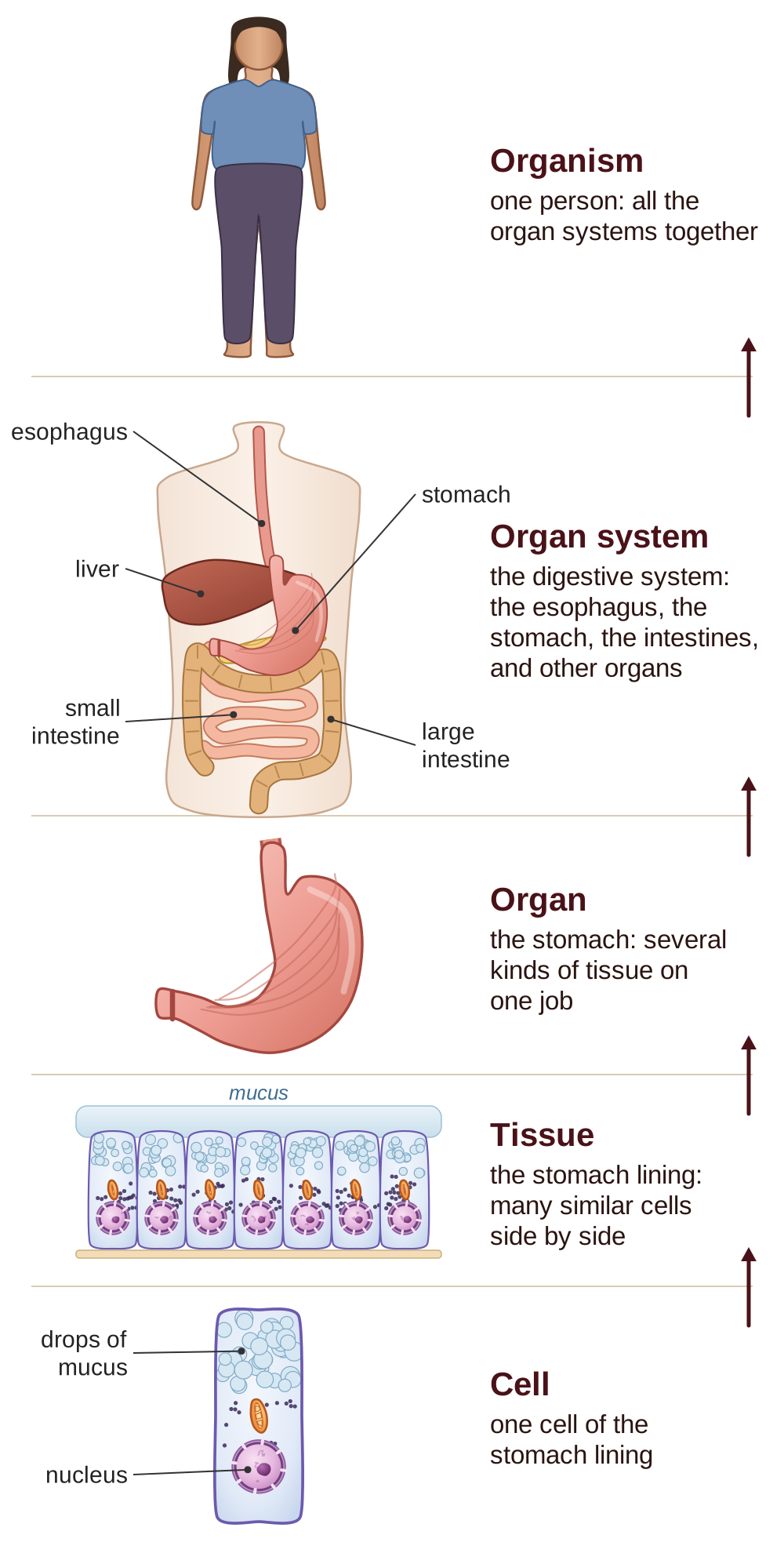
Ana is an organism: one complete living thing. Inside her is her digestive system, the set of organs that breaks down her food. One organ of that system is her stomach. The inside of her stomach is covered by a thin layer called the stomach lining, which is a tissue. That lining is made of cells. Inside each of those cells are smaller parts, organelles, such as the nucleus. And everything in the cell is made of molecules, which are made of atoms.
Going the other way, Ana is one of the many people in the park each morning. She shares the park with squirrels, pigeons, oak trees, grass, insects, and many other living things. The park, with its soil and its pond and the air above it, is one small piece of all the life on Earth.
That is the whole ladder, told once as a story. The parts below take each step slowly.
Think it through. A student writes the levels in this order: cell, organ, tissue, organ system, organism. What is wrong, and how should it be fixed?
Show a model answer
Tissue and organ are in the wrong order. Cells make up tissues, and tissues make up organs, so tissue must come before organ. The correct order is cell, tissue, organ, organ system, organism.
The smallest levels: atom, molecule, organelle, cell
This part covers the four smallest levels: atom, molecule, organelle, and cell. To follow the thread, we start inside one cell of the lining of Ana’s stomach and look at what it is made of.
Atom
An atom is the tiniest particle of a chemical substance that is still that substance. All matter is made of atoms: the air, the sidewalk, a cup of coffee, and you. Atoms are far too small to see, even with an ordinary microscope.
There are about a hundred different kinds of atoms, and each kind is called an element. Oxygen, carbon, hydrogen, and nitrogen are elements. Most of the atoms in your body are of those four kinds.
Example on the thread: an oxygen atom inside one cell of Ana’s stomach lining.
Molecule
A molecule is two or more atoms joined together. Some molecules are small. A molecule of water is three atoms: two hydrogen atoms and one oxygen atom. That is why water is written H2O. Other molecules are very large. A molecule of DNA, the set of instructions a cell carries, is made of many millions of atoms. Sugars, fats, and proteins are molecules too.
Example on the thread: a water molecule inside that stomach cell. The oxygen atom from the step before is part of it.
Organelle
An organelle is a small part inside a cell that has its own job. The word means "little organ," because an organelle does for a cell what an organ does for a body. The nucleus holds the cell’s DNA. The mitochondria release energy from food for the cell to use. The cell membrane is the thin outer skin of the cell; it controls what goes in and out. Organelles are built from molecules: mostly proteins, fats, and other large molecules.
An organelle is not alive on its own. Take a nucleus out of a cell, and it cannot keep itself going.
Example on the thread: the nucleus of that stomach cell.
Some textbooks and some test questions leave the organelle level out, and go straight from molecule to cell. Others include it. Both are correct; they just show the ladder in more or less detail. If a question lists the levels without organelle, nothing is missing. If it includes organelle, it goes between molecule and cell.
Cell
A cell is the smallest unit that is alive on its own. It is a tiny, closed package, surrounded by its membrane, that can take in food, use energy, get rid of waste, respond to what is around it, and make new cells. Most cells are too small to see without a microscope. A human body has about thirty trillion of them.
The cell is the first level on the ladder that is alive. This is one of the most important facts in this guide, and it is often tested. Atoms, molecules, and organelles are the materials and the working parts. Only when they are put together in the right way, inside a membrane, is there something alive.
Example on the thread: one cell of the lining of Ana’s stomach. Some of these cells make mucus, a thick, slippery liquid that coats the inside of the stomach and protects it from the strong acid the stomach uses to break down food.
Is a single cell alive? Is a single protein molecule alive?
Step 1. Find each one on the ladder. A cell is at the cell level. A protein molecule is at the molecule level, below the cell.
Step 2. Remember where life begins. The cell is the first level that is alive.
Step 3. Answer. The cell is alive. The protein molecule is not alive on its own, even though it is found inside living things and does important work there.
Atoms join to make molecules. Molecules build organelles. Organelles work together inside a cell. The cell is the smallest unit that is alive.
Practice
Choose an answer, then press Check. The explanation opens either way.
Which of these is a molecule?
A molecule is two or more atoms joined together, and a water molecule is three atoms (two hydrogen, one oxygen) joined together. A single oxygen atom is one level lower: it is an atom. The nucleus is an organelle, one level higher than a molecule.
Which of these is alive on its own?
The cell is the first level that is alive. DNA is a molecule and a mitochondrion is an organelle. Both are found in living cells and do important jobs there, which makes them tempting, but neither can keep itself alive on its own.
What is an organelle?
An organelle is a small part inside a cell, such as the nucleus, that has its own job. "A group of similar cells" describes a tissue, which is two levels higher.
Inside one body: tissue, organ, organ system, organism
Now we go up from the single cell, through the levels inside one body. A body made of many cells does not use them one at a time. Cells are grouped by the work they do, and the groups are grouped again. This part follows the thread from one cell of Ana’s stomach lining up to Ana herself.
Tissue
A tissue is a group of similar cells that work together to do the same job.
The stomach lining is a tissue. It is a thin sheet of cells, packed side by side, covering the whole inside of the stomach. The cells are alike, and together they do one job: they protect the stomach wall and make the mucus and the juices that help break down food.
One cell of the lining can make a tiny amount of mucus. A whole sheet of those cells, millions of them side by side, can coat the entire inside of the stomach.
Organ
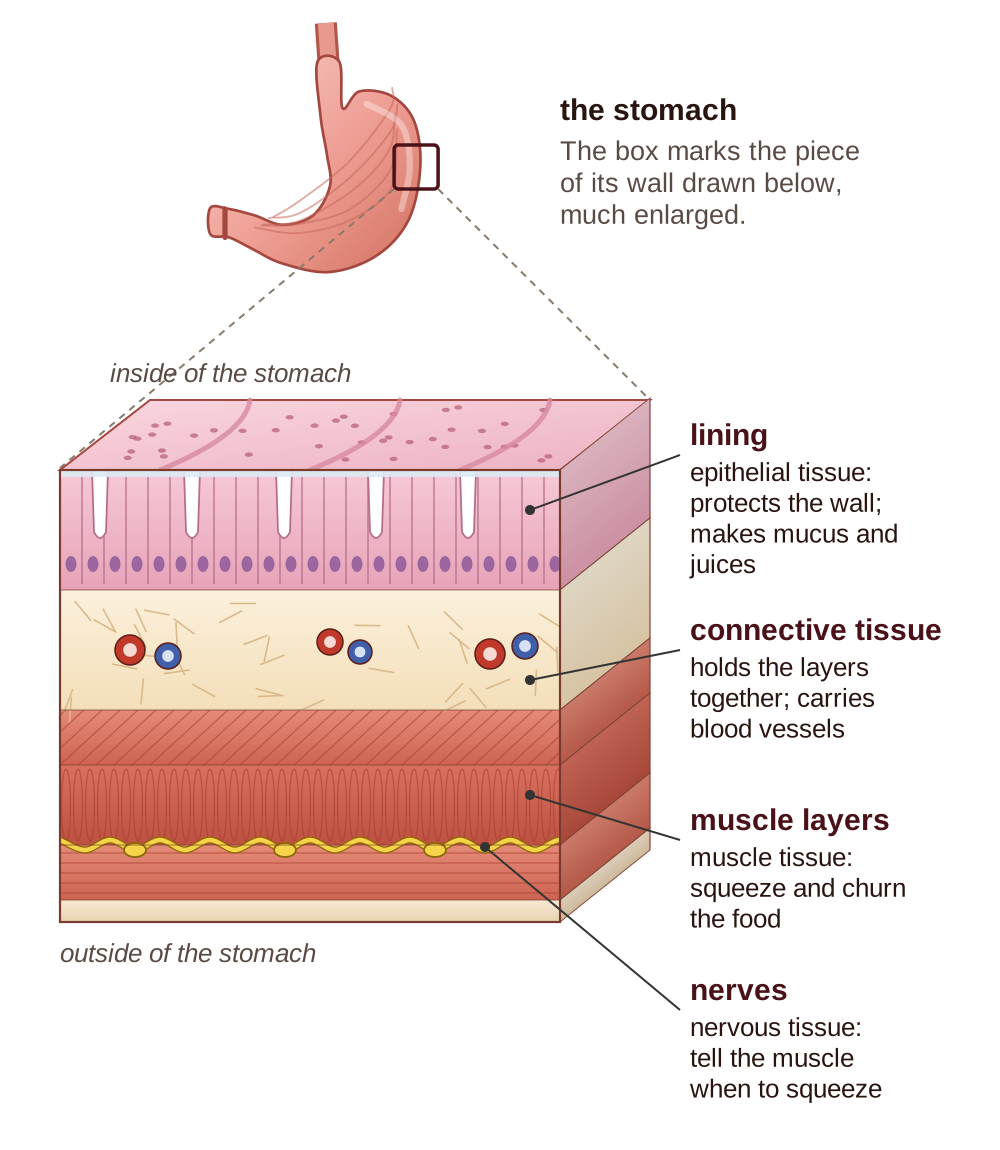
An organ is a structure made of two or more different kinds of tissue that work together on one job.
The stomach is an organ. It is not made of lining alone. Its wall has several layers, and each layer is a different tissue:
- the lining on the inside, which protects the wall and makes mucus and digestive juices;
- layers of muscle, which squeeze and churn the food, mixing it with the juices;
- a tissue that holds the layers together and carries blood vessels to them;
- nerves, which carry signals that tell the muscle when to squeeze.
All of these tissues work on one job: holding a meal, churning it, and breaking down part of it. That is what makes the stomach an organ.
Other organs in the body include the heart, the lungs, the liver, the kidneys, the brain, and the skin. Yes, the skin is an organ: it is made of several tissues working together to cover and protect the body. It is the largest organ you have.
Do not go by size or by how important the part seems. Ask how many kinds of tissue are in it. One kind of similar cells doing one job is a tissue. Several different tissues working together on one job is an organ. By this test, the stomach lining is a tissue, and the stomach is an organ.
Organ system
An organ system is a group of organs that work together on a larger job for the body.
The stomach is one organ of the digestive system. The digestive system breaks food down into molecules small enough to pass into the blood, and gets rid of what is left over. Its organs include the mouth; the esophagus, the tube that carries food from the throat to the stomach; the stomach; the small intestine; and the large intestine. The liver and the pancreas belong to it too: they make juices that flow into the small intestine and help break food down.
No single one of these organs can digest a meal by itself. The mouth and the stomach start the work, but most of the breaking down and nearly all of the taking in of food into the blood happens in the small intestine.
The human body has about eleven organ systems, depending on how they are counted. A few others you will meet on the GED are the circulatory system (the heart, blood vessels, and blood, which carry materials around the body), the respiratory system (the nose, windpipe, and lungs, which bring in oxygen and get rid of carbon dioxide), and the nervous system (the brain, spinal cord, and nerves, which carry signals).
Organism
An organism is one complete living thing. Ana is an organism. So is a pigeon, an oak tree, a mushroom, and a single bacterium.
In a large organism like a person, the organ systems depend on one another. Ana’s digestive system takes in the molecules from her breakfast. Her circulatory system carries them in the blood to every cell. Her respiratory system brings in the oxygen her cells need to release energy from that food. Her nervous system tells her she is hungry in the first place. Together, all her organ systems make one living person.
Similar cells make a tissue. Different tissues make an organ. Organs working together make an organ system. All the organ systems together make an organism.
The heart is made of muscle tissue, nerve tissue, and other tissues working together to pump blood. Which level is the heart?
Step 1. Count the kinds of tissue. The question names more than one: muscle tissue, nerve tissue, and others.
Step 2. Apply the test. Several different tissues working together on one job is an organ.
Step 3. Answer. The heart is an organ. It is one organ of the circulatory system. The muscle tissue inside it, by itself, is a tissue.
A bone, such as the thigh bone, and bone tissue. Are they the same level?
Step 1. Bone tissue is a tissue: bone cells and the hard material they build around themselves, all doing one job.
Step 2. A whole bone, such as the thigh bone, has bone tissue, but it also has blood vessels, nerves, a tough covering on the outside, and marrow inside, where blood cells are made. That is several kinds of tissue working together.
Step 3. So a whole bone is an organ, and bone tissue is one of the tissues it is made of. The skeletal system is all the bones together.
Practice
Choose an answer, then press Check. The explanation opens either way.
The small intestine is made of a lining, layers of muscle, blood vessels, and nerves, working together to digest food. Which level is the small intestine?
Several different tissues working together on one job make an organ. It is tempting to say organ system, because the small intestine belongs to the digestive system; but the small intestine is one organ of that system, not the whole system.
Skin cells packed side by side in a thin sheet cover the outside of the body. Which level is that sheet of cells?
A sheet of similar cells doing one job is a tissue. Organ is the tempting answer, because the skin as a whole is an organ; but the whole skin has several tissues in it, and this question describes only one sheet of similar cells.
The heart, the blood vessels, and the blood work together to carry materials around the body. Which level is this?
Several organs and parts working together on one larger job make an organ system: here, the circulatory system. The heart alone is an organ, which makes "organ" tempting; but the question names the heart together with the vessels and the blood.
One white blood cell floats in the blood. Which level is it?
It is one cell. A tissue would be a group of similar cells working together. Molecule is too small: a cell is made of a great many molecules.
The four kinds of animal tissue, and the organs of a plant
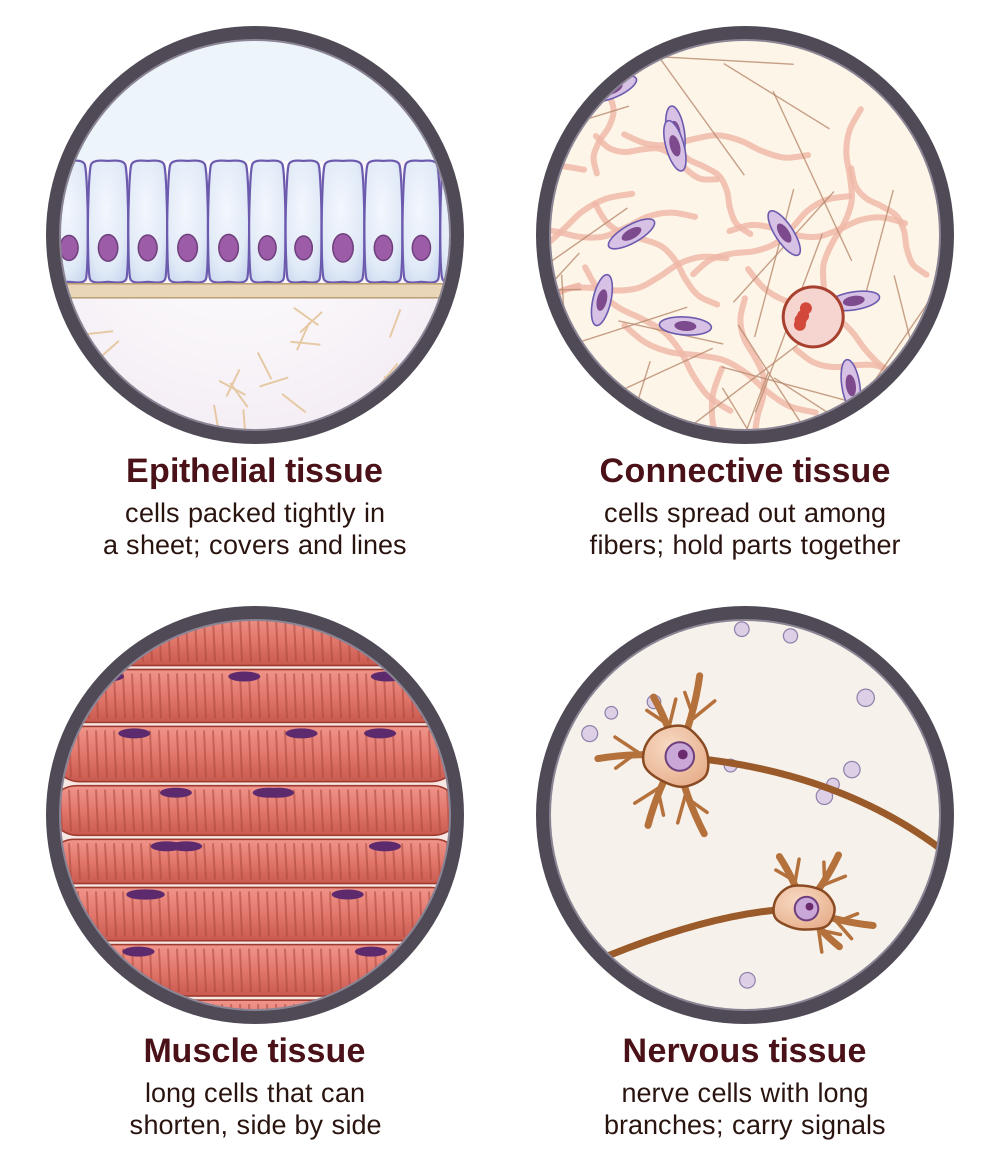
There are many different tissues in the human body, but they all belong to four main types. The GED does not usually ask you to name them in detail, but knowing them makes it much easier to recognize a tissue when a question describes one.
The four main types of tissue in animals
| Type | What it does | Examples |
|---|---|---|
| Epithelial tissue (say ep-ih-THEE-lee-ul) | Covers the outside of the body and lines the inside of hollow organs. It protects, and some of it makes juices such as mucus. | The outer layer of the skin; the stomach lining; the lining of the mouth |
| Connective tissue | Supports the body, holds parts together, and fills spaces between them. | Bone; cartilage (the firm, bendable material in your ears and nose); fat; tendons; blood |
| Muscle tissue | Shortens (contracts) to make movement. | The muscles of your arms and legs; the heart muscle; the muscle layers in the stomach wall |
| Nervous tissue | Carries signals from one part of the body to another. | The brain; the spinal cord; nerves |
Two of the examples may surprise you. Blood is counted as a connective tissue: it is made of cells floating in a liquid, and it connects every part of the body by carrying materials between them. And there are three kinds of muscle tissue: the muscle you move on purpose, such as in your arms; heart muscle, found only in the heart; and smooth muscle, found in the walls of the stomach, the intestines, and the blood vessels, which works without your thinking about it.
Look back at the stomach in Part 3. Its wall has all four types: epithelial tissue (the lining), muscle tissue (the layers that churn), connective tissue (holding the layers together), and nervous tissue (the nerves). This is common. Most organs are built from several of the four types.
Plants have tissues and organs too
The levels of organization are not only for animals. A plant is also built of cells, tissues, and organs.
A plant has three main organs: the root, the stem, and the leaf. A flowering plant also has flowers, which make seeds. Each of these is an organ for the same reason the stomach is: it is made of several kinds of tissue working together on one job.
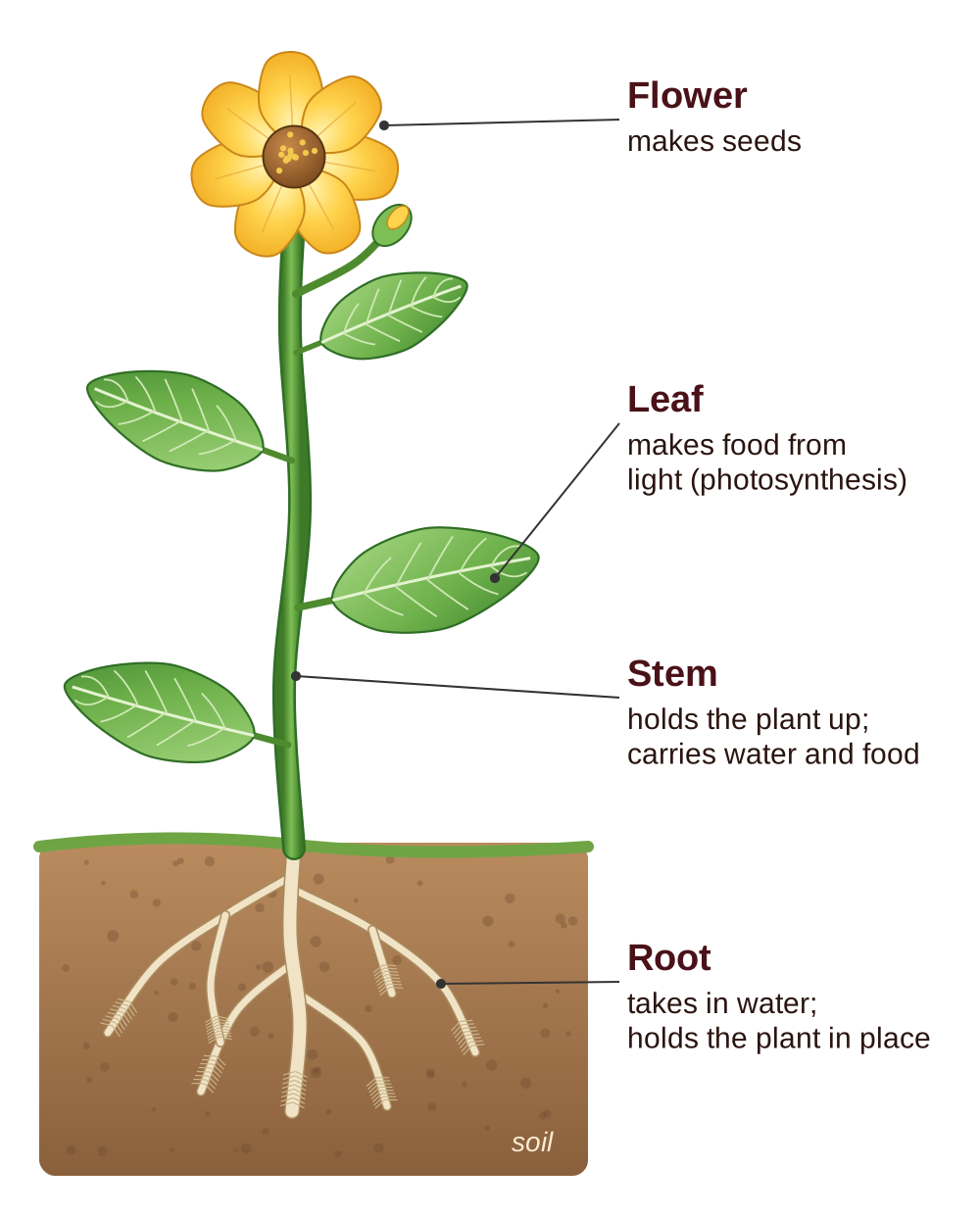
Plant tissues fall into three main types:
- Outer covering tissue, a thin layer that covers the plant and protects it, much as the outer layer of your skin does. On a leaf, it often has a waxy coat that keeps water in.
- Tissue that carries water and food, made of long tubes that run from the roots, up the stem, and into every leaf. One set of tubes, called xylem (say ZY-lum), carries water up from the roots. Another set, called phloem (say FLOW-em), carries the sugar the leaves make to the rest of the plant. The veins you can see in a leaf are these tubes.
- Ground tissue, which is most of the rest of the plant. In a leaf, the ground tissue is the green middle layer, where the cells capture light and make food. That process is called photosynthesis.
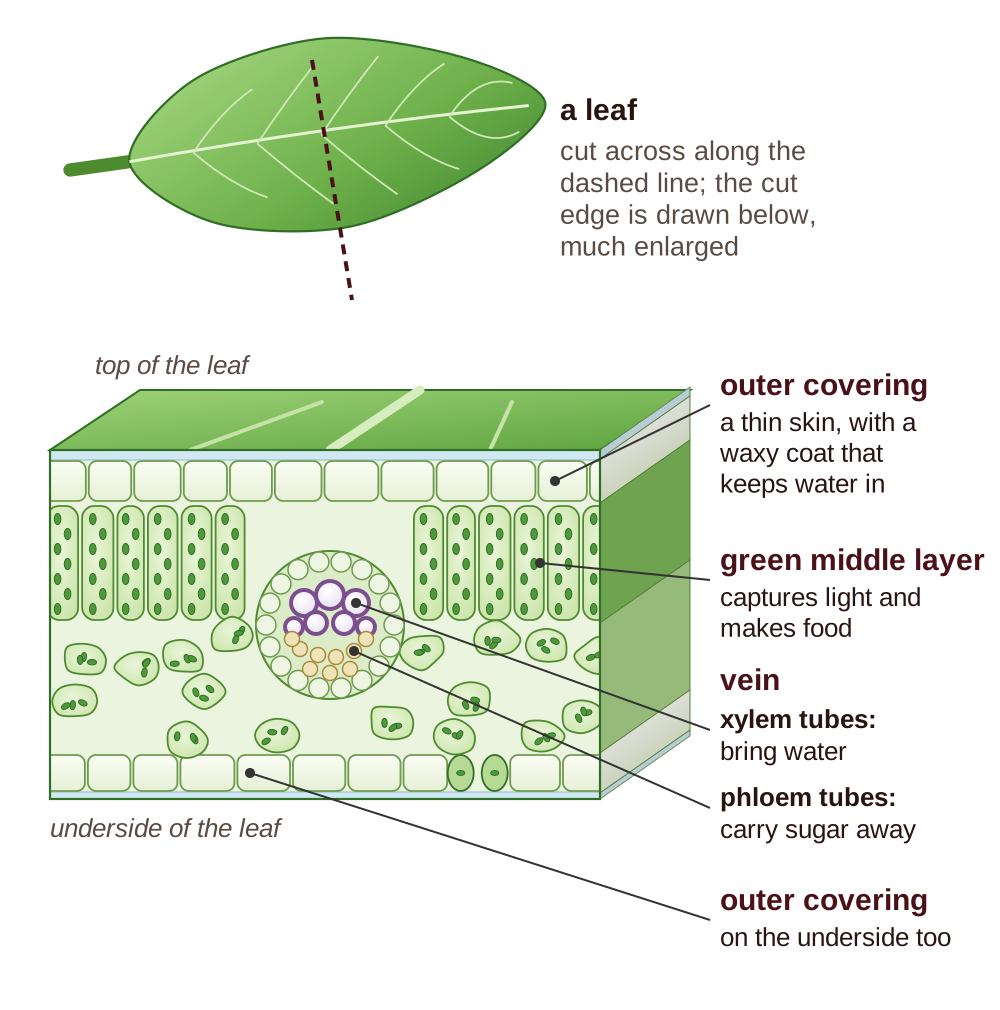
A maple leaf. Is it a tissue or an organ?
Step 1. List what is in it. A leaf has an outer covering on top and bottom, a green middle layer that makes food, and veins that carry water and sugar.
Step 2. Count the kinds of tissue: at least three, working together on one job, making food for the plant.
Step 3. A leaf is an organ. The green middle layer, by itself, is a tissue. The same test works for plants and animals: several kinds of tissue working together means an organ. By that test, a leaf and a heart are the same kind of thing.
Animal tissues come in four main types: epithelial, connective, muscle, and nervous. Plants have tissues and organs too; the main plant organs are the root, the stem, and the leaf.
Practice
Choose an answer, then press Check. The explanation opens either way.
The brain, the spinal cord, and the nerves carry signals through the body. Which type of tissue are they mainly made of?
Nervous tissue carries signals. Muscle tissue is a tempting choice because nerves often make muscles move, but the muscle does the moving; the nervous tissue carries the signal that tells it to.
Which of these is an organ of a plant?
A root is made of several kinds of tissue working together, so it is an organ. The tubes that carry water are tempting, because they are a real plant part, but they are one kind of tissue, not an organ.
Blood is made of cells floating in a liquid, and it carries materials to every part of the body. Which type of tissue is blood counted as?
Biologists count blood as a connective tissue, because it connects every part of the body by carrying materials between them. Many people guess that blood is not a tissue at all, because it is a liquid; but it is made of cells, and that is what counts.
Living things made of one cell
Everything in Parts 3 and 4 was about living things made of many cells, such as people, pigeons, and maple trees. But a great many living things are made of only one cell. This part is about them, and about what the levels look like for them.
Two words: unicellular and multicellular
A living thing made of a single cell is called unicellular (say YOO-nih-SELL-yoo-lur). "Uni" means one, as in unicycle, a bicycle with one wheel. A living thing made of many cells is called multicellular. "Multi" means many.
Unicellular living things include all bacteria; the amoeba (say uh-MEE-buh), a soft single cell that lives in pond water and moves by pushing out part of its body and flowing into it; and yeast, a single-celled fungus that bakers use to make bread dough rise. Multicellular living things include all plants, all animals, and most fungi, such as mushrooms.
If you counted living things one by one, most living things on Earth would be unicellular. There are far more bacteria in a spoonful of garden soil than there are people in New York City.
In a one-celled organism, the cell IS the organism
Look back at the ladder. For Ana, there are five separate levels between one cell and the whole organism: cell, tissue, organ, organ system, organism.
For an amoeba, there is only one. The amoeba is one cell, and that one cell is the whole organism. It has no tissues, no organs, and no organ systems. The cell level and the organism level are the same thing.
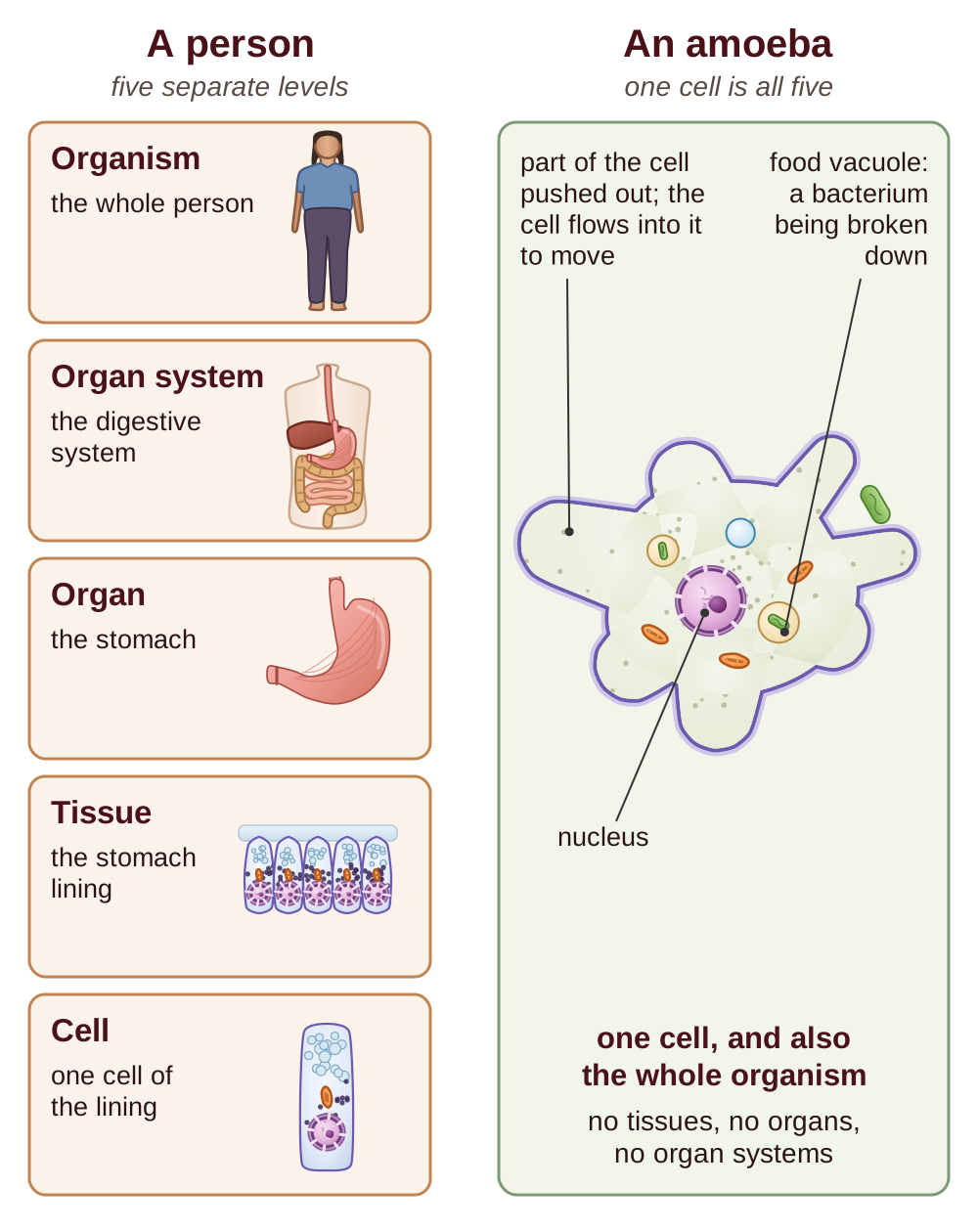
That one cell still does everything a living thing must do. It still has organelles inside it, each with a job. It just does all of its living with the parts inside one membrane.
How does an amoeba eat, with no mouth and no stomach?
Step 1. The amoeba finds a smaller living thing in the pond water, such as a bacterium.
Step 2. It pushes out parts of its body around the bacterium until the bacterium is completely surrounded.
Step 3. The bacterium is now inside the amoeba, closed in a tiny bubble called a food vacuole (say VAK-yoo-ole). The amoeba breaks the food down inside that bubble.
Step 4. So the amoeba does inside one cell what Ana does with a whole digestive system: it takes in food and breaks it down. The work is the same kind of work. The difference is that, in the amoeba, it all happens inside one cell.
A unicellular organism is one cell. In it, the cell is the whole organism: it has no tissues, no organs, and no organ systems, and that one cell does all the work of staying alive.
Think it through. A student says, "Every living thing needs organs to stay alive." Is she right? Use an example in your answer.
Show a model answer
She is not right. An amoeba, a bacterium, or a yeast cell is a whole living thing made of one cell, with no organs at all. That one cell takes in food, uses energy, grows, responds, and makes more of itself. Organs are how large, many-celled living things divide up the work. They are not needed for being alive.
Beyond one living thing: population, community, ecosystem, biosphere
The ladder does not stop at one living thing. No organism lives alone. It lives among others of its own kind, among many other kinds of living things, and in a place with soil, water, air, and sunlight. The next four levels describe those larger groups. They come up again on the GED when the test asks about ecosystems and food webs.
Population
A population is all the members of one species that live in the same area at the same time. A species is one kind of living thing, whose members can have young together: people are one species, gray squirrels are another, and pin oak trees are another.
Example on the thread: all the people in the park on a given morning, Ana among them, are a population. They are all one species, and they are all in one area at the same time.
In the same way, all the gray squirrels in the park near Ana’s home are a population, and so are all the pigeons there. The key is one kind. The squirrels and the pigeons together are not one population, because they are two different species.
Community
A community is all the populations of different species that live in the same area. In other words, it is every living thing in that place.
Example on the thread: all the living things in the park: the people walking through it, the squirrels, the pigeons, the oak trees, the grass, the insects, the earthworms, the mushrooms, and the bacteria in the soil. Each of those is a population. Put all of them together, and you have the park’s community.
A community includes only living things. The soil itself, the water in the pond, and the air are not part of it.
Ecosystem
An ecosystem is a community together with all the nonliving things in that area, and the ways they affect one another. The nonliving things include the soil, the water, the air, the sunlight, and the temperature.
Biologists have two words for these two halves. The living parts of an ecosystem are its biotic parts ("bio" means life). The nonliving parts are its abiotic parts ("a" in front means not: not living). The GED uses both words.
Example on the thread: the park as a whole is an ecosystem. The oak trees take water from the soil and use sunlight to make food. The squirrels eat the acorns from the oaks. Fallen leaves are broken down by insects, fungi, and bacteria, and that returns material to the soil for the trees to use again. The living and the nonliving parts depend on each other.
An ecosystem can be large, like a forest or an ocean, or small, like a pond. A park in the middle of a city is an ecosystem too.
Biosphere
The biosphere is the largest level. It is all the ecosystems on Earth together: every part of the planet where life is found, from the bottom of the deepest ocean, through the land and the soil, to the lower part of the air where birds and insects fly. "Bio" means life, and "sphere" means a ball, like the round Earth.
Example on the thread: the park is one small piece of the biosphere. So is the ocean off Coney Island, and so is a rain forest in Brazil.
Read more: a level some books add, the biome
Some textbooks add one more level between the ecosystem and the biosphere, called the biome (say BY-ome). A biome is a large region of the Earth with a similar climate and similar kinds of plants and animals throughout, such as a desert, a grassland, or a tropical rain forest. Many ecosystems are found inside one biome. If a question includes the biome, it goes just above the ecosystem and just below the biosphere.
One species in one place is a population. All the species in one place are a community. A community plus the nonliving things around it is an ecosystem. All the ecosystems on Earth together are the biosphere.
Practice
Choose an answer, then press Check. The explanation opens either way.
All the pigeons living in Washington Square Park. Which level is this?
All the members of one species in one place make a population. "Community" is the tempting answer, but a community has many different species; this group has only one, pigeons.
A pond with its fish, frogs, water plants, and insects, together with the water, the mud, and the sunlight. Which level is this?
Living things together with the nonliving things around them make an ecosystem. Community is tempting, because the pond’s living things do make a community; but the question also includes the water, the mud, and the sunlight, which are not living.
Every living thing on one block of a Brooklyn street: the people, the street trees, the sparrows, the rats, and the weeds in the sidewalk cracks. Which level is this?
All the populations of different species in one place make a community. It is not a population, because there are many species. It is not an ecosystem, because the question lists only living things, and nothing nonliving.
Which of these is part of an ecosystem but NOT part of a community?
A community includes only living things. An ecosystem adds the nonliving things, and rainwater is not alive. The bacteria in the soil are tempting because they are tiny and found in the soil, but they are living things, so they are part of the community.
Each level can do things the level below cannot
There is one more idea about the levels, and it explains why the levels matter at all.
When parts are put together into a level, the new level can do things that none of its parts could do alone. Each level has abilities that the level below it does not have.
The heart and the heart cell
Take the heart. A single heart muscle cell can tighten and relax. Scientists have watched single heart cells do this in a laboratory dish. But one heart cell cannot pump blood. It is far too small, and it has no hollow space to push blood out of.
A heart can pump. It does so because billions of muscle cells are arranged around hollow chambers, tied together by connective tissue, and signaled by nerve tissue, so that they all squeeze in the right order. Pumping is something the heart can do and the heart cell cannot.
More examples, at every level
- Molecules and the cell. Not one of the molecules in a cell is alive. Put the right molecules together in the right way, inside a membrane, and you have a cell, which is alive. Being alive is the first new ability on the ladder.
- Cells and the tissue. One stomach lining cell makes a tiny amount of mucus. The whole lining, millions of cells side by side, can coat and protect the entire inside of the stomach.
- Tissues and the organ. Muscle tissue alone can squeeze. Lining tissue alone can make juices. Only the stomach, with both together and more besides, can hold a meal and churn it into a thick liquid.
- Organs and the organ system. The stomach cannot finish digesting food, and the small intestine cannot take in a whole sandwich. The digestive system as a whole turns a meal into molecules the blood can carry.
- Organisms and the population. One squirrel does not have a birth rate. A birth rate is how many young are born for every hundred or every thousand members of a group in a year. Only a population has a birth rate, a size, and a way of growing or shrinking over time.
- Communities and the ecosystem. In the park, the trees, the animals that eat them, the fungi and bacteria that break down what dies, and the soil and water together keep material moving round and round, from soil to tree to animal and back to soil. No single living thing does that alone.
Here is a comparison that may help. Take a wall clock apart, and you find gears, springs, and screws. Each piece alone does nothing; a single gear cannot tell time. Put the pieces together in the right arrangement, and the clock keeps time. Keeping time belongs to the whole clock, not to any one piece. In the same way, pumping belongs to the whole heart, and being alive belongs to the whole cell.
Biologists sometimes have a name for these new abilities: emergent properties. "Emerge" means to come out or appear, and a "property" here means an ability or a feature. An emergent property is an ability that appears only when the parts are put together. You do not need the name for the GED, but you may see it in a textbook.
Each level can do things that the level below it cannot. A heart can pump; one heart cell cannot. A cell is alive; the molecules it is made of are not.
Think it through. A single nerve cell can carry one signal. Ana’s brain, made of billions of nerve cells connected together, can remember her neighbor’s phone number. Explain how this is an example of the idea in this part.
Show a model answer
Remembering a phone number is an ability of the brain, an organ made of billions of connected nerve cells and other tissues. No single nerve cell can remember a phone number; it can only carry a signal. The ability to remember appears only when the cells are put together and connected. That is an example of a level being able to do something the level below it cannot.
How the GED asks about the levels
Questions about the levels of organization are usually short, but they are easy to get wrong by reading too quickly. Most of them are one of four kinds.
1. Putting the levels in order
The question gives you a list and asks which one is in the right order. Read the question carefully first: does it ask for smallest to largest, or largest to smallest? Then check each choice one step at a time, using the ladder.
Which list goes from largest to smallest? A. organ, tissue, cell, organ system. B. organism, organ system, organ, tissue. C. tissue, organ, organ system, organism. D. population, organism, community, ecosystem.
Step 1. The question asks for largest to smallest, so the list must go DOWN the ladder.
Step 2. Check A. Organ, tissue, cell go down, but then organ system jumps back up. A is wrong.
Step 3. Check B. Organism, then organ system, then organ, then tissue. Each is one step down. B looks right.
Step 4. Check C. It is in the right order, but going up, from smallest to largest. The question asked for largest to smallest, so C is wrong. This is the most common trap: a choice that is in perfect order, but in the wrong direction.
Step 5. Check D. Community is larger than organism, so it cannot come after organism in a list going down. D is wrong. The answer is B.
2. Naming the level of an example
The question describes something and asks which level it is. You can work it out with a few questions, asked in order:
- Is it one whole living thing? Then it is an organism.
- Is it a part of one living thing? Then ask: is it one cell (cell), a group of similar cells doing one job (tissue), several kinds of tissue on one job (organ), or several organs on a larger job (organ system)?
- Is it smaller than a cell? Then it is an organelle, a molecule, or an atom.
- Is it a group of living things? Then ask: is it one species (population) or many species (community)? Does it also include nonliving things such as water and soil (ecosystem)? Is it all life on Earth (biosphere)?
The lining of the stomach is a sheet of similar cells working together. Which level is it?
Step 1. It is a part of one living thing, not a whole living thing and not a group.
Step 2. It is a group of similar cells doing one job. That is a tissue.
Step 3. Watch for the trap. The word "stomach" is in the question, and the stomach is an organ, so "organ" is tempting. But the question is about the lining, not the whole stomach. The lining is one of the tissues the stomach is made of.
3. Reading a diagram of the levels
The GED may show a diagram like the ladder in Part 1, with boxes and arrows, and ask which level comes directly above or below another. Before answering, check which way the diagram runs. Some diagrams put the smallest level at the bottom, as the ladder in this guide does; others put it at the top, or run from left to right. Follow the arrows, and do not assume.
4. One-celled living things
A question may describe a single-celled organism, such as one seen in a drop of pond water, and ask what it shows. The answer usually depends on Part 5: a single cell can do all the work of staying alive, and in a one-celled organism, the cell level and the organism level are the same. A tempting wrong answer is one that says every living thing needs tissues or organs.
Check which direction an ordering question asks for. To name a level, ask: one living thing, part of one, or a group? Then find the exact step. Read the words of the question closely: the stomach lining is not the stomach.
Practice: ordering and classifying
Choose an answer, then press Check. The explanation opens either way.
Which list is in order from smallest to largest?
Atoms make molecules, molecules build cells, and cells make tissues. In the other lists, two levels are swapped: molecule and cell in the first, atom and molecule in the second, organelle and cell in the third.
Which list is in order from largest to smallest?
The biosphere holds every ecosystem, an ecosystem holds a community, and a community is made of populations. The second list is in the right order but going up, from smallest to largest. That is the most common trap.
A single bacterium. Which TWO levels is it at the same time?
A bacterium is one cell, and that one cell is the whole organism. Organism and population is tempting, but a population is a group of many members of one species; one bacterium is only one member.
The lungs. Which level?
Each lung is an organ, made of several kinds of tissue working on one job: taking oxygen into the blood. Organ system is tempting, but the respiratory system is the lungs together with the nose, the windpipe, and the other parts.
The layer of muscle in the wall of the stomach. Which level?
A layer of similar muscle cells working together is a tissue. Organ is tempting because the stomach is an organ; but the question is about one layer of the stomach, not the whole stomach.
A mitochondrion inside a muscle cell. Which level?
A mitochondrion is a small part inside a cell with its own job, releasing energy from food. That is an organelle. Cell is tempting because the mitochondrion is inside a cell, but it is only one part of the cell.
The terms in this guide
Levels of organization the steps in which living things are built, each made of the level below it.
Atom the tiniest particle of a chemical substance that is still that substance.
Element one kind of atom, such as oxygen, carbon, hydrogen, or nitrogen.
Molecule two or more atoms joined together, such as water (H2O).
Organelle a small part inside a cell that has its own job, such as the nucleus.
Cell the smallest unit that is alive on its own.
Tissue a group of similar cells that work together to do the same job.
Organ two or more kinds of tissue working together on one job, such as the stomach or a leaf.
Organ system a group of organs that work together on a larger job, such as the digestive system.
Organism one complete living thing.
Epithelial tissue tissue that covers the body and lines the inside of hollow organs.
Connective tissue tissue that supports the body and holds its parts together, such as bone, fat, and blood.
Muscle tissue tissue that shortens to make movement.
Nervous tissue tissue that carries signals through the body.
Xylem tubes in a plant that carry water up from the roots.
Phloem tubes in a plant that carry sugar from the leaves to the rest of the plant.
Unicellular made of one cell.
Multicellular made of many cells.
Species one kind of living thing, whose members can have young together.
Population all the members of one species living in the same area at the same time.
Community all the populations of different species living in the same area.
Ecosystem a community together with the nonliving things around it, such as soil, water, air, and sunlight.
Biotic living; the living parts of an ecosystem.
Abiotic not living; the nonliving parts of an ecosystem.
Biome a large region with a similar climate and similar kinds of plants and animals, such as a desert. Some books put it between ecosystem and biosphere.
Biosphere all the ecosystems on Earth together; every place on Earth where there is life.
Emergent property an ability that appears only when parts are put together, such as the heart’s ability to pump.
14 questions on this guide
Check yourself
Choose an answer, then press Check. The explanation opens either way.
Which list is in order from smallest to largest?
Molecules build cells, similar cells make a tissue, and tissues make an organ. "Organ, tissue, cell, molecule" is in the right order but going the wrong way, from largest to smallest. Always check which direction the question asks for.
Which is the smallest level of organization that is alive?
The cell is the smallest unit that is alive on its own. The organelle is tempting because it is a working part of a living cell, but an organelle cannot stay alive on its own. A tissue is alive, but it is a level higher than the cell.
A diagram shows five boxes stacked one above another, with an arrow pointing up from each box to the next. From the bottom: Cell (a muscle cell); Tissue (muscle tissue); Organ (the heart); Organ system (the circulatory system); Organism (a person).According to the diagram, which level comes directly above tissue?Follow the arrow up from tissue: the next box is organ, with the heart as its example. Cell is the box below tissue, not above it; if you chose cell, check which way the arrows point.
A diagram shows five boxes stacked one above another, with an arrow pointing up from each box to the next. From the bottom: Cell (a muscle cell); Tissue (muscle tissue); Organ (the heart); Organ system (the circulatory system); Organism (a person).The stomach is made of a lining, muscle layers, nerves, and other tissues. In the diagram, it would belong at the same level as which example?The stomach, like the heart, is several kinds of tissue working on one job, so both are organs. Muscle tissue is tempting because the stomach has muscle in it, but muscle tissue is only one of the tissues the stomach is made of.
A thin sheet of similar cells covers the inside of the mouth and protects it. Which level is this?
A group of similar cells working together on one job is a tissue. Organ is the tempting answer because the mouth is an organ; but the question describes one sheet of similar cells, and an organ is made of several kinds of tissue.
Which type of animal tissue is the outer layer of the skin?
Epithelial tissue covers the outside of the body and lines the inside of hollow organs. Connective tissue is tempting because it holds the body together, but its examples are bone, cartilage, fat, tendons, and blood, which are not coverings.
Which of these is an organ of a plant?
A leaf is made of several kinds of tissue, an outer covering, a green food-making layer, and veins, working together on one job. The tubes that carry water are tempting, but they are one kind of tissue. A chloroplast is an organelle, and a root cell is a cell.
A drop of pond water holds an amoeba, a living thing made of one cell. It takes in food, grows, and divides into two. What does the amoeba show?
In a unicellular organism the cell is the whole organism, and that one cell does all the work of staying alive. The first choice is the belief this example corrects: the amoeba digests food inside one cell, with no organs at all.
A student studies a vacant lot in the Bronx that neighbors have turned into a community garden. She counts 40 tomato plants, 12 sunflowers, about 200 ants, and 3 sparrows that nest in the fence. She also records the amount of rain each week, the temperature each afternoon, and how many hours of sunlight the garden gets.Which of these is a population?A population is all the members of one species in one place, and the tomato plants are one species. The first choice is tempting because it lists living things, but it has four different species, which makes it a community.
A student studies a vacant lot in the Bronx that neighbors have turned into a community garden. She counts 40 tomato plants, 12 sunflowers, about 200 ants, and 3 sparrows that nest in the fence. She also records the amount of rain each week, the temperature each afternoon, and how many hours of sunlight the garden gets.The student's records of rain, temperature, and sunlight are about which parts of the garden?Rain, temperature, and sunlight are not alive, so they are abiotic parts. Biotic is the tempting mistake, because these things affect the plants and animals; but "biotic" means the living things themselves.
A student studies a vacant lot in the Bronx that neighbors have turned into a community garden. She counts 40 tomato plants, 12 sunflowers, about 200 ants, and 3 sparrows that nest in the fence. She also records the amount of rain each week, the temperature each afternoon, and how many hours of sunlight the garden gets.When the student describes the plants and animals AND the rain, temperature, and sunlight together, which level is she describing?An ecosystem is a community together with the nonliving things around it. Community is tempting, but a community is only the living things; once the rain, temperature, and sunlight are included, it is an ecosystem. The biosphere would be every ecosystem on Earth, not one garden.
A single heart muscle cell in a laboratory dish can tighten and relax, but it cannot pump blood. The whole heart can. What idea does this show?
Pumping is an ability of the whole heart, which appears only when billions of cells, along with other tissues, are put together and arranged around hollow chambers. "Heart cells cannot move at all" is wrong: the passage says the cell can tighten and relax. It cannot pump, which is a different thing.
Which list goes from largest to smallest?
An ecosystem includes a community, a community is made of populations, and a population is made of organisms: each is one step down. The first choice is in the right order but going up, from smallest to largest.
The digestive system includes the mouth, the esophagus, the stomach, the intestines, the liver, and the pancreas. Why is it called an organ system and not an organ?
An organ system is a group of organs that work together, and the digestive system is made of many organs. "The largest part of the body" is tempting, but size does not decide the level; the skin is the largest organ, and it is still one organ.