What this guide is for
This guide is about one question: what makes something alive? Biologists answer it with a list of signs of life. This guide goes through the seven signs one at a time, with examples, and then looks at the hard cases, such as viruses and seeds, where the answer is not obvious.
It is the fuller version of Part 2 of the Life Science Start Here page. If you have read that part, you will recognize the list. Here each sign gets more room, more examples, and practice.
Read the parts in order. Part 1 explains why a list is needed. Parts 2, 3, and 4 explain the seven signs. Part 5 shows why one sign alone is never enough. Part 6 takes on the hard cases. Part 7 shows how the GED test asks about all of this.
At the end there are questions that check themselves, and a list of the terms used in the guide.
Goes with: Alive or Not? · Look Again Quiz 8: What Is Life?
In this guide:
- Why “alive” is harder to define than it seems
- Signs 1 and 2: made of cells, and uses energy
- Signs 3 and 4: keeps its inside steady, and responds
- Signs 5, 6, and 7: grows, reproduces, and changes over generations
- Why one sign alone is not enough
- Hard cases: viruses, seeds, and dead leaves
- How this shows up on the GED test
- Check yourself
Why “alive” is harder to define than it seems
Anyone can tell a dog from a rock. The dog eats, breathes, runs, sleeps, and has puppies. The rock just sits there. So it seems that the word alive should be easy to define.
Try writing a rule, though, and the trouble starts. Here are three rules people often suggest, and what goes wrong with each one.
Rule one: “Something is alive if it moves.”
A city bus moves, and so does a subway train, and neither one is alive. Meanwhile, an oak tree in Central Park does not move from place to place at all, and it is alive. So this rule lets in some things that are not alive, and it shuts out some things that are.
Rule two: “Something is alive if it eats.”
A tomato plant in a community garden never eats anything. It makes its own food, using the energy in sunlight. It is still alive. So this rule shuts out every green plant.
Rule three: “Something is alive if it grows.”
A snowball rolled across a yard grows bigger. A salt crystal in a jar of salty water grows bigger. Neither one is alive. So this rule lets in things it should keep out.
The answer biologists use: a list
Each of those rules picks out one thing that living things do. The problem is that some nonliving things do that one thing too, and some living things do not do it in an obvious way.
Biology, the study of living things, solves the problem with a list of signs instead of a single rule. A living thing is called an organism: one bacterium, one mushroom, one pigeon, one person. To count as alive, something must show all of the signs on the list, not just one or two of them.
There is no single rule that separates living from nonliving. Biologists use a list of seven signs, and something counts as alive only if it shows all of them.
Different books and tests word the list a little differently, and some give six or eight signs instead of seven. The ideas underneath are the same. For example, Look Again Quiz 8 on this site says “takes in fuel and releases energy” where this guide says “uses energy,” and “makes copies of itself” where this guide says “reproduces.” Quiz 8 lists six features and treats the seventh, change over many generations, separately, because you cannot see it by looking at one plant or animal on one day. The GED test may call the list the characteristics of life. “Characteristics” simply means features.
One more point before the signs themselves. The signs describe a kind of living thing, not every single member of it. A person who never has children is still alive, because people, as a kind, reproduce. Part 4 comes back to this.
Think it through. A friend says, “Something is alive if it moves on its own.” Give one example of something that moves on its own but is not alive, and one example of something that is alive but does not move from place to place.
Show a model answer
A robot vacuum cleaner moves around an apartment on its own, turning when it bumps into a wall, and it is not alive. A tree, a mushroom, or a rose bush does not move from place to place, and each is alive. (Many other answers work: a car, an elevator, or a windup toy moves; grass, moss, or a cactus is alive and stays put.) The rule fails both ways, which is why biologists use a whole list.
Signs 1 and 2: made of cells, and uses energy
This part covers the first two signs on the list. They are the two that rule out the most nonliving things, so they are a good place to start.
Sign 1: It is made of cells
A cell is the smallest unit that is alive on its own. A cell is a tiny bag of watery material, wrapped in a thin outer skin called the cell membrane. Inside, thousands of chemical processes go on at once. Almost all cells are too small to see without a microscope, a tool that uses lenses to make small things look much larger.
Some living things are just one cell. A living thing made of a single cell is called unicellular (“uni” means one). The bacteria that turn milk into yogurt are unicellular. So is yeast, the tiny living thing that makes bread dough rise. A single yeast cell takes in food, uses energy, and makes new yeast cells, all inside that one cell.
Other living things are made of many cells working together. A living thing made of many cells is called multicellular (“multi” means many). You are multicellular: your body is made of about thirty trillion cells. A pigeon, a cat, an oak tree, and a mushroom are all multicellular.
Most living things on Earth, counted one by one, are unicellular. Bacteria alone far outnumber all the plants and animals put together. A single cell can do all the work of staying alive.
Every living thing is made of one or more cells. The cell is the smallest unit that is alive on its own.
This sign does more work than any other in ruling things out. A fire, a crystal, a car, a cloud, and a robot are not made of cells, so none of them is alive, no matter what else they can do. Scientists also know that new cells come only from cells that already existed. These ideas are part of what is called cell theory; the guide The History of Cell Theory tells how scientists worked it out, and the guide Cells looks inside a cell.
Being made of cells is necessary, but it is not enough by itself. A wooden chair is made of cells. So is a cotton T-shirt, because cotton comes from a plant. But those cells died long ago and do nothing now. Part 5 and Part 6 come back to this.
Sign 2: It uses energy
Energy is what makes it possible to move something, heat something, or change something. A living thing needs energy for everything it does: to move, to grow, to repair damage, and even to sit still. While you sit and read this, your heart is beating, your lungs are pulling in air, and each of your cells is busy moving materials in and out. All of that takes energy.
Living things get energy in one of two ways:
- From sunlight. Plants, and some unicellular living things, capture the energy in sunlight and use it to make their own food, a sugar. This process is called photosynthesis. The tomato plant in the community garden is doing it all day long.
- From food. Animals and fungi (mushrooms, molds, and yeast) cannot make their own food. They take in food that other living things made. A pigeon on a subway platform pecking at crumbs is getting energy this way, and so are you when you buy a sandwich at the bodega.
Either way, the food is not the end of the story. Inside the cells, the energy stored in food has to be released before the cell can use it. That releasing is called cellular respiration, and both plants and animals do it. The guide Photosynthesis and Cellular Respiration explains both processes.
All the chemical work a living thing does to stay alive, including releasing energy from food and building new material, is called its metabolism (say meh-TAB-uh-liz-um). The work is done by chemical reactions: changes in which some substances turn into different substances. Using energy also makes waste. When your cells release energy from food, they make carbon dioxide, a gas, and you breathe it out.
Living things take in energy, from sunlight or from food, and use it to keep themselves running. All the chemical work they do to stay alive is called metabolism.
A bean plant grows on a sunny fire escape in Brooklyn. Where does it get its energy, and how does it use it?
Step 1: Ask whether it makes its own food or takes in food. A bean plant is green and has no way to eat, so it makes its own food. It captures energy from sunlight, by photosynthesis.
Step 2: Ask what it does with the food it makes. Its cells release the energy stored in that food, by cellular respiration, and use the energy to grow new leaves, take in water through its roots, and make beans.
Step 3: Name the sign. Capturing energy and using it is Sign 2, “uses energy.” All of that chemical work together is the plant’s metabolism.
Practice
Choose an answer, then press Check. The explanation opens either way.
A single bacterium lives in a cup of yogurt. Which word describes it?
Unicellular: a bacterium is one cell, and that one cell does all the work of staying alive. Multicellular is the opposite word, which is why it can be tempting; it means made of many cells, like you.
Which of these is an example of a living thing using energy?
The squirrel takes in food and uses the energy in it to move and dig. The rock, the puddle, and the bag all change because of energy from outside them (sunlight, heat, wind), but none of them takes in energy and uses it to keep itself running.
Signs 3 and 4: keeps its inside steady, and responds
This part covers the next two signs. They are closely related: both are about how a living thing deals with the world around it.
Sign 3: It keeps its inside steady
The world outside a living thing keeps changing. It gets hot and cold, wet and dry. A living thing has to keep the conditions inside its body, or inside its one cell, within narrow limits, or its cells stop working. Keeping the inside steady while the outside changes is called homeostasis (say hoe-mee-oh-STAY-sis). “Homeo” means similar or same, and “stasis” means standing still.
The best-known example is body temperature. On a January morning waiting for the bus, and on an August afternoon on a hot subway platform, your body stays close to 98.6 degrees Fahrenheit (37 degrees Celsius). Your normal temperature moves a little during the day, but only by about a degree. The body does this with actions that undo a change:
- When you get too warm, you sweat. As the sweat dries on your skin, it carries heat away and cools you down.
- When you get too cold, you shiver. Shivering is fast, small movements of your muscles, and the work of the muscles makes heat.
Temperature is only one thing a body keeps steady. Here are others:
- Water. When you have not had enough to drink, you feel thirsty, and your kidneys hold on to water, so you make less urine. When you drink a lot, you make more.
- Sugar in the blood. After a meal, sugar from the food enters your blood. Your body then moves sugar out of the blood and into cells, or stores it, so the level comes back down.
- Plants keep water steady too. Leaves have tiny openings, called stomata, that let gases in and out. On a hot, dry day, the openings close, which keeps the plant from losing too much water.
- Even a single cell does it. Some unicellular living things in pond water keep taking in water from their surroundings. They have a small part that collects the extra water and squeezes it out of the cell, so the cell does not swell and burst.
In each case the pattern is the same: something inside starts to change, the living thing senses the change, and it acts to bring things back to normal. The handout The Feedback Loop and Look Again Quiz 19: Homeostasis go further into how this works in the human body.
Homeostasis is keeping the inside steady while the outside changes. Your body temperature, your water, and the sugar in your blood are all held within narrow limits.
Sign 4: It responds to its surroundings
A living thing notices changes around it and reacts to them. A change in the surroundings that a living thing reacts to is called a stimulus (more than one are stimuli, say STIM-yoo-lie). What the living thing does in reaction is called its response. Here are some examples, with the stimulus and the response named in each:
| Example | Stimulus (the change) | Response (the reaction) |
|---|---|---|
| You touch a hot pan | Heat on your hand | You pull your hand back |
| You come up from the subway into bright sun | Bright light | You squint, and the pupils of your eyes get smaller |
| A plant on a windowsill | Light coming from one side | Over several days, the stem bends toward the window |
| Pigeons on a platform | A train roaring in | The pigeons fly up |
| A Venus flytrap (a plant that catches insects) | An insect touching tiny hairs inside its leaf | The leaf snaps shut |
| Bacteria in water | Food nearby | The bacteria swim toward the food |
Notice that a response can be fast, like pulling back from a hot pan, or slow, like a plant bending over several days. Both count.
Signs 3 and 4 often work together. Sweating is a response to heat, and the reason for the response is to keep your temperature steady. When a test question asks which sign an example shows, look at what the example is about. If it is about holding something steady inside the body, the answer is homeostasis. If it is about reacting to something outside, the answer is responding.
Living things respond to their surroundings. The change they react to is a stimulus; what they do is the response.
Practice
Choose an answer, then press Check. The explanation opens either way.
You step out of an air-conditioned laundromat into a hot July afternoon, and after a few minutes you start to sweat. What is the stimulus?
The stimulus is the change in the surroundings that you react to: the heat. The sweat is the response, which is the most common mix-up. Holding your temperature steady is the purpose of the response, which is homeostasis.
Over the course of a day, a man’s blood sugar rises after each meal and then comes back down to about the same level. Which sign of life does this show?
The body keeps bringing the sugar level back to normal. Keeping a condition inside the body steady is homeostasis. Growing is tempting only because the level rises; but it comes back down, and nothing is getting bigger.
Signs 5, 6, and 7: grows, reproduces, and changes over generations
This part covers the last three signs. They are about change: how one living thing changes during its life, how it makes more of its own kind, and how a kind of living thing changes over a very long time.
Sign 5: It grows and develops
When a living thing grows, it gets bigger by taking in materials and building more of itself. Most of that growth comes from its cells dividing to make more cells, and from cells getting larger. A baby who weighs 7 pounds at birth may weigh 20 pounds a year later, and almost all of the new weight is new cells built from food.
When a living thing develops, it changes form in an order that is set by its own instructions. It does not just get bigger; it becomes something different. Some examples:
- A seed becomes a seedling, then a full-grown plant that makes flowers and seeds of its own.
- A baby becomes a child, then a teenager, then an adult. The body changes shape and gains new abilities along the way.
- A caterpillar becomes a butterfly. It goes from a crawling, leaf-eating creature to a winged one with a completely different body. This kind of large change in body form is called metamorphosis (say met-uh-MOR-fuh-sis).
- A tadpole, which lives underwater and breathes with gills, becomes a frog, which has legs and breathes air.
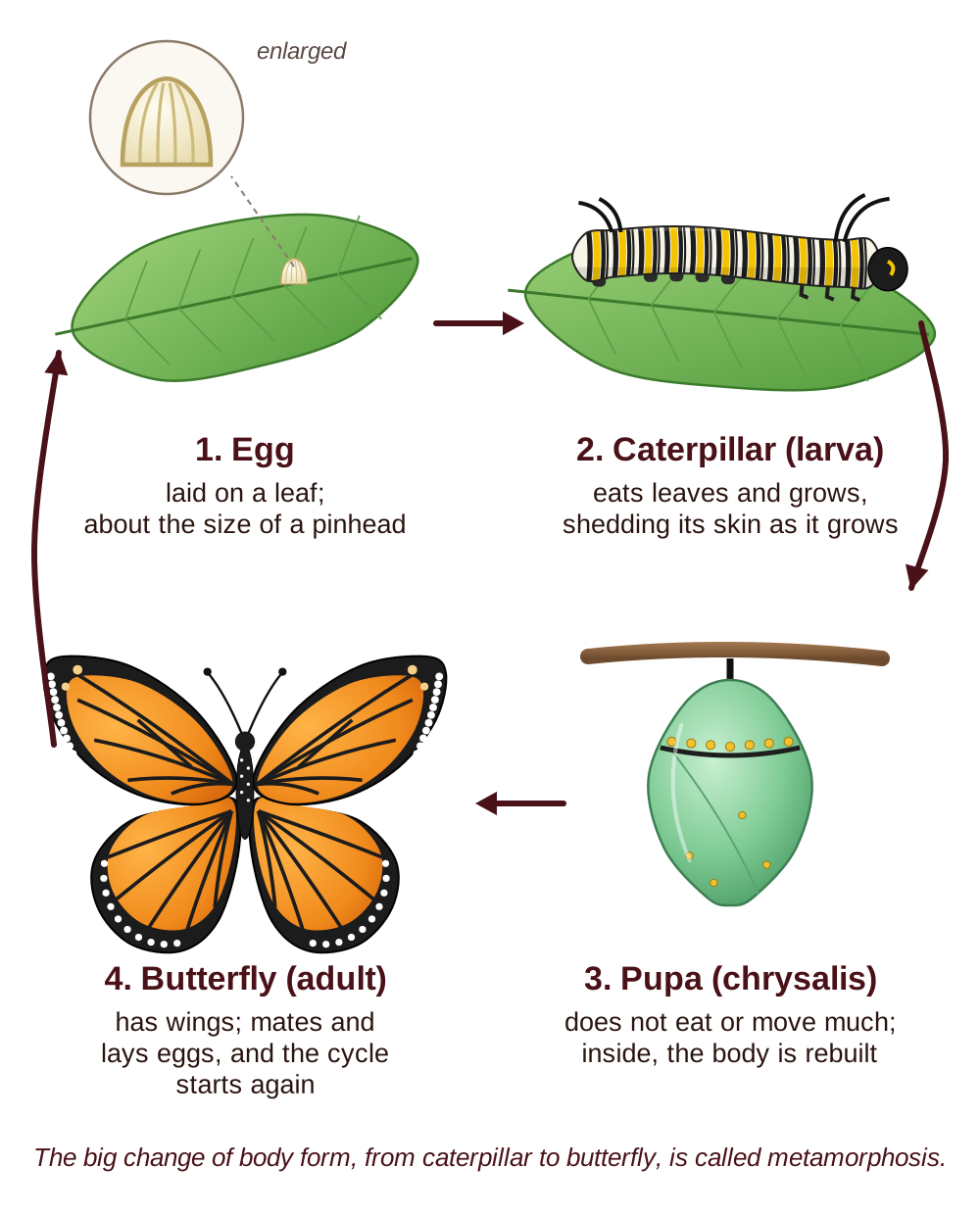
This is the difference between living growth and the “growth” of a crystal. A salt crystal gets bigger only because more salt from the water sticks to its outside, layer on layer. Nothing inside the crystal is working, and the crystal never changes into anything else. A living thing builds itself from the inside, following its own instructions.
Sign 6: It reproduces
To reproduce is to make more of your own kind. The young are called offspring. Every living thing carries a set of instructions in its cells, written in a chemical called DNA. When a living thing reproduces, it passes a copy of its DNA to its offspring, and that is why the offspring are the same kind of living thing as the parent. The guide Genetics explains how traits pass from parents to children.
There are two ways to reproduce:
- Asexual reproduction needs only one parent, and the offspring are copies of the parent. A bacterium copies its DNA and splits in two (this is called binary fission, and the guide Cell Division explains it). A yeast cell grows a small bump that breaks off as a new yeast cell; this is called budding. A spider plant on a windowsill sends out long stems with small new plants on the ends, and each small plant can be potted on its own.
- Sexual reproduction needs two parents. Each parent gives a sex cell (a sperm or an egg), and the two join. The offspring gets a mix of DNA from both parents, so it is not an exact copy of either one. People, pigeons, cats, and most plants with flowers reproduce this way.
Reproduction is the one sign that an individual living thing does not need in order to stay alive. You can live a whole, healthy life without having children. But a kind of living thing that did not reproduce would disappear when its last member died. That is why the sign is about the kind, not each individual.
A mule is the offspring of a female horse and a male donkey. Mules almost never have young of their own. Is a mule alive?
Step 1: Check the other signs. A mule is made of cells. It eats and uses energy. It keeps its body temperature steady. It responds: it flicks its ears at a fly and jumps at a loud noise. It grew from a foal into an adult.
Step 2: Look at the sign it seems to fail. A mule cannot usually reproduce. But the signs describe a kind of living thing, and every mule comes from horses and donkeys, which do reproduce. A mule is in the same position as a person who never has children.
Step 3: Decide. A mule is alive. Not being able to have young does not make an individual nonliving.
Sign 7: Its kind changes over many generations
A generation is one step in a family line: parents are one generation, their children the next, their grandchildren the next. Over many generations, a kind of living thing slowly changes so that it is better suited to its surroundings. This is called evolutionary adaptation. An adaptation is a feature that helps a living thing survive and reproduce where it lives.
This sign is different from the others in an important way. It does not happen to one living thing during its life. It happens to a whole population (all the members of one kind of living thing in one place) over many generations. That is why you can never see it by watching one plant or one animal, and why Look Again Quiz 8 leaves it out of its table.
Here is an example you may have heard about at a clinic or a hospital. An antibiotic is a medicine that kills bacteria. When a group of bacteria is treated with an antibiotic, most of them die. But a few bacteria may happen to have a small difference in their DNA that lets them survive. Those survivors reproduce, and their offspring carry the same difference. After many generations, which for bacteria can mean a few days or weeks, the whole population may be one the antibiotic can no longer kill. The kind of bacteria has changed. Doctors call this antibiotic resistance.
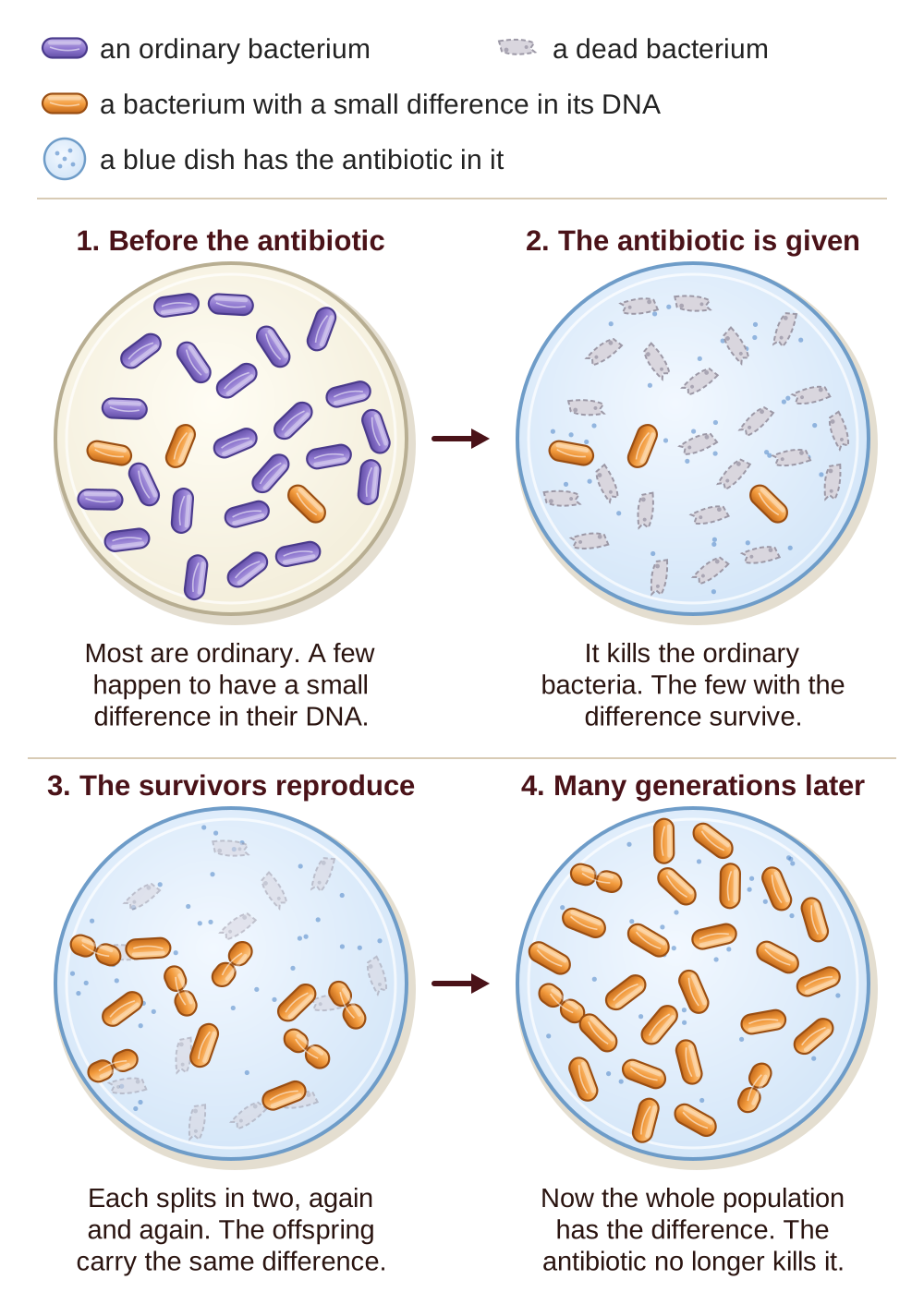
The guide Evolution and Ecosystems explains how this kind of change, called natural selection, works.
Living things grow and develop, reproduce, and, as a kind, change over many generations to suit their surroundings. Reproduction and change over generations describe the kind, not each individual.
Practice
Choose an answer, then press Check. The explanation opens either way.
A tadpole hatches in a pond, grows legs, loses its tail, and becomes a frog. Which sign of life does this show best?
The tadpole changes form during its own life, in a set order. That is growing and developing. Changing over many generations is the tempting answer because the frog looks so different from the tadpole; but it is one animal changing in one lifetime, not a kind of animal changing over many lifetimes.
A gardener cuts a stem from a plant, puts it in water, and it grows roots and becomes a new plant just like the first. What kind of reproduction is this?
Only one parent plant was involved, and the new plant is a copy of it, so this is asexual reproduction. It is tempting to think a new plant must come from a seed, but many plants also reproduce from pieces of themselves.
Why one sign alone is not enough
Every sign on the list, taken alone, can be found in something that is not alive. That is the most important reason the list is a list. The table checks some familiar nonliving things against the signs.
| Thing | Signs it seems to show | Signs it lacks |
|---|---|---|
| A wood fire | Takes in fuel and gives off energy; grows; spreads, and a spark can start a new fire; responds to a draft | No cells; does not keep its inside steady; has no DNA, no set of instructions to pass on |
| A salt crystal | Grows larger | No cells; uses no energy; does not respond, develop, or reproduce |
| A car | Takes in fuel, gives off energy and waste gases; responds to the steering wheel and the brake | No cells; does not grow, repair itself, or reproduce |
| A robot vacuum | Uses electricity; responds by turning at a wall; goes back to its charger when its battery is low | No cells; does not grow, develop, or reproduce |
| A wooden chair | Made of cells | Its cells are dead: it uses no energy and does nothing else on the list |
A fire in a wood stove takes in fuel, gives off heat and light, gets bigger, and leans when a door opens and lets in a draft. Why is it not alive?
Step 1: List what the fire really does. It does take in fuel (the wood, and oxygen from the air) and release energy. It does get bigger. It does change when the air moves. Those observations are all correct, which is why a fire can seem alive.
Step 2: Look for the signs it lacks. A fire is not made of cells. It has no inside to keep steady: it simply burns hotter with more fuel and air and dies down with less. It carries no DNA. When a fire spreads to new wood, it is not building a new fire from a set of instructions; the heat simply sets more material burning.
Step 3: Decide. Because something must show every sign, and the fire fails several, it is not alive. The sign that settles it most quickly is the first one: it is not made of cells.
A car takes in gasoline, uses its energy to move, and gives off waste gases from the tailpipe. Is that metabolism?
Step 1: Compare with a living thing. You also take in fuel (food), use its energy, and give off a waste gas (carbon dioxide). The comparison is close, and that is exactly what makes the car a useful example.
Step 2: Check the rest of the list. The car is not made of cells. It does not grow; it is the same size the day it is scrapped as the day it was built. It cannot repair a flat tire by itself. It does not make baby cars.
Step 3: Decide. Burning fuel is not enough. Metabolism is the chemical work done by cells, and the car has none. It is not alive.
No single sign separates living from nonliving. A fire grows and uses energy, a crystal grows, and a car uses fuel. Only a thing that shows all the signs together is alive.
Think it through. A wooden chair is made of cells. Why is it not alive?
Show a model answer
The wood in the chair was once part of a living tree, so it is made of cells. But those cells died when the tree was cut down and the wood dried. The chair uses no energy, does not grow, does not respond, does not keep its inside steady, and cannot reproduce. Being made of cells is necessary for life, but it is not enough by itself. The chair is something that was once alive and is now dead.
Hard cases: viruses, seeds, and dead leaves
Most things are easy to sort. This part is about the cases that are not, the ones the GED test likes to ask about. For each one, run the whole list, one sign at a time.
Viruses
A virus is a tiny package of genetic material (DNA, or a similar chemical called RNA) inside a coat made of protein. Viruses are much smaller than bacteria; most of them are too small to see even with an ordinary microscope. Viruses cause many illnesses you know: the common cold, the flu, measles, and COVID-19.
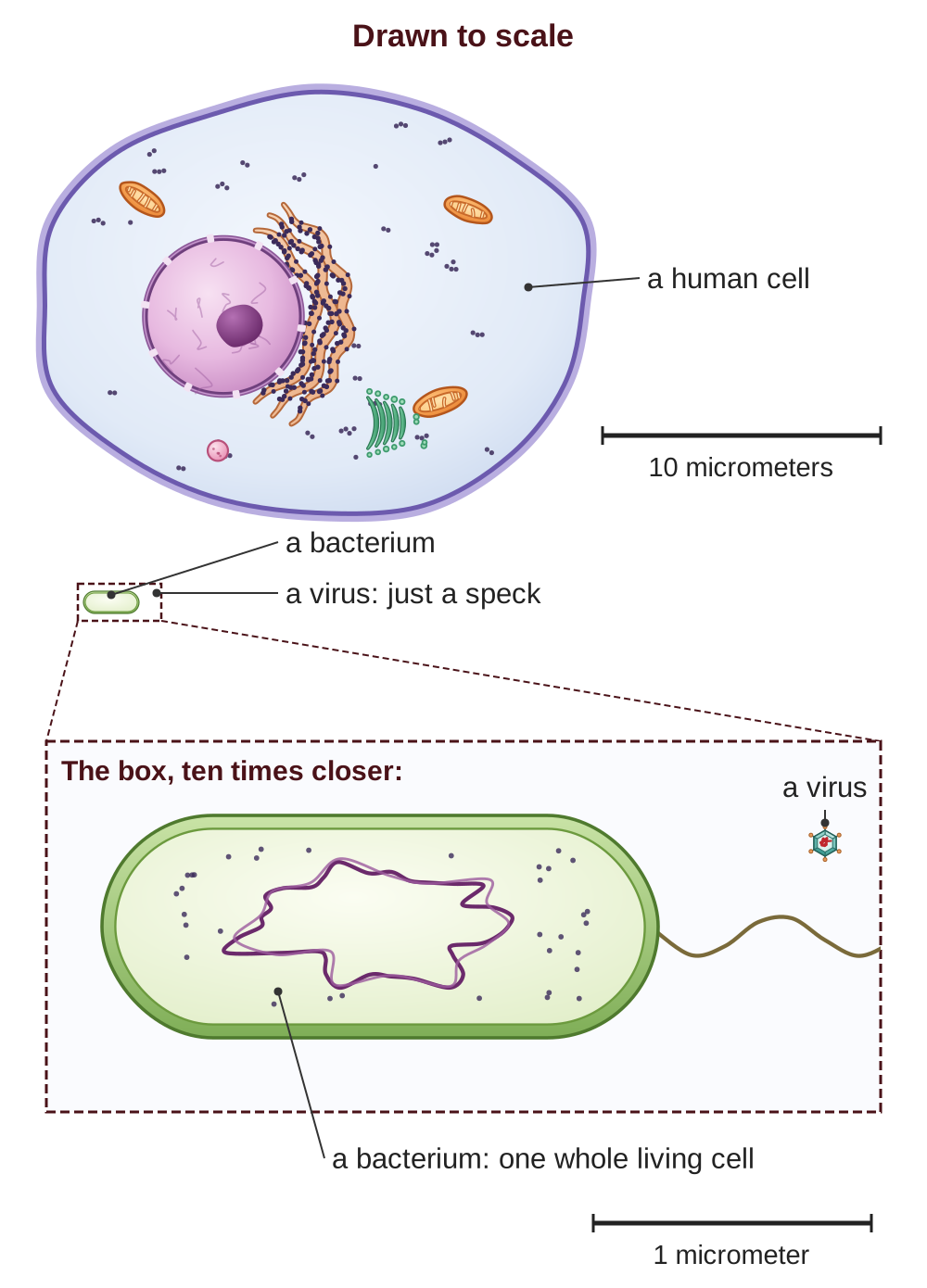
Run the list for a virus sitting on a doorknob:
- Made of cells? No. A virus is not a cell. It has no membrane of its own around living material, and none of the parts a cell uses to do its work.
- Uses energy? No. A virus has no metabolism. On its own it takes in nothing and does nothing.
- Keeps its inside steady? No.
- Responds? No.
- Grows and develops? No. New viruses are put together at full size; they never grow.
- Reproduces? Only inside a living cell, and only by using that cell’s parts and energy.
- Changes over generations? Yes. Viruses do change over time. That is why a new flu shot is made every year: the flu viruses going around have changed.
Here is how a virus makes copies of itself. The living cell it gets into is called the host cell.
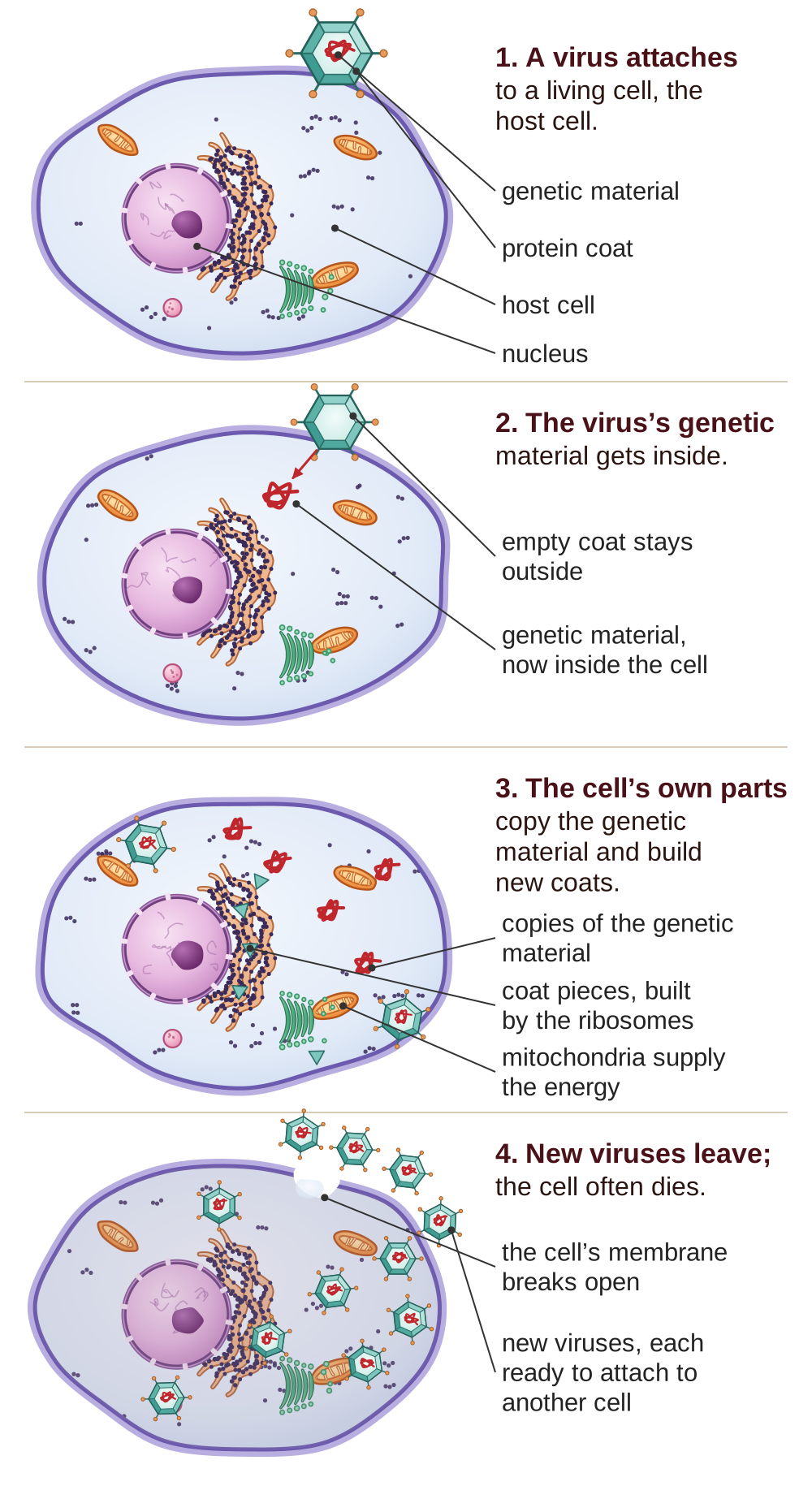
So a virus shows, at most, two signs of life, and it reproduces only with equipment it borrows from a living cell. Because it is not made of cells and cannot use energy or reproduce on its own, most scientists say a virus is not alive. Some scientists argue that viruses are somewhere in between living and nonliving, and that argument is still going on. Being able to say why a virus is a hard case matters more than picking a side.
For the GED test, the safe answer is this: a virus is not considered a living thing, because it is not made of cells and cannot reproduce on its own; it reproduces only inside a host cell.
This difference has a practical side. Antibiotics kill bacteria by attacking the parts that a living bacterial cell uses to do its work. A virus has no such parts of its own, so antibiotics do not work against viruses. That is why a doctor will not give you an antibiotic for a cold.
Seeds and spores: alive, but resting
A dry bean seed sits in a paper packet on a hardware store shelf for a year. Run the list. It is made of cells. But it is not growing, not taking in water, not responding, and not reproducing, at least not in any way you can see. Is it alive?
Give it water and warmth, and within a few days it swells, puts out a root, and grows into a young bean plant. Nothing was added to it except the right conditions. So the seed was alive the whole time. It was dormant (say DOR-mint): alive, but with its activity slowed down so far that it is hard to detect. A seed contains a tiny young plant and a store of food, wrapped in a tough coat, and it can wait in this state until conditions are right.
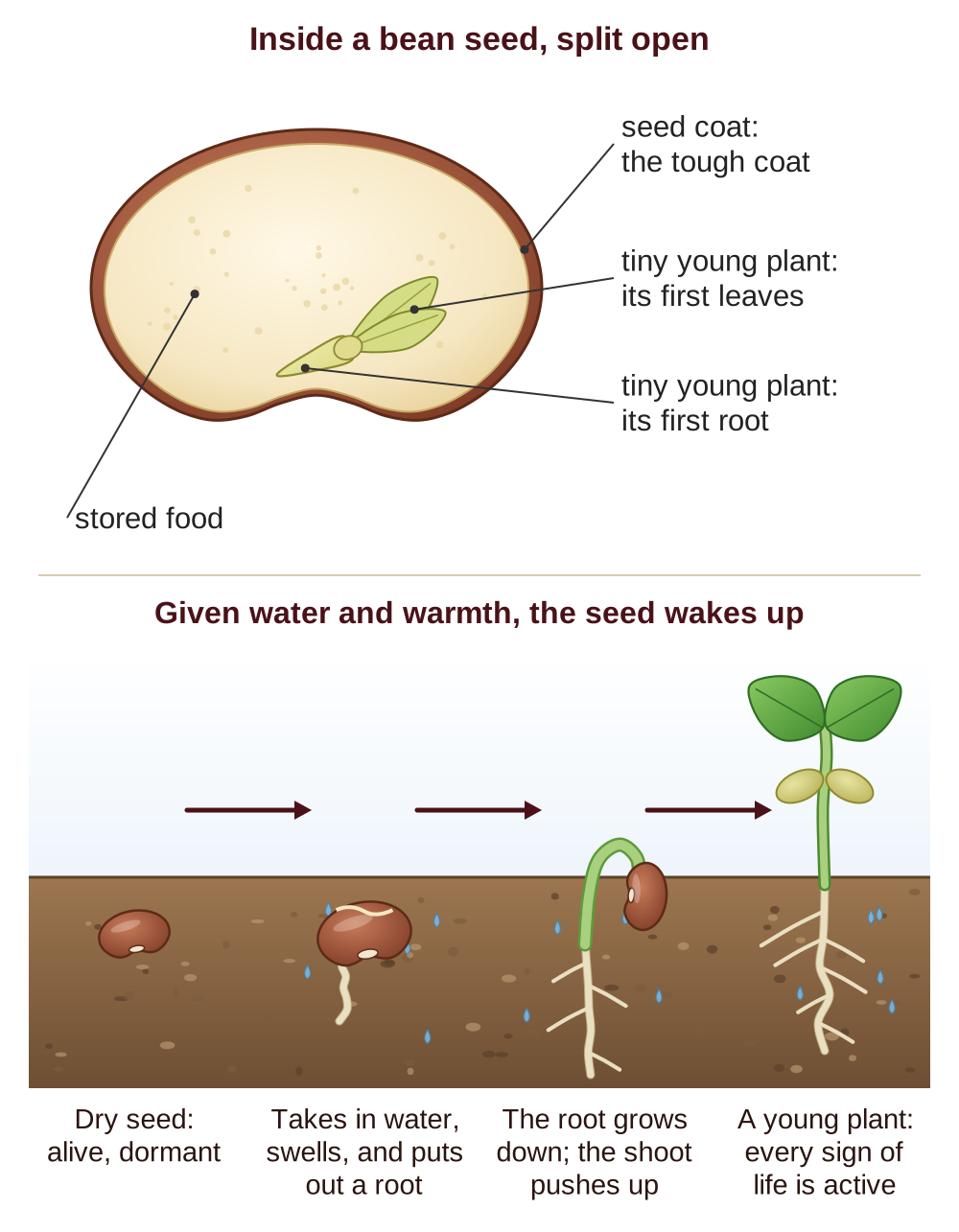
Some seeds can stay dormant for a very long time. A date palm seed about 2,000 years old, found in the ruins of an ancient fortress in Israel, was planted in 2005 and sprouted.
Spores are another resting form. A spore is a single cell, often with a tough coat, that can grow into a new living thing. Molds, mushrooms, and ferns make spores, and so do some bacteria. Mold spores float in the air everywhere, too small to see. When one lands on a damp slice of bread, it starts to grow. That is why bread left out for a week grows mold.
Other examples of being alive but resting: a packet of dry baker’s yeast, which comes back to life in warm water; and an animal that hibernates through the winter, slowing its body down until spring.
Something dormant is alive, even when it shows almost no signs at the moment. Ask what it does when conditions allow, not only what it is doing right now.
A living leaf and a dead leaf
Compare two maple leaves in a community garden. One is green, on the tree, in June. The other is brown and dry, on the ground, in November.
The green leaf’s cells are alive and working. They capture sunlight and make food by photosynthesis. They use energy. They take in water through the leaf’s veins, and the tiny openings on the leaf close on a hot, dry day to save water.
The brown leaf is still made of cells. Under a microscope you could see the walls of every one. But those cells are dead. They use no energy, make no food, and respond to nothing.
Here is the test that separates the dead leaf from the dormant seed. Give the seed water and warmth, and it comes back to activity. Give the brown leaf water, warmth, and sunlight, and nothing happens. It will never turn green again. Dormant means stopped for now; dead means stopped for good.
It helps to keep three words apart:
- Living: showing the signs of life now, or able to start again when conditions allow (a dormant seed is living).
- Dead: once alive, but stopped for good. A fallen brown leaf, a wooden chair, a cotton T-shirt, and a sheet of paper (made from wood) are all made of dead cells.
- Nonliving: never alive at all. A rock, a salt crystal, a fire, and a car are nonliving.
Sorting practice
Sort each thing into one of four groups. Choose an answer, then press Check. The explanation opens either way.
A pigeon on a fire escape
A pigeon is made of cells, eats and uses energy, keeps its body temperature steady, responds, grows, and reproduces. It is alive and active.
A packet of dry baker’s yeast
The yeast cells are dried out and resting. Put them in warm water with a little sugar and they become active again. That is dormant. “Dead” is the tempting answer because the yeast does nothing in the packet; but dead things never start again.
A candle flame
A flame uses fuel, gives off energy, and flickers in a draft, but it is not made of cells, and it never was. It is nonliving.
A cotton T-shirt
Cotton comes from the cotton plant, so the threads are made of plant cells. Those cells are dead. The shirt was once part of something alive; it is not nonliving in the way a rock is.
A flu virus on a doorknob
Most scientists say a virus is not alive: it is not made of cells, and it cannot use energy or reproduce on its own. It can make copies of itself only inside a host cell. “Dormant” is tempting because a virus can wait and later cause an illness; but a dormant seed is a living thing that is resting, and a virus is not a living thing at all.
Mold growing on an old slice of bread
Mold is a fungus, made of cells. It is taking in food from the bread, using energy, and growing. It is alive and active.
A fallen brown leaf in November
The leaf is made of cells, but they have stopped for good: water and sunlight will not bring them back. “Dormant” is the tempting answer, but a dormant thing can start again, and the leaf cannot.
A bean seed in a paper packet
The seed is resting. Given water and warmth, it will sprout. It is alive but dormant.
A salt crystal growing in a jar
The crystal grows, but only because salt from the water sticks to its outside. It has no cells and uses no energy. It is nonliving.
How this shows up on the GED test
GED questions about the signs of life usually come in one of four forms:
- Which sign does this show? You are given an example, such as a plant bending toward light, and asked to name the sign. Look at what the example is about: reacting to something outside (responding), holding something steady inside (homeostasis), changing form during one life (growing and developing), or a kind changing over many generations.
- Why is this not alive? You are given something that seems alive, such as a fire, and asked which sign it lacks. Usually the answer is that it is not made of cells.
- A table. A table checks several things against the signs, with a yes or no in each box, as in Look Again Quiz 8. Read across each row and down each column before you answer.
- A passage about a new organism or an unknown sample. Scientists find something new and must decide whether it is alive. You are asked which observation would be the best evidence. This form needs the most care, so the rest of this part works through one.
Scientists collect water from a hot spring. Under a microscope, they see tiny round objects. Which observation would be the strongest evidence that the objects are living things?
A. The objects get larger over several days.
B. The objects move when the water is stirred.
C. Each object is a cell, and the objects take in material from the water and divide into new objects like themselves.
D. The objects are found only in very hot water.
Step 1: For each choice, ask two questions. Is this one of the signs of life? And could a nonliving thing do this too?
Step 2: Choice A. Getting larger looks like growth. But a crystal also gets larger as material builds up on it. A nonliving thing can do this, so A is weak evidence.
Step 3: Choice B. Moving when the water is stirred is not a response; grains of sand do that too. The objects are only being carried by the water. B is not evidence of life at all.
Step 4: Choice D. Where something is found is not a sign of life. Plenty of nonliving things are found in hot water. D is not evidence.
Step 5: Choice C. It names several signs at once: made of cells (Sign 1), taking in material (Sign 2), and dividing into new objects like themselves (Sign 6). No nonliving thing is made of cells. C is the strongest evidence.
The lesson: the best evidence names a sign that nonliving things cannot show, such as being made of cells, or several signs together. Weak evidence names something that a crystal, a fire, or a machine could also do.
“Best” or “strongest” evidence means more than one choice may be true, and you must pick the one that settles the question. “All” matters: living things show all the signs. “Not” and “except” turn a question around; read them twice. And when a question points to one sentence of a passage, answer about that sentence; the passage may describe other signs later that answer a different question.
Think it through. A passage describes a newly discovered worm living near a vent in the deep ocean floor, where the water is very hot. The worm’s body temperature stays much lower than the water around it. Which sign of life does this observation show, and why might it be good evidence that the worm is alive?
Show a model answer
It shows homeostasis: the worm keeps its inside steady while the outside is very different. It is good evidence because nonliving objects in hot water simply heat up until they match the water; they do not hold their own inside conditions steady. On its own, one sign does not prove life, but together with being made of cells, it makes a strong case.
For more practice with questions in these forms, take Look Again Quiz 8: What Is Life?, and work through Alive or Not?, where you sort eight hard cases yourself. Then go on to the next guide, How Life Is Organized, which shows how cells are built up into tissues, organs, and whole living things.
The terms in this guide
Organism one complete living thing, such as a bacterium, a tree, or a person.
Biology the study of living things; another name for life science.
Characteristics of life the signs that all living things show; another name for the signs of life.
Cell the smallest unit that is alive on its own.
Unicellular made of a single cell.
Multicellular made of many cells.
Microscope a tool that uses lenses to make small things look much larger.
Energy what makes it possible to move, heat, or change something.
Photosynthesis the process plants use to capture energy from sunlight and make their own food.
Cellular respiration the process cells use to release the energy stored in food.
Metabolism all the chemical work a living thing does to stay alive.
Chemical reaction a change in which some substances turn into different substances.
Homeostasis keeping the inside of a living thing steady while the outside changes.
Stomata tiny openings on a leaf that let gases in and out, and close to save water.
Stimulus (plural: stimuli) a change in the surroundings that a living thing reacts to.
Response what a living thing does in reaction to a stimulus.
Grow to get bigger by taking in materials and building more of oneself.
Develop to change form in a set order during one’s life.
Metamorphosis a large change in body form during an animal’s life, such as a caterpillar becoming a butterfly.
Reproduce to make more of one’s own kind.
Offspring the young that a living thing produces.
DNA the chemical that carries a living thing’s instructions, passed from parents to offspring.
Asexual reproduction reproduction with one parent; the offspring are copies of the parent.
Sexual reproduction reproduction with two parents; the offspring get a mix of DNA from both.
Budding a way of reproducing in which a small new cell or body grows out of the parent and breaks off.
Generation one step in a family line: parents, then children, then grandchildren.
Population all the members of one kind of living thing in one place.
Adaptation a feature that helps a living thing survive and reproduce where it lives.
Evolutionary adaptation the slow change of a kind of living thing, over many generations, to suit its surroundings.
Antibiotic a medicine that kills bacteria; it does not work against viruses.
Virus a tiny package of genetic material in a protein coat; it can make copies of itself only inside a host cell.
Host cell the living cell that a virus gets into and uses to make copies of itself.
Dormant alive, but resting, with activity slowed so far that it is hard to detect.
Spore a single cell, often with a tough coat, that can grow into a new living thing.
Nonliving never alive, such as a rock or a fire.
Dead once alive, but stopped for good.
14 questions on this guide
Check yourself
Choose an answer, then press Check. The explanation opens either way.
Which statement best describes how biologists decide whether something is alive?
Biologists use a list, and something must show all of the signs on it. Each of the other choices is a single sign or a single rule, and each one lets in something nonliving: a car moves and uses energy, and a crystal grows. Choosing one of them is the mistake of trusting one sign alone.
Maria keeps a jar of very salty water on a windowsill. Over two weeks, cubes of salt form on a string in the jar and get larger every day. Her son says the salt must be alive, because it grows. What is the best reply?
The salt does grow, but only because more salt sticks to its outside. It has no cells, and it shows no other sign of life. The tempting answer is the first one, which treats growth alone as proof of life; a crystal is the standard example of why that rule fails.
On a 20-degree January morning, a man’s body temperature stays close to 98.6 degrees Fahrenheit. What is this called?
Keeping the inside steady while the outside changes is homeostasis. Metabolism is the tempting answer, because the heat his body makes does come from the chemical work of metabolism; but the question is about keeping the temperature steady, and that is homeostasis.
A plant on a windowsill in a Bronx apartment bends toward the window over several days. In this example, what is the light from the window?
The light is the change in the surroundings that the plant reacts to, so it is the stimulus. The bending is the response. Mixing up the two is the most common mistake: the stimulus comes first, and the response is what the living thing does about it.
Why do most scientists say a virus is not alive?
A virus is not made of cells, and it can make copies of itself only inside a host cell, using that cell’s parts and energy. Size is the tempting answer, but size is not one of the signs of life: bacteria are tiny too, and they are alive.
A packet of bean seeds has sat on a store shelf for a year. The seeds are not growing or taking in water. Which statement is correct?
The seeds are resting. Given water and warmth, they will sprout, which shows they were alive the whole time. “They become alive after they are planted” is tempting, but planting adds only conditions, not life; something dead or nonliving would not sprout.
What is the best evidence that a fallen brown leaf is dead, and not just dormant?
The difference between dead and dormant is whether activity can start again. A dormant seed comes back with water and warmth; a dead leaf does not. The color is tempting, but some living leaves are not green, and color alone does not show whether cells are working.
Scientists find tiny objects in water from a deep-sea vent. Which observation would be the strongest evidence that the objects are alive?
Being made of cells, taking in food, and dividing are three signs of life, and no nonliving thing is made of cells. The first choice is tempting because it sounds like growth; but material building up on the outside is how a crystal grows, so it does not show life.
A student says a fire is alive because it takes in fuel, gives off energy, and spreads. Which sign of life does a fire clearly lack?
A fire is not made of cells, and something must show every sign to be alive. The other three choices are things a fire really does, which is what makes them tempting; the question asks what it lacks.
A mule’s mother is a horse and its father is a donkey. Mules almost never have young. Which statement is correct?
A mule is made of cells, uses energy, keeps its inside steady, responds, and grows. The sign about reproducing describes a kind of living thing, not each individual, just as a person who never has children is still alive. The first choice is the tempting one, from reading that sign as a rule for every individual.
In one hospital, an antibiotic killed most of a certain kind of bacteria twenty years ago. Today the same antibiotic kills very few of them. Which sign of life does this change show?
Over many generations, the bacteria that survived the medicine reproduced, and the population changed. That is a kind changing over many generations. Responding is tempting, but a response is one living thing reacting to a stimulus during its own life; this change happened across many generations of bacteria.
A nurse records a woman’s temperature during one day. At 6 a.m. the air outside is 45°F and her temperature is 98.2°F. At noon the air is 72°F and her temperature is 98.6°F. At midnight the air is 40°F and her temperature is 98.1°F. What do these numbers show?
The air went from 40 to 72 degrees, a change of 32 degrees. Her temperature went from 98.1 to 98.6, a change of half a degree. That steady inside is homeostasis. “Exactly 98.6 all day” is tempting because 98.6 is the number everyone learns; but the numbers show small changes, and a normal temperature does move a little.
A yeast cell in bread dough is a single cell. It takes in sugar, releases energy, and makes new yeast cells by budding. What is yeast?
Each yeast is one cell that does all the work of staying alive by itself, so it is a unicellular organism. Multicellular is tempting because dough holds huge numbers of yeast cells; but each cell lives on its own, and they are not one organism working together.
A caterpillar sheds its skin one last time, and underneath is a hard case called a chrysalis. Later a butterfly comes out of the chrysalis. Which sign of life does this show?
The caterpillar changes form during its own life, in a set order: caterpillar, chrysalis, butterfly. That is development, and this large change in form is called metamorphosis. Changing over many generations is tempting because the change is so large; but it is one animal in one lifetime, not a kind of animal over many lifetimes.